

Drom Taberna, the beloved Queen Street West bar known as much for its live music and artistic energy as for its Eastern European food, has long been a creative hub for Toronto’s artists. Now, that informal spirit has taken a formal step forward.
A group of Drom employees have transformed their grassroots arts group into an official not-for-profit organization, giving their collective the structure and resources needed to grow.
The Drom Artist Collective (DAC) — founded by Rashid Mohiddin, Celeste Ganon, and former La Palette manager David Gulyas — recently completed the process of incorporating as a non-profit, allowing it to scale up creative production and apply for grant funding.
“It means moving forward, ideally, we will be the vessel for people’s dreams,” said Mohiddin. “If you have a project, come to us. We now have the architecture to support it.”
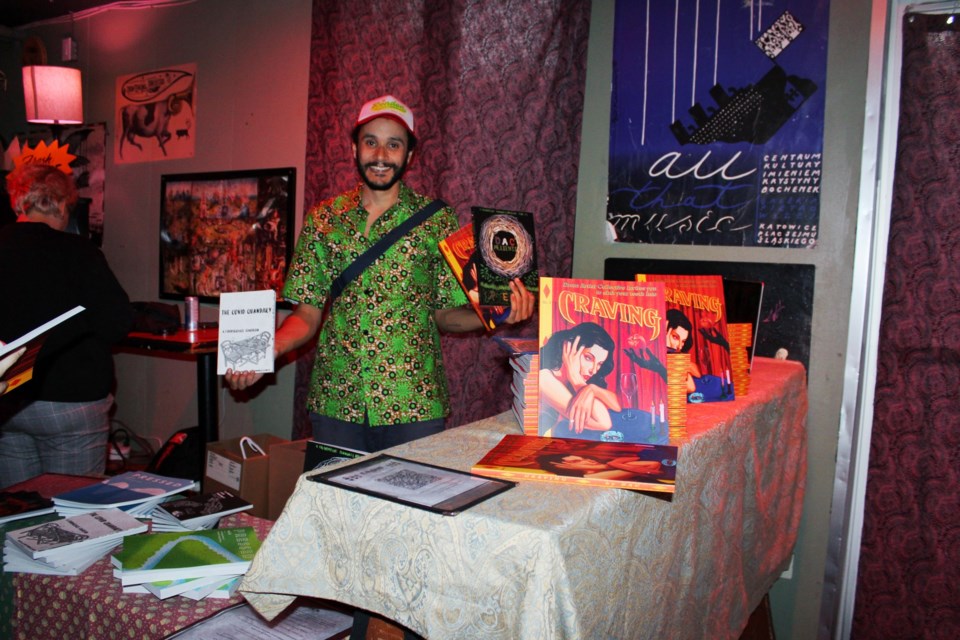
The idea for DAC began in 2020 when the trio wanted to produce a magazine but realized they couldn’t do it alone. They founded the collective to unite artists, musicians, writers, and industry professionals, offering mutual support and shared resources. Over the years, DAC has produced eight books, dozens of video projects (including music videos), and a community magazine featuring contributors from across Toronto — proving that artistic collaboration can be a powerful alternative to the “starving artist” stereotype.
On October 14, the collective debuted its latest magazine issue, Craving, at a lively launch party at Drom Taberna featuring jazz vocalist Donovan Locke. The event also marked the launch of Dromline, a new storytelling website that will publish poetry, art, essays, and journalism from Torontonians.
“The least we can do is use the Drom brand, which people trust, to try and create space for stories,” Mohiddin said.
The decision to incorporate was driven by a desire to scale up. After realizing no one in the busy collective had time to navigate the legal process, they hired a consulting firm — a process that took about a year and a half to complete.
With not-for-profit status, DAC will now be eligible for arts grants and will begin taking over some event programming at Drom Taberna, a responsibility previously handled by co-founder Misha Artebyakin. That shift will ease financial pressures on the bar while positioning DAC as a serious cultural institution in its own right.
“This feels like the natural progression of what DAC is meant to be,” said Artebyakin. “The organization exists to empower, to unite, to connect and to bring together.”