

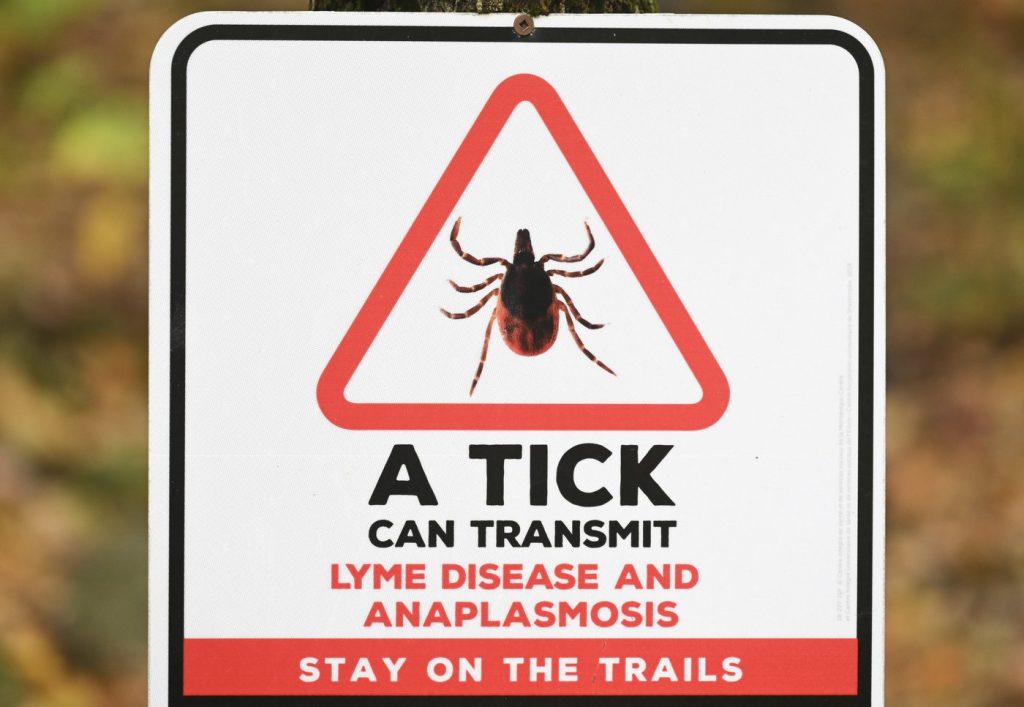
As blacklegged (deer) ticks continue to spread across eastern Canada, health experts are warning that Lyme disease is no longer the only tick-borne illness Canadians need to be concerned about. Medical professionals are now reporting a noticeable increase in anaplasmosis, a potentially serious bacterial infection that can cause severe complications if not diagnosed and treated promptly.
A new study published in the Canadian Medical Association Journal urges physicians to consider anaplasmosis when treating patients with unexplained fever, fatigue, chills, headaches, or flu-like symptoms, particularly in regions where blacklegged ticks are becoming more common.
The warning follows the case of a 79-year-old eastern Ontario resident who was hospitalized last summer with fever, chills, weakness, and a fall. Although he did not recall being bitten by a tick, he frequently spent time in wooded areas where tick-borne diseases are widespread. During his hospital stay, he developed a low blood cell count, breathing difficulties, mild kidney injury, and myocarditis—an inflammation of the heart muscle.
Doctors immediately started treatment with the antibiotic doxycycline, the recommended first-line medication for both Lyme disease and anaplasmosis. The patient responded rapidly and made a full recovery. Laboratory tests later confirmed that he had contracted anaplasmosis.
Dr. Michael Quon, an internal medicine specialist at The Ottawa Hospital and senior author of the study, said physicians are seeing the disease far more frequently than in previous years.
“This is an infection we rarely encountered even five years ago. Today, we are seeing it more often in clinical practice, making early recognition increasingly important,” Dr. Quon said.
According to Dr. Quon, one of the biggest challenges is that anaplasmosis often begins with vague, flu-like symptoms that can easily be mistaken for many other illnesses. Unlike Lyme disease, which frequently causes a distinctive expanding rash, anaplasmosis usually presents without a rash. Patients often show a reduced blood cell count, which can help doctors distinguish between the two illnesses.
If left untreated, anaplasmosis can lead to serious health complications, including heart inflammation, brain inflammation, acute respiratory distress, and kidney failure. Because laboratory confirmation can take time, doctors are being advised to begin doxycycline treatment immediately whenever the disease is strongly suspected rather than waiting for test results.
Health officials say the increase in anaplasmosis is closely linked to the growing population of blacklegged ticks across Canada. The Public Health Agency of Canada reports that the tick population has expanded significantly from Manitoba eastward, with the greatest increases occurring in Ontario, Quebec, and Nova Scotia.
Surveillance data also show that the proportion of blacklegged ticks carrying Anaplasma phagocytophilum—the bacterium responsible for anaplasmosis—has doubled from approximately three per cent in 2022 to six per cent in 2024.
Jules Koffi, Senior Epidemiologist with the Public Health Agency of Canada, noted that while Lyme disease remains the better-known tick-borne illness, physicians should now routinely consider both infections. He also cautioned that some patients can become infected with Lyme disease and anaplasmosis simultaneously.
Despite the increase in tick-borne illnesses, infectious disease specialists stress there is no reason for Canadians to avoid spending time outdoors.
Dr. Jeffrey Pernica, an infectious disease specialist at Hamilton Health Sciences’ McMaster Children’s Hospital, encourages people to continue enjoying parks, forests, and nature while taking simple preventive measures.
Health experts recommend using insect repellents containing DEET or Icaridin, wearing long sleeves and pants in wooded or grassy areas, performing thorough daily tick checks on both adults and children, and removing attached ticks as quickly as possible using fine-point tweezers. Prompt removal significantly reduces the risk of infection, particularly Lyme disease.
The Public Health Agency of Canada also advises people to photograph any removed tick and submit the image to eTick.ca, which helps identify tick species and supports national tick surveillance programs.
Medical experts emphasize that awareness, early diagnosis, and prompt treatment remain the most effective tools in preventing serious illness as tick populations continue to expand across Canada.