

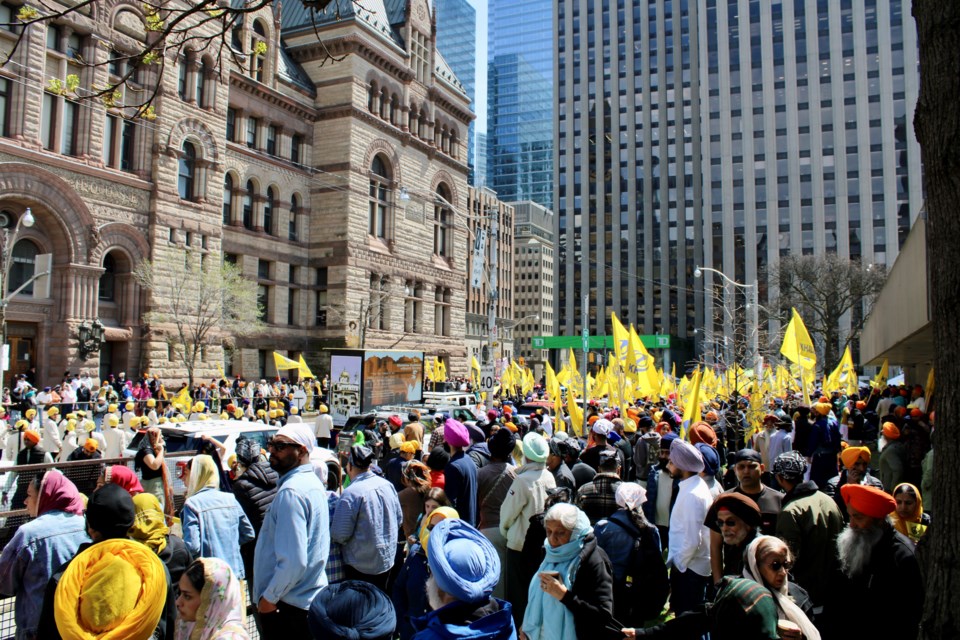
Thousands of people gathered at Nathan Phillips Square on Sunday to celebrate Vaisakhi, also known as Khalsa Day, marking the Sikh New Year and the founding of the Khalsa in 1699.
The annual celebration, organized by the Ontario Sikhs and Gurdwaras Council, has been a Toronto tradition since 1986. Organizers say the Nagar Kirtan procession is now one of the largest Sikh parades in Canada, drawing families, community groups, and visitors from across the region.
This year’s event began at City Hall after being relocated from Exhibition Place, which is being used for preparations connected to the FIFA World Cup 2026.
Before the parade began, large crowds gathered for langar — the Sikh tradition of serving free meals to everyone regardless of religion, background, or status. Long rows of tents around the square offered vegetarian food including lentils, vegetable curries, pakoras, fried flatbread, and sweet lassi drinks.
Volunteers described the meal service as an expression of “seva,” the Sikh principle of selfless service. Many attendees said the tradition reflects equality, compassion, and community spirit.
A prayer area was also set up in the square, where visitors removed their shoes and sat quietly in reflection before the procession began.
One of the most visible symbols of the day was the distribution of orange turbans by the Toronto Turban Crew. Volunteers helped tie turbans for attendees, explaining that the colour represents courage, dignity, and equality.
The parade officially started at 1:30 p.m., moving south along Bay Street with decorated floats, hymns, prayers, and community participants joining along the route.
Many attendees also carried yellow Khalistan flags, reflecting support for the proposed Sikh homeland movement connected to Punjab, India. The flags added a political dimension to an event otherwise centred on faith, culture, and service.
During the procession, volunteers handed out Karah Parshad, a traditional sacred sweet offered at Sikh gatherings. People stepped forward respectfully to receive it as the floats moved through the crowd.
For many families in attendance, the celebration was about identity, belonging, and unity. The combination of prayer, music, service, and public participation once again turned downtown Toronto into a vibrant display of Sikh heritage and community pride.