

A landmark ruling by the U.S. Supreme Court striking down tariffs imposed under the International Emergency Economic Powers Act (IEEPA) has delivered a legal setback to U.S. President Donald Trump, but labour leaders warn it does little to ease the trade tensions impacting Canadian industries.
The court determined that Trump lacked the authority to impose sweeping “economic emergency” tariffs under IEEPA, marking a clear rebuke of presidential overreach. However, according to Unifor National President Lana Payne, Canadian workers should not interpret the decision as a turning point in the broader trade conflict.
Payne emphasized that while the ruling exposes what she described as legally flawed tariff actions, the overall risk to Canadian employment remains significant. She cautioned that the U.S. administration could pursue alternative legal pathways to reintroduce or expand trade penalties, potentially intensifying pressure on Canadian jobs and investment.
Although the IEEPA-based tariffs have been invalidated, other measures remain firmly in place. Industry-specific tariffs enacted under Section 232 — justified by the U.S. on national security grounds — continue to target key sectors including automotive manufacturing, steel, aluminum, and forestry products. These measures, Payne noted, were never part of the IEEPA challenge and could be expanded at any time.
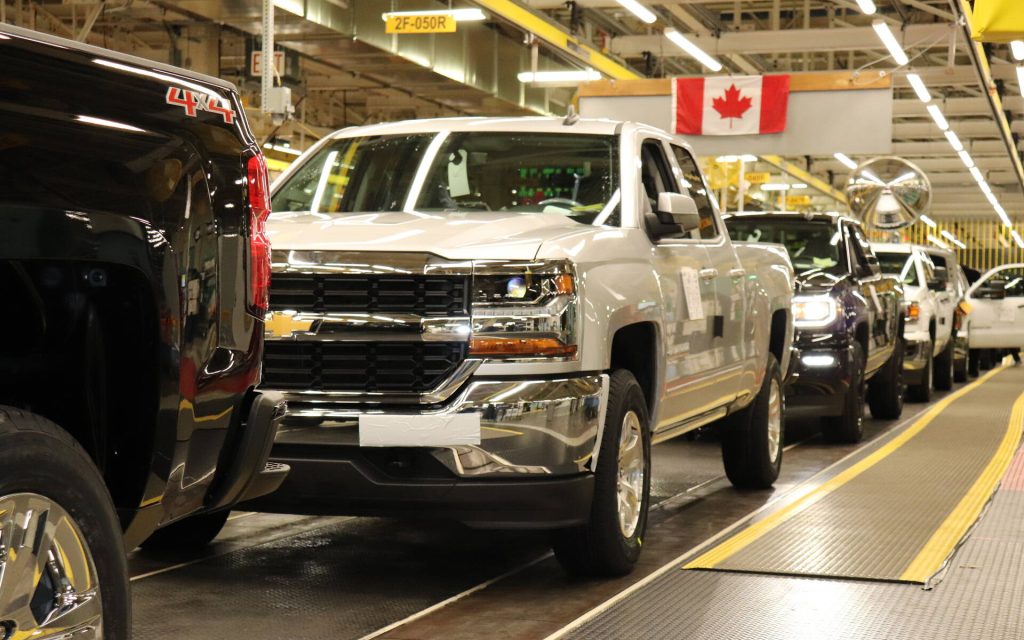
Ontario’s auto sector has already felt the consequences. General Motors reduced production at its Oshawa plant, eliminating at least 500 jobs and shifting much of that work to U.S. facilities. The electric vehicle assembly plant in Ingersoll has also closed, and Stellantis has moved Jeep production out of Brampton, further weakening the region’s manufacturing base.
Unifor has urged the federal government to adopt stronger industrial strategies to shield Canadian workers from ongoing trade volatility. Among its recommendations are penalties for companies that relocate jobs or operations outside Canada due to U.S. tariff pressures, as well as targeted investments aimed at strengthening domestic supply chains and safeguarding economic sovereignty.
While the Supreme Court’s ruling curtails one avenue of tariff enforcement, union leaders maintain that the broader U.S.-Canada trade dispute remains unresolved, leaving uncertainty hanging over thousands of Canadian workers and critical industrial sectors.