

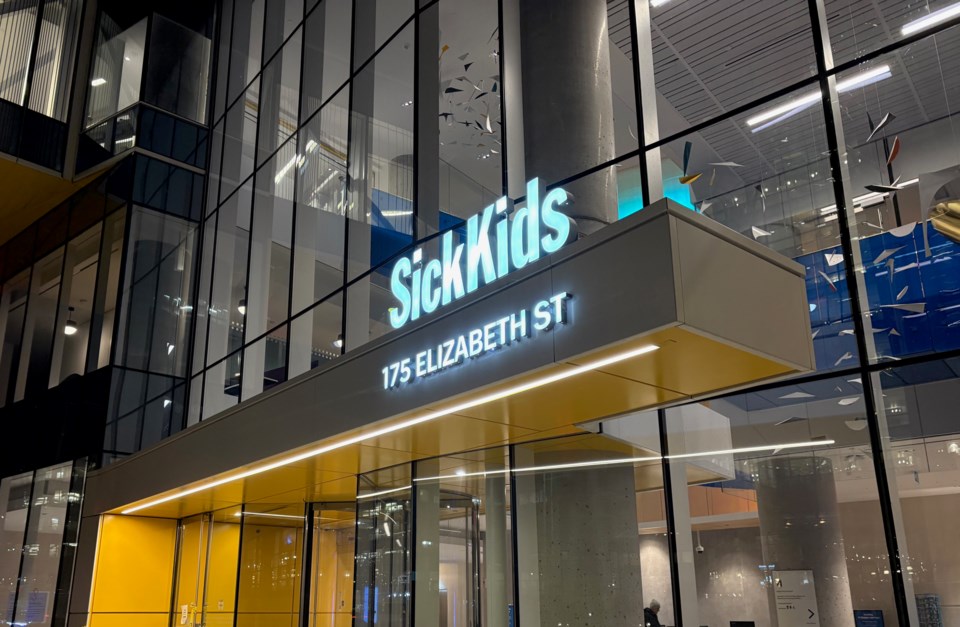
A transformative $35-million donation is poised to reshape mental health care for children and youth at Toronto’s Hospital for Sick Children (SickKids) and the Children’s Hospital of Eastern Ontario (CHEO), marking one of the most significant philanthropic investments in pediatric mental health in Canada.
The donation, made by the Waverley House Foundation, arrives at a critical time. According to both hospitals, 1.2 million Canadian children and youth are currently affected by mental illness, with many not responding to existing treatments.
The funding will accelerate groundbreaking research in precision medicine, an emerging approach that uses genetics, data, environment, and lived experience to tailor mental health treatment to each young person’s unique profile. The goal is to move beyond one-size-fits-all therapies and provide faster, more targeted care.
“Traditional mental health treatments are our best and most current option for children and youth. But for up to half of the kids we see, standard treatments just don’t work,” said Dr. Kathleen Pajer, senior scientist at the CHEO Research Institute. “A precision approach gives us the tools to understand risks earlier and develop care that actually meets their needs.”
Research shows that 70 per cent of mental health challenges begin in childhood or adolescence. Early detection, experts say, is often the difference between lifelong struggle and long-term stability.
“I’ve seen how mental health challenges ripple through families and generations,” said Bruce McKean, founder of the Waverley House Foundation. “Too often, we react too late. Early detection and intervention will change lives — even save them.”
McKean, a father, grandfather and former teacher, said he hopes the donation will help young people “thrive,” noting the potential of precision medicine to deliver better and faster outcomes.
SickKids and CHEO have entered a joint partnership anchored in three pillars — data, talent, and breakthroughs — aimed at creating an entirely new model of pediatric mental health care. That includes using machine learning to identify risks sooner, recruiting global experts, and developing treatment plans that reflect the full complexity of each child’s life and biology.
Among the projects underway is work led by Dr. Jacob Vorstman, a senior scientist and psychiatrist at SickKids, who is using advanced machine-learning tools to analyze health records and mental-health indicators. His precision-based approach is already helping emergency clinicians identify conditions such as autism or anxiety in real time, allowing for immediate and tailored intervention.
Another major advancement comes from SickKids psychologist and senior scientist Dr. Jennifer Crosbie, who has uncovered potential links between oral bacteria and mental health symptoms in nearly 5,000 children — research that could open an entirely new pathway for early diagnosis.
SickKids Foundation president and CEO Jennifer Bernard called the donation “transformational,” saying it will “change the future of mental health care for children and youth across Canada.”
“Together, we are building a legacy of compassion and possibility,” she said. “Every child deserves the chance to thrive — and this gift brings that vision closer to reality.”