

President Donald Trump announced on Friday that he plans to introduce reciprocal tariffs on several countries early next week, escalating his ongoing efforts to reshape global trade policies in favor of the United States.
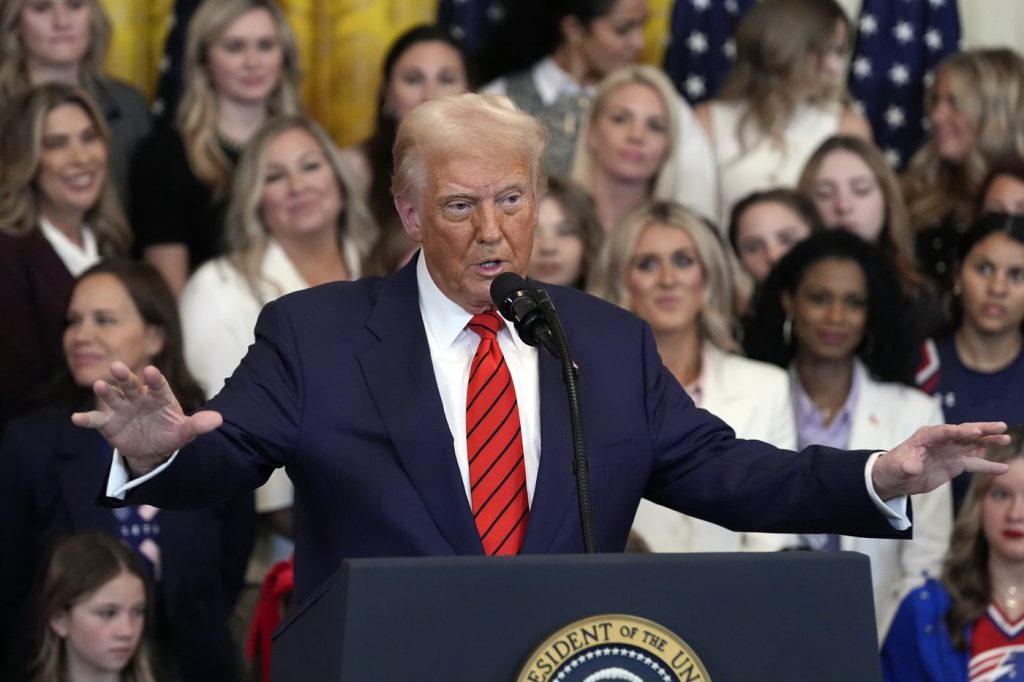
Speaking at the White House during a meeting with Japanese Prime Minister Shigeru Ishiba, Trump stated that the tariffs would ensure the U.S. is treated “evenly” in international trade, though he did not specify which countries would be affected.
“I’ll be announcing that next week—reciprocal trade—so that we’re treated evenly with other countries. We don’t want any more, any less,” said Trump.
The move is expected to fulfill a key campaign promise to impose tariffs on foreign imports that match the rates applied to U.S. exports by trading partners. Reports indicate that auto tariffs remain under consideration, with the White House weighing possible exemptions.
Trump has frequently criticized the European Union’s 10% tariffs on auto imports, which he argues create an unfair advantage compared to the 2.5% U.S. tariff on European cars. He has also pointed out that India, Vietnam, and Brazil impose higher tariffs on American goods, with the World Trade Organization reporting that:
- India’s trade-weighted tariff rate stands at 12%
- Brazil’s rate is 6.7%
- Vietnam’s rate is 5.1%
- European Union nations’ rates average 2.7%
- The U.S. trade-weighted tariff rate is 2.2%
During confirmation hearings this week, Trump’s Commerce Secretary nominee Howard Lutnick raised concerns about India’s high tariff rates, while U.S. Trade Representative nominee Jamieson Greer called for reducing barriers to U.S. exports, citing Vietnam’s trade policies as an example.
Trump’s Republican allies in Congress were briefed on the tariff plan during budget discussions at the White House on Thursday, according to sources familiar with the talks. The administration has framed the tariff increases as part of a strategy to offset revenue losses from an upcoming proposal to extend the 2017 tax cuts, a move that budget analysts warn could add trillions to the national debt.
Wall Street reacted negatively to reports of Trump’s trade discussion, with markets extending losses on Friday amid concerns over potential inflationary effects.
The announcement follows recent developments in trade relations with Canada and Mexico, where Trump initially imposed 25% tariffs on imports before delaying enforcement in response to market volatility. Instead, the two countries agreed to increase border enforcement efforts, a key priority for the administration.
Greer, Trump’s nominee for U.S. Trade Representative, echoed the administration’s stance, stating during his confirmation hearing on Thursday:
“If these countries want to continue enjoying market access to the United States, they must reduce trade barriers and create better reciprocity.”
The reciprocal tariff policy is expected to be officially announced by Monday or Tuesday next week. Trump is set to dine with Senate Republicans on Friday, before attending Super Bowl weekend alongside House Speaker Mike Johnson.
The proposed Republican tax and spending plan, which will likely incorporate revenue from increased tariffs, is set to be unveiled this weekend. However, passage through Congress remains uncertain, as Republicans hold only a narrow majority and may rely on budgetary loopholes to avoid a Democratic filibuster.
For now, businesses, investors, and trade partners will be watching closely as the White House finalizes details of the reciprocal tariff strategy in the coming days.