

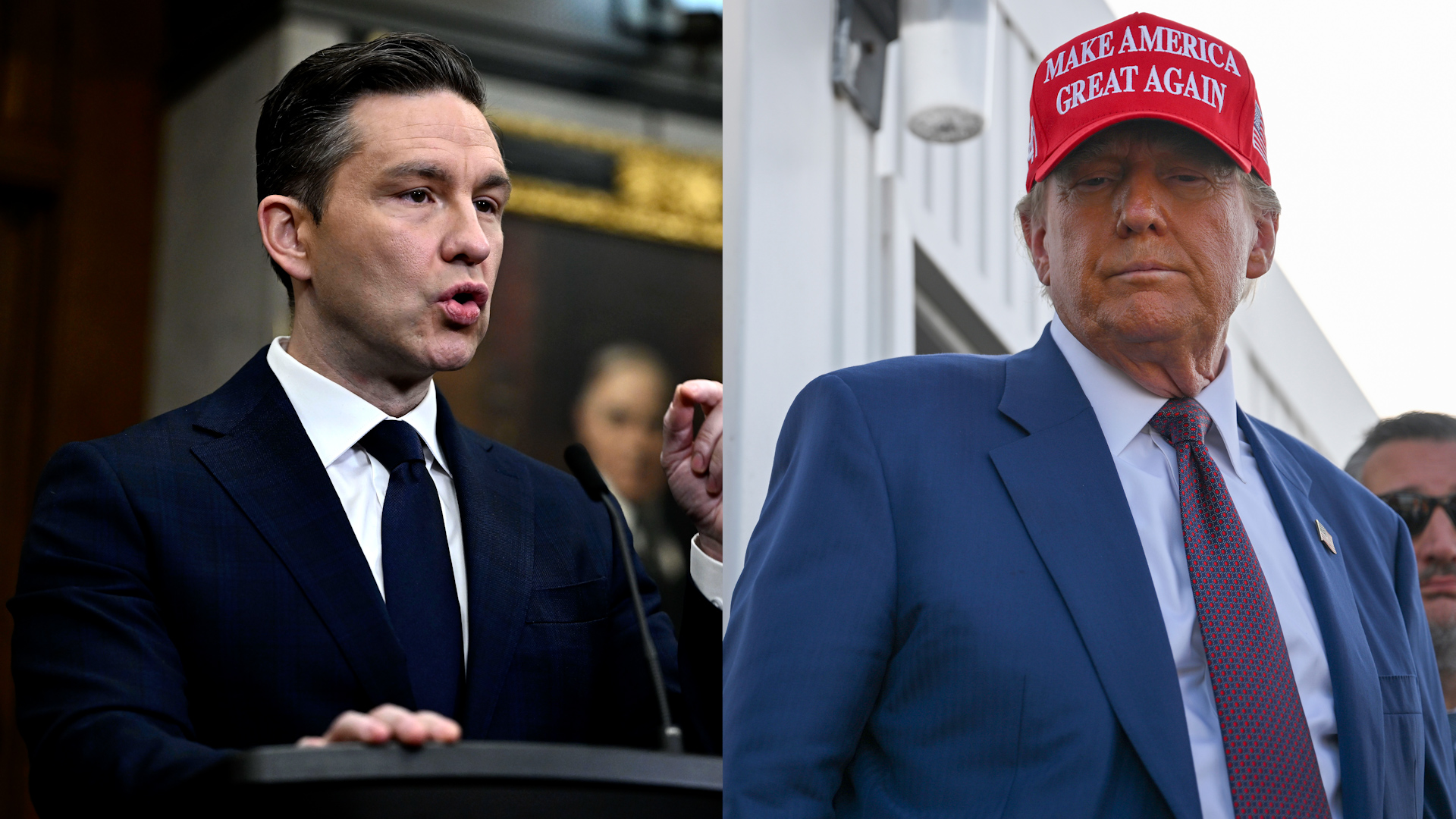
Conservative leader Pierre Poilievre has outlined his strategy to counter potential U.S. tariffs and reduce interprovincial trade barriers if he becomes Canada’s prime minister.
In an exclusive interview with CTV News Atlantic’s Todd Battis, Poilievre shared his plan to respond decisively if President Donald Trump implements the proposed 25 percent tariffs on Canadian imports. He indicated that his government would target U.S. products and services that are either unnecessary for Canada or can be produced domestically.
“If we get into a trade war, both Canadians and Americans will lose,” Poilievre warned. “We’ll focus on sourcing elsewhere to maximize the impact on Americans while minimizing the impact on Canadians.”
When asked if his response could involve a dollar-for-dollar retaliation, Poilievre affirmed, “I would say so. The response must hit hard. We need to be precise and strategic.”
President Trump’s proposed tariffs are set to take effect on February 1, potentially impacting the $3.6 billion worth of goods that cross the Canada-U.S. border daily. According to the Canadian Chamber of Commerce, 2.3 million Canadian jobs depend on U.S. exports.
While touring the Maritimes this week, Poilievre emphasized his commitment to enhancing Canada’s economic resilience. He pledged to introduce an emergency “bring-it-home” tax cut to stimulate domestic growth and promised to dismantle interprovincial trade barriers.
“We currently have freer trade with the Americans than among ourselves,” Poilievre remarked. “If the U.S. proves to be an unreliable trade partner, we must strengthen our internal markets and expand trade with other countries.”
Poilievre also unveiled his energy and resource development agenda, vowing to repeal Bill C-69 and accelerate the approval of key projects. He expressed support for a new initiative akin to the Energy East pipeline to transport western oil to eastern refineries.
“An east-west pipeline is critical,” he said. “While the original project may not return, the principle of refining western oil in eastern Canada is sound economics. Continuing to sell oil at a discount in the west while buying at a premium in the east is financial negligence.”
Nova Scotia Premier Tim Houston, in a recent memo, highlighted his vision for the province’s self-sufficiency, including energy development and a potential reduction in federal transfer payments. In contrast, Poilievre assured that he would not cut transfer payments to Maritime provinces if elected.
“My goal is to enrich the Maritime provinces,” Poilievre stated. “There’s no reason why they can’t transition into the ‘have’ category.”
With his firm stance on trade, energy, and economic development, Poilievre seeks to position himself as a leader ready to defend Canada’s interests while bolstering its domestic economy.