

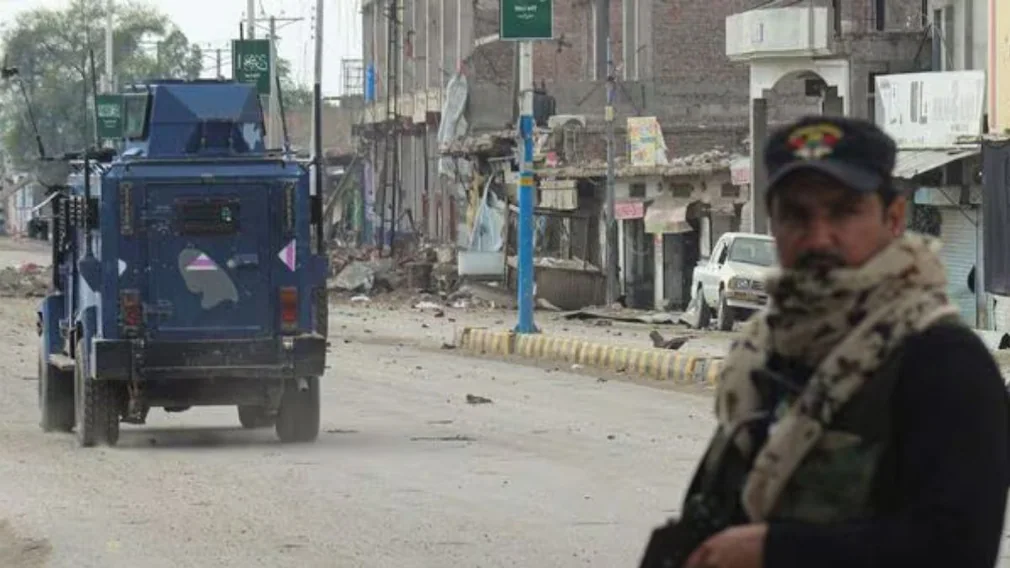
ISLAMABAD — At least 30 people, including women and children, were killed early Monday when Pakistan Air Force JF-17 fighter jets dropped eight Chinese-made LS-6 precision bombs on a village in Khyber Pakhtunkhwa’s Tirah Valley, a remote region notorious for militant hideouts.
The strikes, carried out around 2 a.m., targeted what authorities said was a bomb-making facility operated by the Tehreek-e-Taliban Pakistan (TTP). Police said two senior TTP commanders, Aman Gul and Masood Khan, had been using civilians as human shields and storing crude explosives in mosques nearby.
The attack came just days after a TTP ambush in South Waziristan killed 12 Pakistani soldiers, underscoring the escalating conflict between Islamabad and the resurgent militant group since the Taliban’s return to power in Afghanistan in 2021.
Civilian Toll Sparks Outrage
Despite government claims of targeting terrorist infrastructure, the heavy civilian death toll triggered immediate backlash. Thousands protested in Mingora last week demanding peace and protection for civilians, and opposition party PTI condemned the strike, warning that “bombings have sown so many seeds of hatred… nothing will be left.”
Rights groups have also criticized Pakistan’s counterterrorism tactics. Amnesty International previously accused the government of an “alarming disregard for civilian life” after multiple children were killed in earlier operations this year.
Khyber’s Long Battle With Militancy
Khyber Pakhtunkhwa, located along the Afghan border, has been a flashpoint for militancy since the 1980s when U.S.-backed mujahideen used the region as a base against Soviet forces. The rugged, inaccessible terrain has allowed militant groups like TTP, Jaish-e-Mohammed, and Hizbul Mujahideen to regroup and rebuild training camps, especially after India’s Operation Sindoor destroyed several terror bases in Pakistan and Pakistan-occupied Kashmir.
Afghanistan’s Taliban government has denied Pakistan’s accusations of harboring TTP, calling the security crisis “an internal Pakistani matter.”
Rising Concerns
Analysts warn that repeated airstrikes risk further alienating local populations and fueling recruitment for militant groups. With rising attacks and Islamabad’s reliance on military solutions, critics say Pakistan risks being locked in a cycle of violence that destabilizes the entire northwest region.