

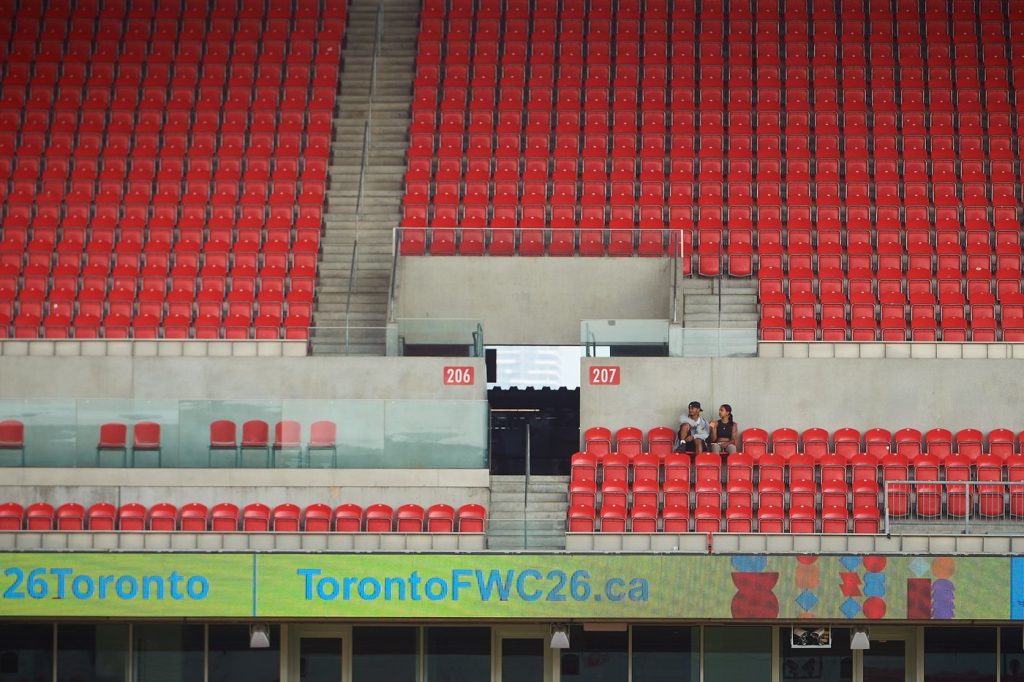
Toronto Public Health is launching a pilot wastewater surveillance program ahead of the FIFA World Cup to monitor and detect the spread of infectious diseases as hundreds of thousands of visitors arrive in the city next summer.
Dr. Michelle Murti, Toronto’s new Medical Officer of Health, said the program will involve collecting sewage samples from key fan congregation areas and testing them for COVID-19, influenza, RSV, and potentially other illnesses such as measles. “It’ll just be one more piece of information that we have as part of a larger suite of information that we’re looking at to make sure that we’re keeping people safe and healthy through the games,” Murti explained.
The city expects around 300,000 out-of-town visitors for six World Cup matches beginning in June. Wastewater surveillance was a critical early-warning tool during the pandemic, offering near real-time data on COVID-19 trends before symptoms appeared. Ontario’s province-wide program ended last year, but Toronto’s pilot aims to revive and adapt this technology for a massive international event.
Experts have praised the initiative. Dr. Fahad Razak of St. Michael’s Hospital called the approach “innovative,” noting that similar methods were successfully used in Windsor-Essex earlier this year to detect rising measles cases. “Measles is a very good example because it is an illness that is so transmissible,” he said. “If you have a high pocket of unprotected people and you have the emergence of the measles signal within that area, that’s an area where you’d want to do your best from a public health perspective to try and prevent spread.”
Razak added that wastewater monitoring could also be used to track contaminated opioid supplies during the tournament, helping authorities intervene quickly to save lives.
Dr. Lawrence Goodridge, co-lead of the Guelph Wastewater Epidemiology Lab, noted that the end of the provincial program has forced cities like Toronto to launch smaller-scale pilots. He cautioned that while the program will be valuable if outbreaks occur, its reach will be limited because fans will be moving throughout the province.
Toronto’s pilot will help determine the long-term role of wastewater surveillance in managing large-scale events. If successful, it could become a model for future global gatherings in the city.