

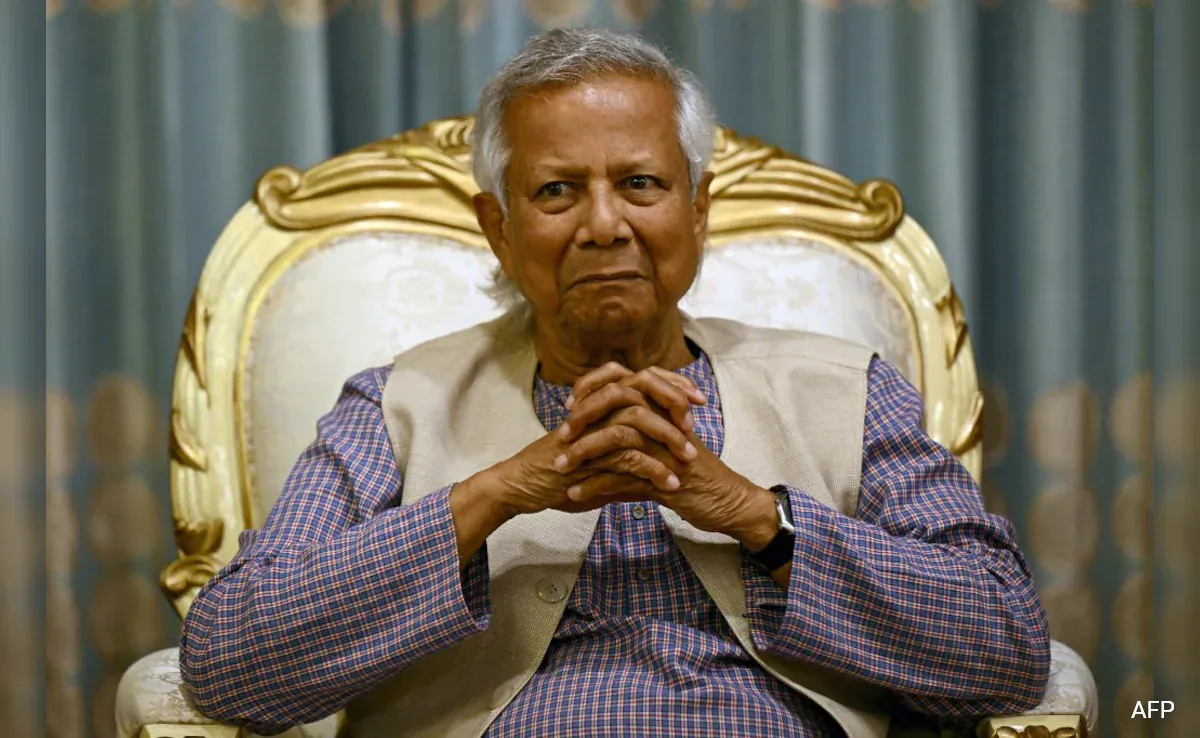
DHAKA — Muhammad Yunus will continue to serve as the head of Bangladesh’s interim government, quelling widespread speculation following reports that he was considering resignation. Planning Adviser Wahiduddin Mahmud confirmed the decision following an unscheduled meeting of the advisory council held Saturday in Dhaka.
“He didn’t say he would leave,” Mahmud stated. “He said that while there are many obstacles in carrying out our responsibilities, we are overcoming them. He is definitely staying.”
This assurance came just two days after Yunus told student leaders from the National Citizen Party (NCP) that he was mulling resignation, citing political deadlock and his growing frustration with the lack of cooperation from political parties. Yunus had reportedly voiced similar sentiments in a closed-door Cabinet meeting on Thursday, during which his advisers convinced him to remain in office.
Nineteen Cabinet-level advisers attended the urgent council meeting, which followed a scheduled session of the Executive Committee of the National Economic Council (ECNEC) at the Sher-e-Bangla Nagar. Discussions were reportedly centered on Yunus’s reform agenda, the upcoming elections, and the July Proclamation — a declaration that marked the beginning of last year’s student-led uprising that ousted Prime Minister Sheikh Hasina’s Awami League government.
NCP convenor Nahid Islam met with Yunus after the meeting and urged him to stay strong “for the sake of the country’s security and the expectations of the mass uprising.”
Analysts believe Yunus’s remarks about resignation were a strategic test of both political and public support. His government is under increasing pressure to announce a firm timeline for the next general election and to push forward with long-promised political reforms. Meetings with opposition leaders from the Bangladesh Nationalist Party (BNP) and Jamaat-e-Islami were scheduled for later in the evening.
The BNP, now a dominant force in the post-Hasina political landscape, has demanded early elections and expressed hope that Yunus would see through the transition process before stepping down. Jamaat-e-Islami echoed those sentiments, insisting that a specific roadmap for structural reforms and fair elections must be publicly released.
Meanwhile, internal tensions between the interim civilian administration and the military have surfaced. Military leaders reportedly pressed Yunus to hold elections by December 2025 and voiced opposition to a proposed aid corridor through Bangladesh to Myanmar’s Rakhine state. General Waker-Uz-Zaman, chief of army staff, later held a senior officers’ meeting to address gaps in communication and to reassert the military’s role in national security decision-making.
Military presence on the streets has intensified, with troops granted magistracy power and instructed to take stronger measures against lawlessness. The military’s visible posture signals a heightened concern about public unrest and political fragmentation.
The interim government, backed by the military and student-led SAD factions that evolved into the NCP, has moved aggressively against the former ruling Awami League. Key party leaders, including ex-ministers, have been imprisoned on charges ranging from corruption to crimes against humanity.
With the political temperature rising, calls for transparency and accountability have grown louder. The BNP recently led a massive protest demanding immediate elections, while the NCP countered with demands to expel advisers allegedly sympathetic to the BNP.
As rival factions, pressure groups, and trade unions flood the capital’s streets with competing demands, Bangladesh finds itself at a pivotal moment. Yunus’s decision to stay — for now — may bring temporary calm, but the country’s future hinges on a credible election roadmap and a functioning political consensus that remains elusive.