

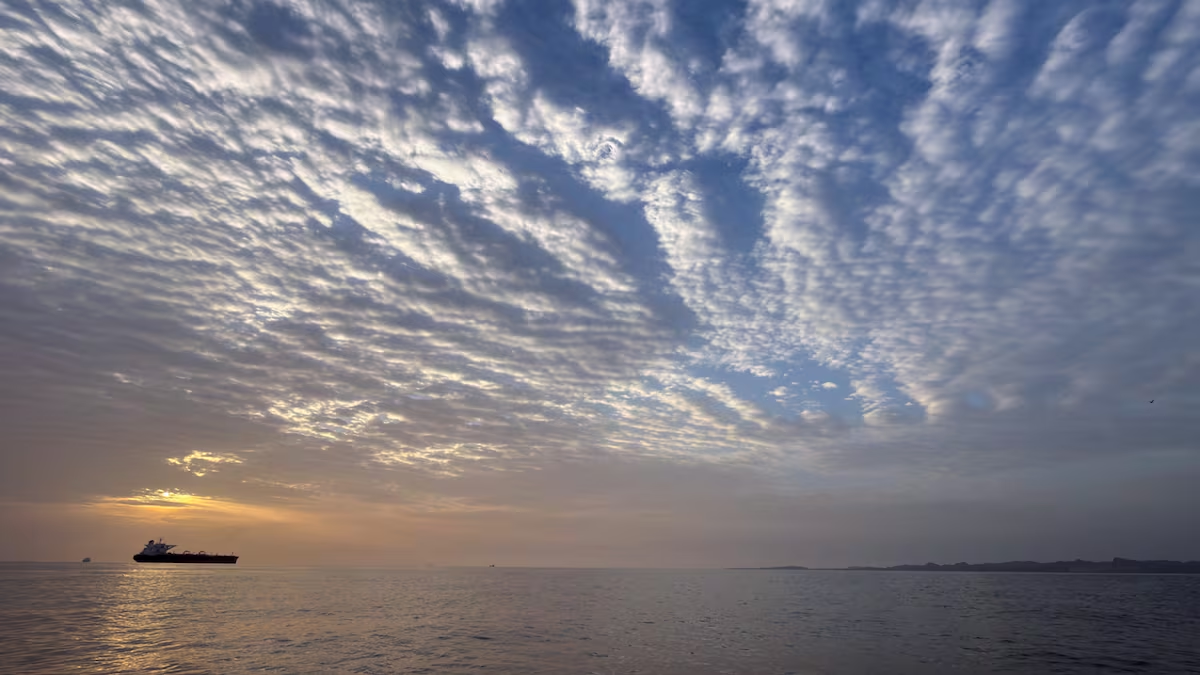
Tensions in the Middle East intensified sharply after Iran announced it had once again closed the strategically vital Strait of Hormuz, reversing its brief reopening and firing on vessels attempting to pass through the waterway.
The move comes in direct response to a continued blockade imposed by the United States, with Iranian military officials warning that any ship approaching the strait would be treated as cooperating with an enemy and could be targeted.
The escalation marks a dangerous turning point in a conflict that has already entered its eighth week, raising fears of a wider confrontation and deepening concerns over global energy stability. Roughly one-fifth of the world’s oil supply normally passes through the narrow shipping corridor, making any disruption immediately significant for international markets.
Reports indicate that Iranian Revolutionary Guard forces opened fire on at least one tanker, while another vessel was struck by a projectile, damaging cargo. The incidents have triggered diplomatic concern, including protests from India after two of its flagged ships were reportedly targeted.
The renewed closure comes just a day after Iran had briefly reopened the strait following signs of de-escalation linked to a ceasefire between Israel and Hezbollah in Lebanon. That reopening had prompted a drop in global oil prices, offering short-lived relief to markets already strained by weeks of instability.
However, remarks from Donald Trump confirming that the U.S. blockade would remain in place appear to have triggered Iran’s reversal. Iranian officials have condemned the blockade as a violation of ceasefire conditions and warned it risks undermining ongoing diplomatic efforts.
At the centre of the crisis is a broader geopolitical struggle involving Iran’s nuclear program, regional security concerns, and competing strategic interests. Iran’s leadership has taken an increasingly defiant stance, signalling readiness to maintain control over the strait until the conflict fully ends.
Meanwhile, diplomatic efforts continue behind the scenes, with Pakistan attempting to mediate renewed talks between Washington and Tehran. New proposals are reportedly under review, though Iranian officials have expressed skepticism about the U.S. position, suggesting negotiations remain fragile.
The implications of the standoff extend far beyond the region. Energy analysts warn that continued disruption in the Strait of Hormuz could trigger sustained increases in fuel prices worldwide, adding pressure to already volatile economies and affecting consumers globally.
As both sides harden their positions, the situation remains highly unpredictable. The coming days — particularly with a fragile ceasefire deadline approaching — are expected to be critical in determining whether tensions ease through diplomacy or escalate further into broader conflict.