

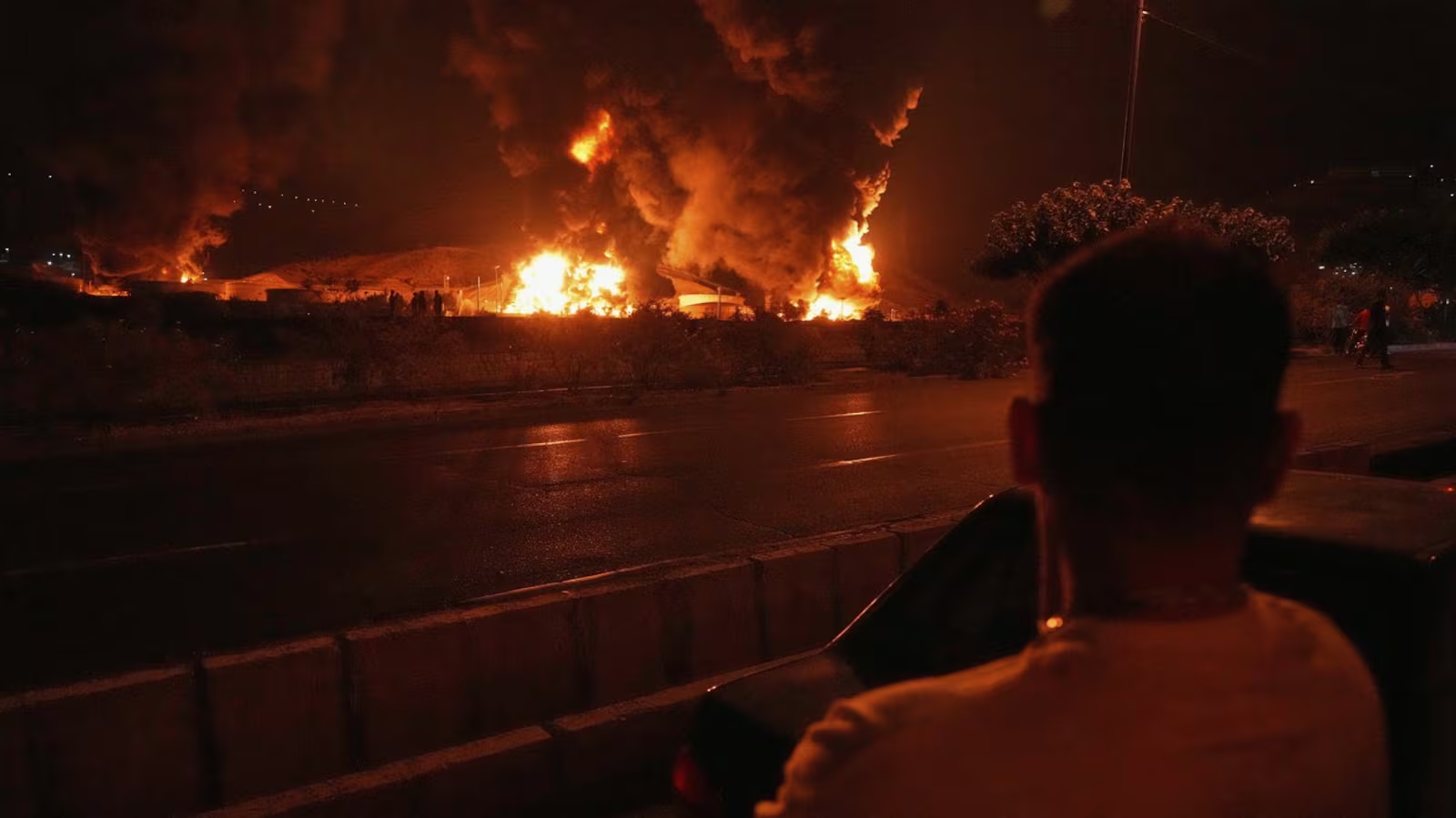
Explosions lit up the skies over Iran for a third consecutive day as Israel launched a new wave of airstrikes across the country, hitting defense, nuclear, and energy infrastructure. Iran responded with its own barrage, some of which broke through Israel’s air defenses and struck civilian neighborhoods, killing and wounding dozens.
The ongoing exchange has now claimed over 90 lives in both countries and wounded hundreds more, with officials on both sides vowing continued retaliation. Meanwhile, planned nuclear negotiations between the United States and Iran, once seen as a potential path to de-escalation, were abruptly canceled.
The conflict escalated dramatically after Israel’s initial strike on Friday, which targeted Iranian nuclear facilities and military bases, killing key generals and nuclear scientists. Since then, Tehran has reported Israeli hits on two oil refineries, threatening an already fragile global energy market.
Iran’s Foreign Minister Abbas Araghchi condemned the attacks, calling them an act of aggression with the backing of the United States. He warned that Iran’s retaliatory strikes would continue until Israel ceased its operations. On Sunday, more explosions were reported across Tehran, as Israel signaled intentions to expand the campaign by warning civilians to vacate areas near weapons factories.
On the Israeli side, at least 13 people have been killed since the strikes began, including children, with dozens more wounded. In Bat Yam near Tel Aviv, a missile hit an apartment complex, killing six, while others were injured or remain missing. Additional fatalities occurred in Tamra and Rehovot, where a research institution also reported structural damage.
Emergency services are overwhelmed, and cities across both nations are preparing for further attacks. Iran has begun opening metro stations and mosques as public bomb shelters. Israel has kept its airspace and airports closed for a third straight day.
The U.N.’s nuclear watchdog confirmed that Israel struck key sites at Iran’s Natanz and Isfahan nuclear facilities, severely damaging critical buildings. Though radiation levels remain normal, experts warn the damage could take “many months or more” to repair, delaying Iran’s nuclear activities but also increasing risk in the region.
Oman, a key mediator in U.S.–Iran nuclear talks, canceled a planned sixth round of negotiations, with Iran calling such talks “unjustifiable” in the wake of the attacks. President Donald Trump reiterated U.S. support for Israel and issued a stern warning to Iran not to retaliate against American interests.
While Iran maintains its nuclear program is peaceful, concerns continue to mount. The UN recently censured Tehran for accelerating uranium enrichment, and analysts suggest Iran could develop nuclear weapons within months if it decided to do so.
As world leaders urge restraint, both nations appear to be digging in for a prolonged confrontation with the potential to ignite further instability across the Middle East.