

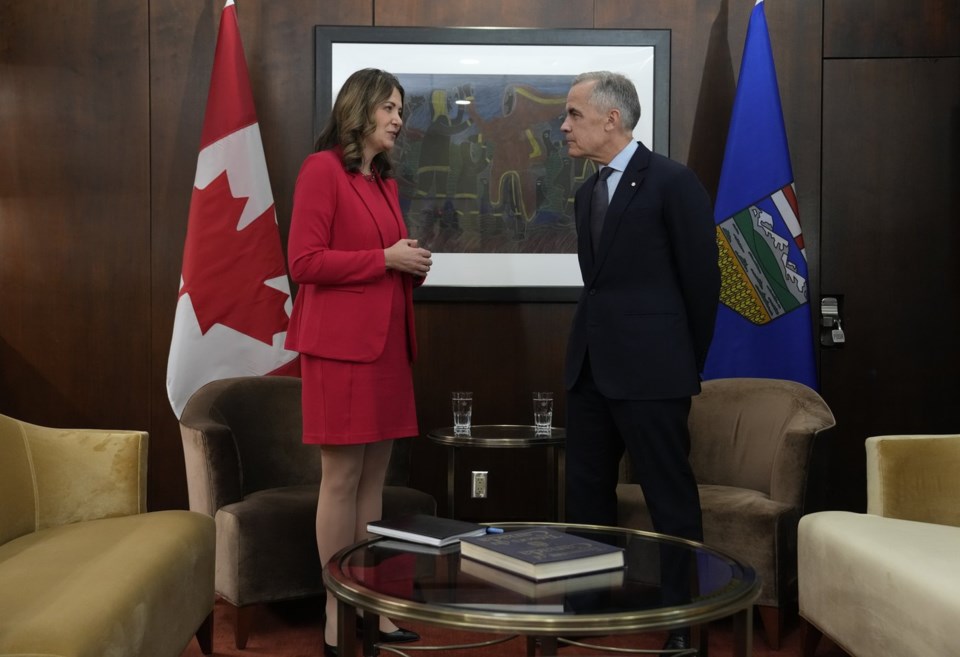
Mark Carney and Danielle Smith are expected to announce a major agreement in Calgary today focused on industrial carbon pricing and future energy infrastructure projects, including a proposed new pipeline to Canada’s West Coast.
According to sources familiar with the discussions, the agreement would see Alberta gradually increase its industrial carbon emissions price to:
- $100 per tonne by 2027
- $130 per tonne by 2035–2040
Alberta had previously frozen its industrial carbon price at $95 per tonne last year.
Pipeline and Energy Expansion Linked to Deal
The agreement is tied to a memorandum of understanding signed between Ottawa and Alberta in November aimed at advancing:
- A new bitumen export pipeline to the West Coast
- Energy infrastructure development
- Greater co-operation between Alberta and the federal government
Carney has reportedly described the agreement as a key step toward improving national energy security and strengthening Canada’s economic competitiveness.
What the Carbon Pricing Structure Means
The proposed plan involves two different pricing systems:
- Headline carbon price: the amount companies pay directly to Alberta
- Effective carbon price: the market price for emissions credits traded between companies
Under Alberta’s system:
- Companies can earn and trade emissions credits
- Funds collected are reinvested into emissions-reduction technology and industrial innovation
The arrangement could also pressure Ottawa to offer greater flexibility to other provinces using the federal carbon pricing framework after previous court rulings requiring equal treatment across jurisdictions.
Industry Reaction Mixed
Some energy executives argue Canada’s current carbon policies hurt competitiveness compared to oil-producing nations without carbon pricing systems.
Others support stronger pricing mechanisms.
Nancy Southern, CEO of ATCO, recently said Canadian companies can adapt and remain competitive under higher carbon pricing.
Critics Warn Climate Goals Are Being Weakened
Former federal environment minister Catherine McKenna criticized the expected agreement, arguing it weakens Canada’s broader climate strategy and reduces pressure on major oil and gas producers to lower emissions.
McKenna said the oil and gas sector remains one of the few major industries that has not significantly reduced emissions levels.
Political Context: Alberta Separation Tensions
The announcement also comes amid heightened political tensions in Alberta following a court decision this week that overturned a separatist referendum petition.
Smith and Carney have both suggested stronger federal-provincial co-operation on energy projects could help ease separatist frustrations within Alberta.
Earlier this week, a judge ruled the separatist petition process failed to adequately consult First Nations and should never have been approved. Alberta’s government has said it plans to appeal the ruling.
The Calgary announcement is expected to be closely watched by:
- Energy companies
- Environmental groups
- Provincial governments
- Indigenous leaders
- Investors monitoring Canada’s long-term energy strategy