

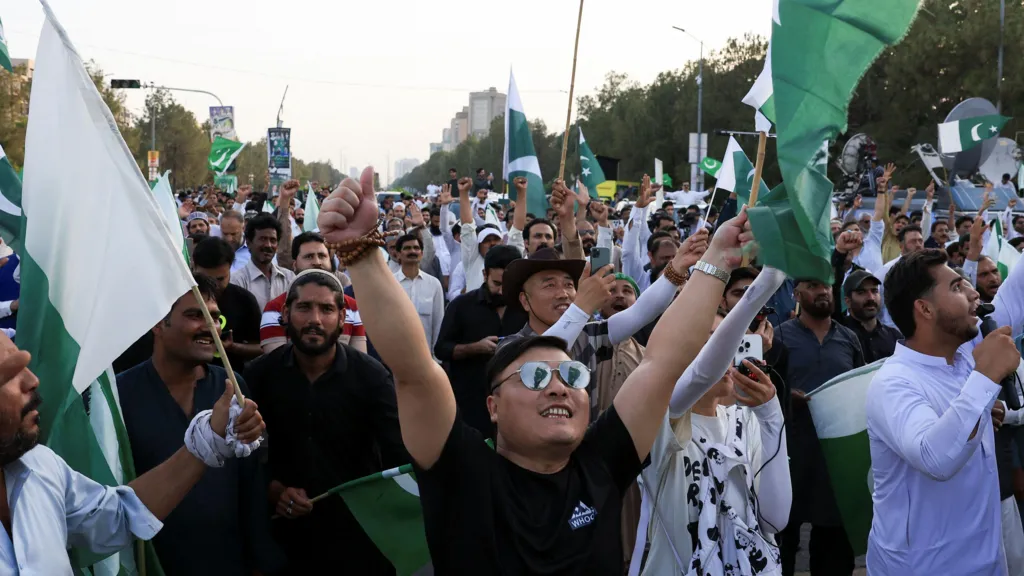
After four tense days of cross-border attacks, aerial combat, and accusations of missile strikes, India and Pakistan agreed to a “full and immediate ceasefire” on Saturday, as announced by U.S. President Donald Trump via social media.
While the truce brought momentary relief, its fragility was evident within hours, with both sides trading fresh accusations of violations. India alleged “repeated breaches” by Pakistan, which in turn reaffirmed its commitment to restraint.
U.S. Diplomacy and Global Backchannels
Behind the scenes, U.S. Secretary of State Marco Rubio’s call to Pakistan’s Army Chief Asim Munir on May 9 is believed to have been pivotal in breaking the escalation cycle.
“Rubio’s intervention may have been the crucial turning point,” said Tanvi Madan of the Brookings Institution, noting that the U.S., UK, and Saudi Arabia had worked in parallel to de-escalate tensions.
Pakistan’s Foreign Minister Ishaq Dar confirmed that up to “three dozen countries,” including Turkey and Saudi Arabia, were diplomatically engaged.
Despite a slow start—marked by Vice President JD Vance’s remark that the conflict was “none of our business”—the U.S. ultimately assumed a decisive crisis management role. Rubio’s intervention, along with Trump’s relationships with leaders on both sides, lent Washington the leverage to mediate effectively.
The Path to Crisis
The conflict began after a terror attack on April 22 killed 26 tourists in Indian-administered Kashmir. India responded with airstrikes inside Pakistan, prompting retaliatory clashes and fears of a wider war.
By Saturday, Pakistan claimed it had shot down Indian jets and drones, while India struck what it described as terrorist infrastructure deep inside Pakistani territory.
This rapid military escalation led both sides to mobilize national security councils, with Pakistan even convening its National Command Authority, which controls its nuclear arsenal.
Behind the Ceasefire
Sources say three parallel diplomatic tracks helped secure the ceasefire:
- U.S. and UK diplomatic pressure
- Saudi mediation, including visits to both capitals
- Direct talks between the Indian and Pakistani National Security Advisors
Analysts such as Ashley J. Tellis of Carnegie said the outcome “would not have occurred without Secretary Rubio’s efforts.”
However, some reports suggest the ceasefire may have been brokered more directly by senior Indian and Pakistani military officials rather than external powers—adding ambiguity to who deserves credit.
Fragile Peace
Experts caution that the ceasefire could be short-lived.
“This truce came together fast and under extreme pressure,” said Michael Kugelman of the Wilson Center. “It lacks solid guarantees and could unravel quickly if either side perceives provocation.”
Still, Saturday’s scenes of celebration in Islamabad and Srinagar reflected a collective sigh of relief—however temporary.
As regional tensions simmer, one thing remains clear: diplomacy, however delayed, may have averted disaster.