

Canadians are paying significantly more for insurance than they were just a few years ago, and a new Statistics Canada analysis suggests that increasingly severe weather events are a major reason why.
The report reveals that insurance premiums for homes, mortgages, and vehicles have risen sharply over the past six years as insurers face mounting claims from floods, wildfires, hailstorms, severe storms, and other climate-related disasters. Rising repair costs, higher vehicle prices, and growing auto theft losses have also contributed to escalating premiums.
Between December 2019 and December 2025, home and mortgage insurance premiums increased by 45 per cent nationwide, more than double the overall inflation rate of 21 per cent during the same period. Vehicle insurance premiums also rose substantially, climbing nearly 24 per cent.
The province hardest hit by rising homeowners’ insurance costs was Alberta. Over the past twenty years, homeowners’ insurance premiums in Alberta surged by an astonishing 391.6 per cent, the largest increase recorded anywhere in Canada.
Even during the more recent five-year period, Alberta continued to lead the country with a 55.8 per cent increase in homeowners’ insurance premiums. Other provinces experiencing above-average increases included Manitoba at 46.7 per cent, Nova Scotia at 43.1 per cent, and Saskatchewan at 40.9 per cent. The national average increase during that same period was 38.6 per cent.
According to the report, Alberta’s dramatic rise reflects its heightened exposure to costly natural disasters, particularly hailstorms, wildfires, and severe convective storms. The Calgary region has been especially vulnerable to major weather-related losses.
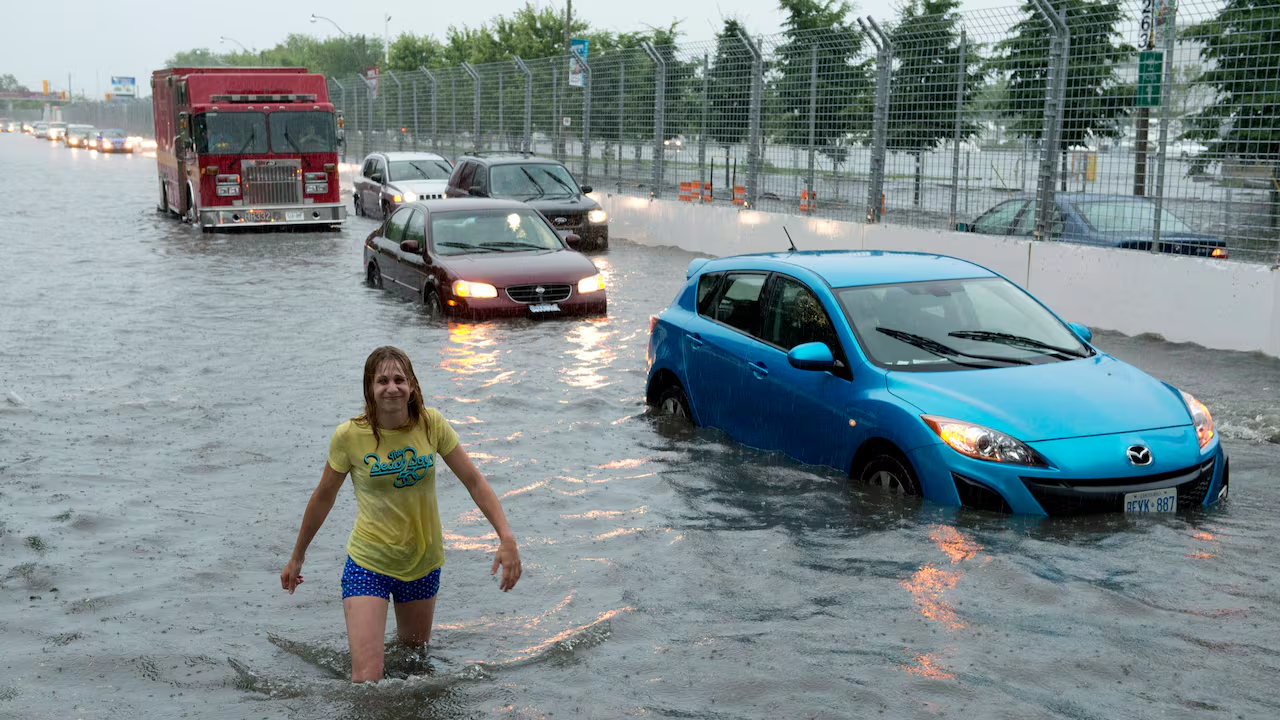
Flooding remains the single largest source of insured losses across Canada. During the past decade, insurance companies paid approximately $9 billion in flood-related claims, with nearly half of that total occurring in 2024 alone. Aging water and sewer infrastructure in many communities has further increased risks and contributed to higher municipal costs and property taxes.
The financial impact extends beyond insured losses. Statistics Canada estimates that for every dollar paid by insurers following extreme weather events, Canadians incur between two and four dollars in uninsured costs. These include damage to public infrastructure, emergency response expenses, and increased municipal costs ultimately borne by taxpayers.
The federal government’s disaster assistance programs are also under increasing pressure. Provinces and municipalities have relied heavily on federal support to rebuild roads, bridges, public buildings, and other infrastructure damaged by floods, fires, and severe storms.
The report highlights 2024 as the most expensive year on record for catastrophic insurance claims in Canada. Total catastrophic losses reached an unprecedented $8.6 billion, surpassing the previous record of $6.2 billion set in 2016.
Several major disasters contributed to the record-setting year, including a devastating Calgary hailstorm that generated approximately $3 billion in claims, the Jasper Wildfire that resulted in about $1.1 billion in losses, severe flooding in Quebec that produced $2.7 billion in claims, and major flooding in Ontario that caused nearly $1 billion in damages.
Statistics Canada noted that every year from 2020 through 2025 ranks among the ten costliest years ever recorded for weather-related insurance losses since national tracking began in 1983.
The findings underscore a growing reality facing Canadians: as extreme weather events become more frequent and severe, the financial costs are increasingly being reflected in insurance premiums, property taxes, and disaster recovery expenses across the country. For homeowners, businesses, and governments alike, adapting to climate-related risks is becoming both an environmental and economic necessity.