

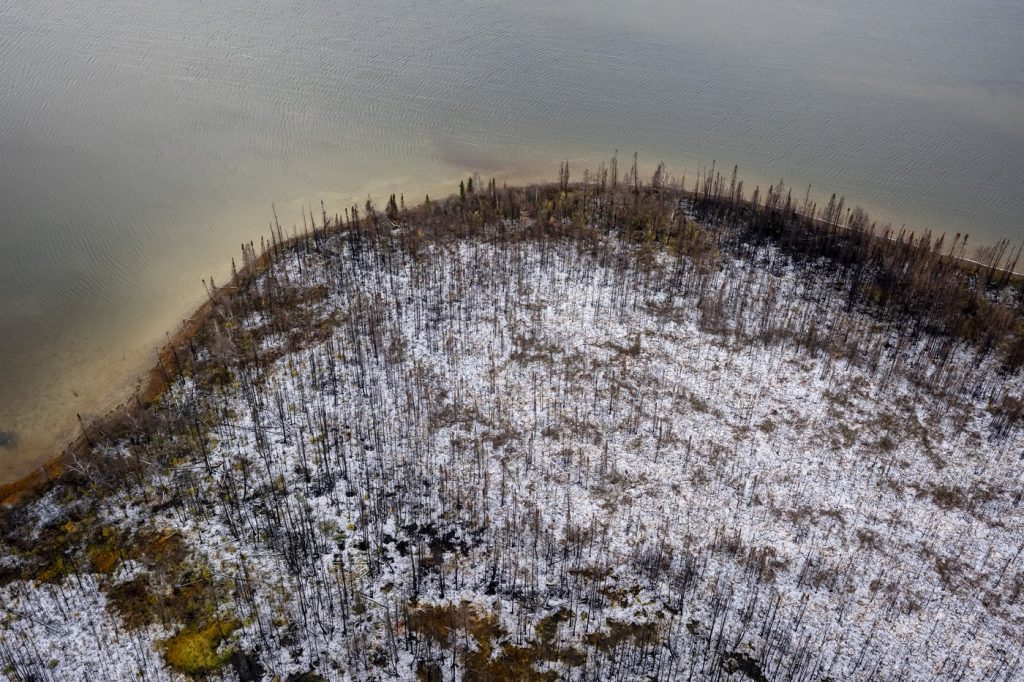
TORONTO, July 2, 2026 — Wildfire experts are dismissing claims circulating on social media that Quebec experiences fewer forest fires because it banned the use of glyphosate-based herbicides in public forests more than two decades ago. Researchers say there is no scientific evidence supporting a direct connection between the province’s 2001 glyphosate ban and wildfire activity, emphasizing that forest fires are driven by a complex combination of climate, weather and environmental conditions.
The online claim gained widespread attention after a social media post shared a satellite wildfire map suggesting Quebec had significantly fewer fires than other parts of Canada. The post argued that the province’s decision to prohibit glyphosate use for forest management was responsible for the apparent difference and implied that the herbicide contributes to more severe wildfire seasons elsewhere in Canada.
Scientists with the Canadian Forest Service say the conclusion is misleading. According to forest research scientist Nelson Thiffault, wildfire occurrence and intensity are influenced primarily by factors such as drought, temperature, wind conditions, rainfall, ignition sources and the natural characteristics of the landscape. He stated that he is unaware of any scientific evidence showing that Quebec’s glyphosate policy has resulted in fewer wildfires or that glyphosate itself is a primary cause of increased fire activity.
Glyphosate remains one of Canada’s most commonly used herbicides and is widely applied in agriculture and, in several provinces, for forest management to control vegetation that competes with commercially valuable conifer trees. Provinces such as Ontario, British Columbia and New Brunswick continue to use glyphosate-based products under regulated conditions. Health Canada maintains that approved glyphosate products do not pose unacceptable risks to Canadians when used according to label directions.
Fire ecologist Robert Gray noted that herbicides can temporarily increase the amount of dead vegetation in treated areas, potentially making some landscapes more combustible in the short term. However, experts caution that wildfire behaviour cannot be attributed to a single management practice. Thiffault explained that forests dominated by conifer species generally burn more readily than deciduous forests because deciduous trees typically retain higher moisture levels. Even so, he emphasized that overall forest management strategies—not glyphosate alone—determine how forests develop and respond to wildfire.
Canadian Forest Service research scientist Jonathan Boucher added that there is currently insufficient evidence to establish a direct relationship between glyphosate use and wildfire frequency or severity. He also pointed out that provinces employ a variety of vegetation management techniques, making it impossible to isolate glyphosate as the determining factor. Boucher further noted that wildfire maps shared on social media often represent only a single moment in time and do not accurately reflect long-term wildfire trends across Canada, where conditions vary significantly from one region and one year to another.
Researchers also highlighted Quebec’s record-setting 2023 wildfire season as evidence that contradicts the claims circulating online. During that year, more than four million hectares of forest burned in Quebec, making it one of the most destructive wildfire seasons in Canadian history despite the province’s longstanding ban on glyphosate. Historical wildfire records dating back to the 1970s also show that Quebec has frequently ranked among the provinces with the largest annual area burned, while the Northwest Territories experienced similarly devastating fires despite not using glyphosate in forest management.
Experts encourage Canadians to rely on credible scientific research and official wildfire data rather than conclusions drawn from isolated images or social media posts. They stress that climate conditions, prolonged drought, extreme temperatures and changing weather patterns remain the most significant factors influencing Canada’s increasingly severe wildfire seasons.
Source: Adapted from The Canadian Press.