

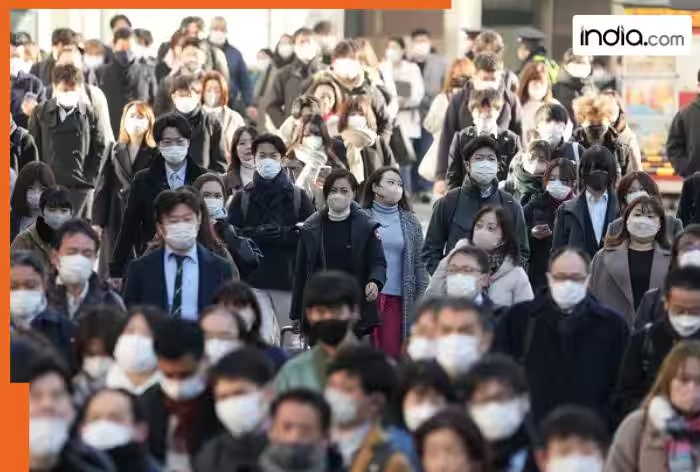
Japan is confronting a sudden and unusually early outbreak of seasonal influenza, triggering nationwide concern as more than 4,000 people have been hospitalized and over 130 schools temporarily shut down. The surge, which began in late September, has already surpassed the government’s epidemic threshold — a troubling signal this early in the season.
The Ministry of Health, Labour and Welfare officially declared an epidemic on October 3, after 4,030 influenza patients were reported at designated medical institutions across the country during the week starting September 22. This marks only the second time in 20 years that a seasonal influenza wave has struck so early, according to Japan Today.
The outbreak is hitting hardest in Okinawa Prefecture, which has reported the highest number of flu patients per hospital. Major urban centres like Tokyo and Kagoshima are also seeing sharp increases. Across roughly 3,000 hospitals nationwide, the average now stands at 1.04 patients per medical institution, exceeding the official epidemic line.
Schools Shut as Virus Spreads Among Children
Children have emerged as the most vulnerable group in this outbreak. Between September 22 and 28, 135 schools, kindergartens, and childcare centres were forced to close due to concentrated clusters of infections — three times more closures than the same period last year. Officials have urged schools and parents to follow preventive measures to curb transmission, including mask-wearing, regular handwashing, and early vaccination.
Why the Sudden Surge?
Health experts believe a combination of factors is fuelling this early wave. After years of pandemic-related restrictions, the return of mass international tourism has increased the movement of people — and viruses — across borders. Additionally, fluctuations in seasonal temperatures, with warm spells followed by sudden cooling, may have created conditions that allowed the virus to spread earlier than usual.
“The flu season has started really early this year, but in the changing global environment this might become a more common scenario,” said Professor Yoko Tsukamoto of the Health Sciences University of Hokkaido, speaking to the South China Morning Post. “We are seeing a greater circulation of people, both in Japan and globally, with people taking the virus to new places, which is another factor behind the virus adapting to new environments.”
Public Urged to Take Precautions
Typically, Japan’s flu season begins in December, peaks before the New Year, and subsides by April. But this year, experts warn the peak could arrive weeks earlier, increasing the risk of hospital strain if cases continue to rise.
Authorities are advising young children, seniors, and individuals with underlying health conditions to get vaccinated as soon as possible. While the specific flu strain has not yet been publicly identified, health officials stress that early vaccination and basic hygiene practices remain the most effective tools to prevent further spread.
As the world continues to recover from COVID-19, the sudden resurgence of influenza in Japan is a stark reminder that infectious disease threats have not disappeared—and vigilance remains crucial.