

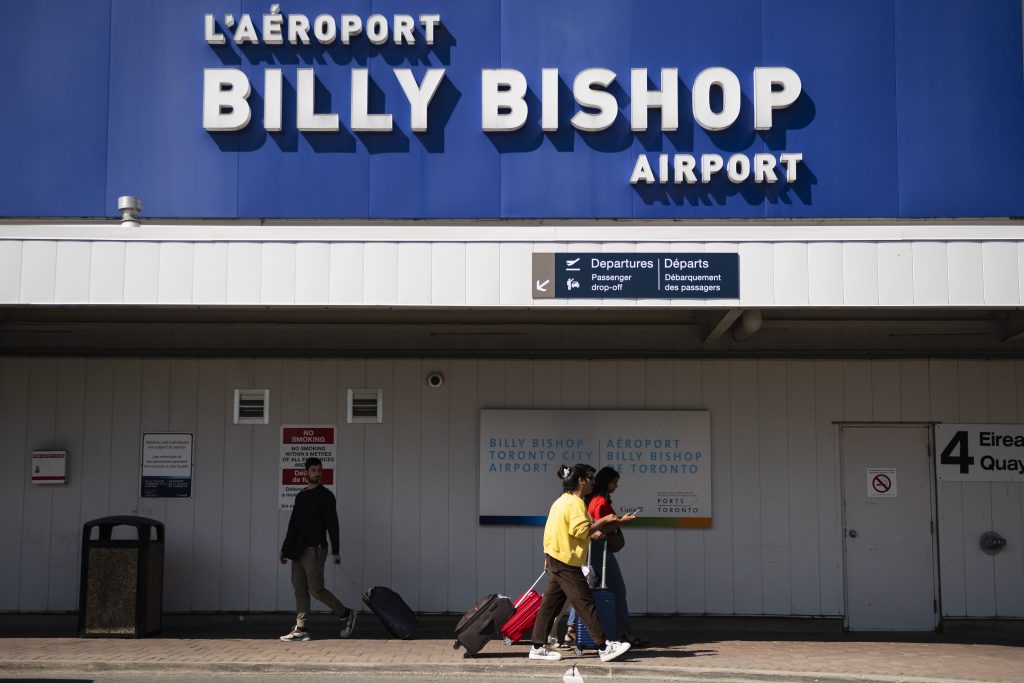
The Ontario government has officially moved to take control of the land surrounding Toronto’s island airport, triggering fierce political backlash and setting the stage for one of the most controversial waterfront redevelopment battles in recent memory.
Premier Doug Ford’s government passed legislation Thursday allowing the province to assume authority over lands tied to Billy Bishop Toronto City Airport as part of an ambitious plan to dramatically expand the downtown airport and transform it into a major economic hub.
The province now intends to designate the airport area as a “special economic zone,” a powerful legal mechanism that gives Queen’s Park the authority to fast-track development projects while bypassing or suspending certain provincial and municipal laws, including environmental assessments and local planning restrictions.
Transportation Minister Prabmeet Sarkaria described the airport expansion as a critical nation-building project that is too important to delay.
“We’re going to work with the Toronto Port Authority to ensure that we move forward with that and deploy the special economic zones and other tools that are needed to ensure that this project is moved forward,” Sarkaria said following passage of the legislation.
The province insists it will not take over the entirety of the Toronto Islands despite broad wording contained within the legislation. Officials say the government will work with the City of Toronto to identify only the land necessary to support the airport’s future expansion.
Ford has long argued that Billy Bishop Airport is a “crown jewel” that could become a major economic engine if expanded to accommodate commercial jets. Currently, the airport’s runways are too short to support regular jet operations.
The expansion proposal could dramatically increase passenger traffic from approximately two million travellers annually to as many as 10 million over the coming decades.
PortsToronto CEO RJ Steenstra has backed the plan, saying the estimated $4 to $5 billion expansion would be funded primarily through passengers and airlines over a 25-year period, similar to financing models used at other Canadian airports.
However, the province’s aggressive move has ignited intense criticism from opposition parties, environmental advocates, Indigenous groups, and Toronto city officials, who accuse the Ford government of overriding local democracy and keeping residents in the dark.
Toronto Mayor Olivia Chow condemned the move as a provincial “land grab” carried out without proper consultation with residents or city officials.
“Once again, Torontonians are the victims of provincial overreach, robbed of their say over the future of their own waterfront,” Chow said in a strongly worded statement.
She also criticized the province and PortsToronto for failing to publicly release detailed airport expansion plans.
The controversy surrounding the airport project is being intensified by the province’s controversial special economic zone legislation, passed last year, which grants cabinet sweeping powers to suspend provincial and municipal rules in designated development areas.
The legislation was originally introduced to accelerate approvals for major mining developments in northern Ontario’s Ring of Fire region, but it sparked widespread protests, particularly from First Nations communities who argued the law undermines Indigenous rights, environmental protections, and public consultation processes.
Now critics fear those same extraordinary powers could be applied to Toronto’s waterfront redevelopment.
Marit Stiles accused Ford of pursuing another personal “vanity project” against the wishes of Toronto residents, while interim Liberal leader John Fraser argued the government’s priorities are misplaced during a time of growing affordability pressures and healthcare challenges.
Mike Schreiner expressed serious concerns about the government’s ability to override environmental laws, worker protections, and Indigenous consultation requirements through special economic zone powers.
“The fact that they want to turn Toronto island into a lawless zone where essentially cabinet makes all the rules threatens Indigenous consultation, environmental laws, worker health and safety laws, and basic democracy,” Schreiner warned.
The federal government has so far remained cautious about fully endorsing the project. Transport Minister Steven MacKinnon said Ottawa would work with the province and stakeholders while launching consultations with local communities and residents before any final decisions are made.
Prime Minister Mark Carney has described the airport expansion concept as a “very interesting vision” with “big possibilities,” though the federal government has not yet formally approved the proposal.
The airport expansion forms part of Ford’s much broader vision for Toronto’s waterfront, which also includes the controversial redevelopment of Ontario Place featuring a new science centre, a large spa complex, waterparks, beaches, entertainment venues, and year-round attractions.
However, transportation planners and city officials have already warned that the combined developments could create severe traffic congestion and major infrastructure pressures across Toronto’s downtown waterfront corridor.
As political tensions continue escalating, the future of Toronto’s island airport is rapidly becoming more than just an aviation debate — it is now emerging as a larger battle over provincial power, urban development, environmental oversight, and who ultimately controls the future of Toronto’s waterfront.