

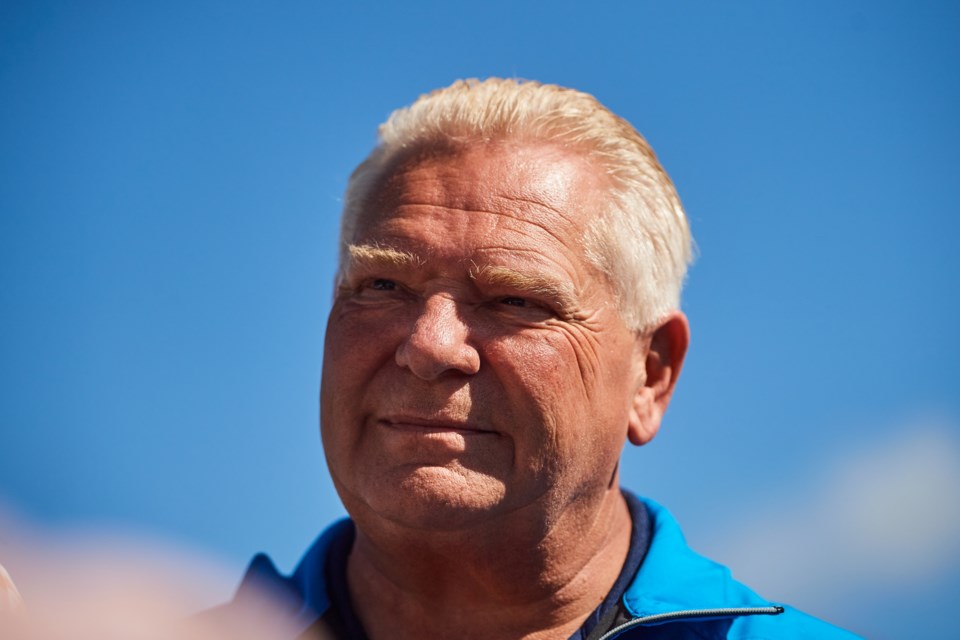
Ontario Premier Doug Ford is pressing Prime Minister Mark Carney to keep Canada’s 100 per cent tariffs on Chinese-made electric vehicles (EVs), warning that removing them could put tens of thousands of auto sector jobs at risk.
In a letter sent to Carney on Wednesday, Ford argued the tariffs have been “key” to protecting Canada’s automotive industry and are crucial at a time when the sector is already under pressure from U.S. tariffs introduced by President Donald Trump.
“Canada’s tariff on Chinese-made EVs is critical to protecting more than 157,000 direct jobs in Ontario and hundreds of thousands of indirect jobs across the country,” Ford wrote. “Removing them risks isolating our automotive sector within North America.”
The tariffs, first imposed by the Trudeau government in October 2024, applied to all electric and certain hybrid passenger cars, trucks, buses, and delivery vans from China. The move mirrored similar action by the United States, aimed at countering what both countries described as unfairly subsidized competition from Chinese producers.
But the Carney government has signalled it is reviewing the tariffs as part of efforts to ease tensions with Beijing, which retaliated by slapping steep duties — including a 100 per cent tariff on Canadian canola oil, meal, and peas. Carney has suggested he wants to reopen dialogue with China and find a way to balance trade relationships.
Ford, however, cautioned that lifting the tariffs could undermine months of work with U.S. officials to safeguard the highly integrated cross-border auto supply chain. “Hundreds of thousands of workers and their families are depending on us to get this right,” he said.
Saskatchewan Premier Scott Moe also weighed in, saying the issue is “not as simple” as dropping tariffs in exchange for relief on canola, though he acknowledged there is room for “dialogue” on how to recalibrate Canada-China trade relations.
Ford did praise Carney for reviewing Ottawa’s zero-emission vehicle sales mandate, which had required all new vehicles sold by 2035 to be zero-emission, with an interim target of 20 per cent by 2026. Ford said loosening those targets gives manufacturers flexibility to meet market demand — and that keeping tariffs in place would complement that decision by giving Canada’s EV and battery sectors time to build a competitive foundation.
Mexico, meanwhile, is considering its own 50 per cent tariff on Chinese EV imports. Carney is expected to raise the issue during a meeting with Mexican President Claudia Sheinbaum this week, as the two leaders discuss trilateral trade priorities with the United States.