

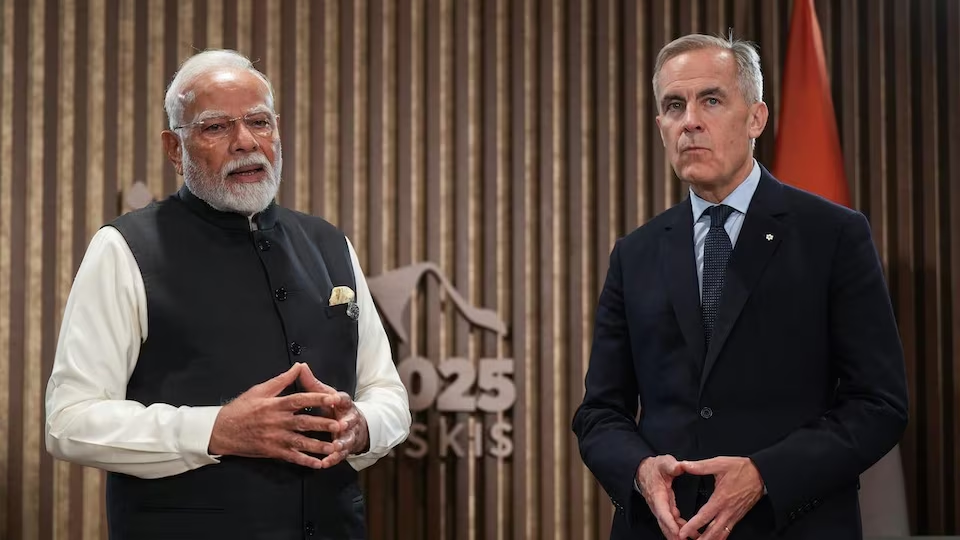
Canada must remain on high alert regarding foreign interference from India, warns a new Canadian Security Intelligence Service (CSIS) report released just a day after Prime Minister Mark Carney and Indian Prime Minister Narendra Modi agreed to reinstate their top diplomats. The warning comes amid a delicate diplomatic reset between the two countries, following months of strained relations over allegations linking India to politically motivated violence in Canada.
The annual CSIS report identifies India as a continuing source of foreign interference alongside other state actors such as Russia, China, and Iran. The agency cautions that Indian interference efforts have extended beyond ethnic and religious communities and now reach into Canada’s political system.
While Canada and India agreed during this week’s G7 summit to restore their high commissioners and resume visa services, the shadow of unresolved tensions remains. The move follows the fallout from the killing of Canadian citizen and Khalistani activist Hardeep Singh Nijjar in British Columbia in 2023. The RCMP has alleged Indian involvement in his assassination—a claim that led to a diplomatic standoff and reciprocal expulsions of diplomats.
In its latest report, CSIS describes Nijjar’s murder as a clear escalation of India’s transnational repression efforts, marking a shift in how the Modi government targets Sikh separatists abroad. Though the agency clarifies that only a small number of individuals in Canada are considered extremists, peaceful Khalistan advocacy continues to fuel India’s interference tactics.
Prime Minister Carney has come under criticism, including from within his own party, for welcoming Modi to the G7 table. While Carney has defended the invitation by highlighting India’s global importance, many Sikh-Canadians feel betrayed by the lack of stronger demands for accountability. “People feel the government is more focused on economic ties than public safety,” said Gurpreet Sahota, editor-in-chief of Channel Punjabi in Surrey.
Carney told reporters he raised issues of transnational repression, security, and organized crime with Modi, but stopped short of directly addressing Nijjar’s killing. “We’ve had a discussion… about law enforcement-to-law enforcement cooperation,” Carney said when pressed at the G7 closing news conference.
Meanwhile, B.C. Premier David Eby has asked Ottawa to designate the India-based Lawrence Bishnoi gang as a terrorist organization. The gang is allegedly linked to extortion threats against South Asian Canadians in cities like Surrey and Brampton. Public Safety Minister Gary Anandasangaree acknowledged Eby’s concern and said such a designation would depend on formal recommendations from national security agencies.
NDP MP Jenny Kwan also urged the federal government to list the Bishnoi gang as a terrorist entity and called on Carney to suspend all security and intelligence-sharing agreements with India until trust is restored.
Despite the renewed diplomatic engagement, CSIS’s report serves as a stark reminder that Canada must strike a careful balance—maintaining dialogue with India while actively defending its sovereignty and democratic institutions from foreign influence.