

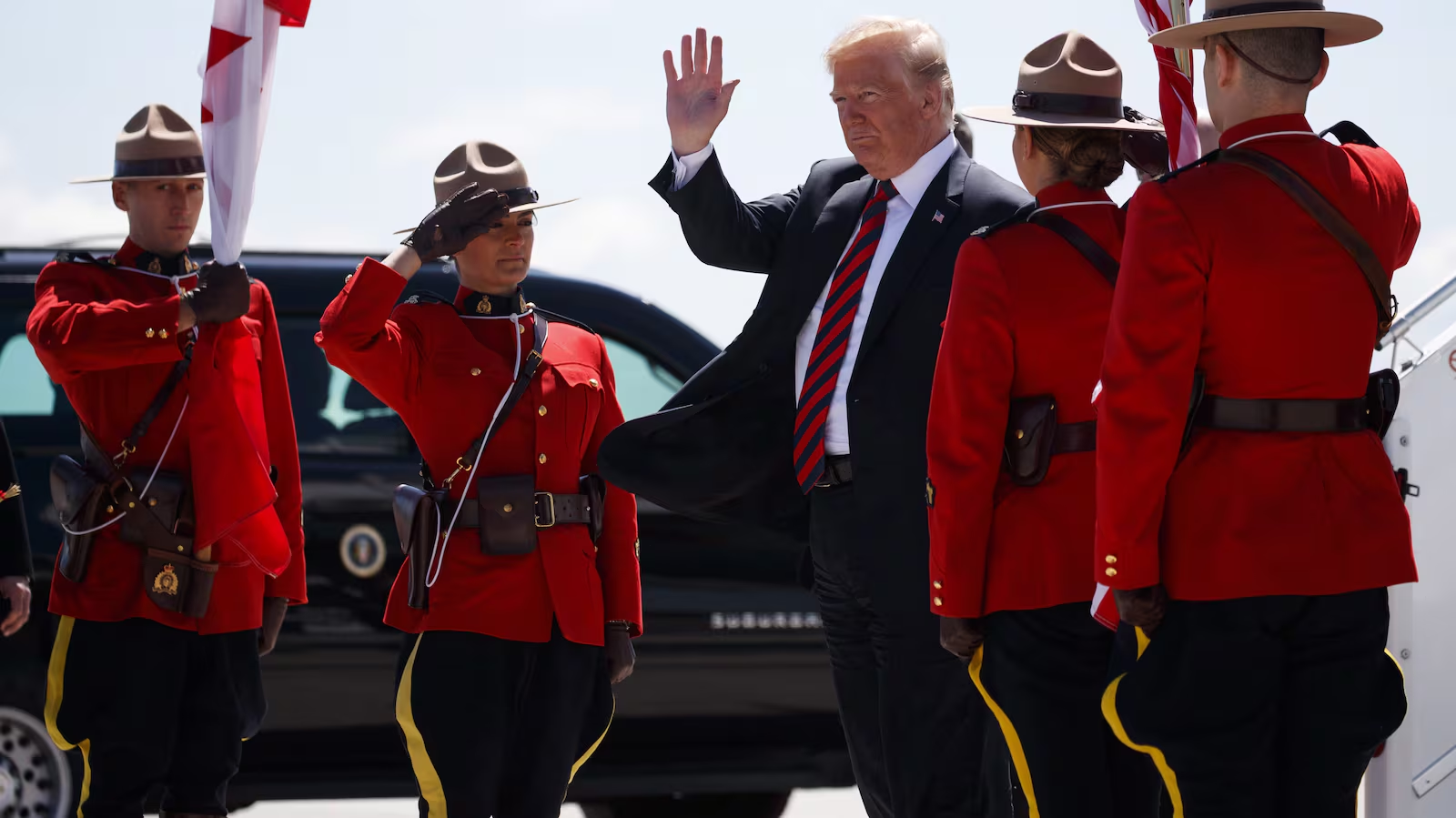
Former U.S. President Donald Trump is preparing to attend next month’s G7 summit in Alberta — but his criminal conviction raises a critical question: Can a felon legally enter Canada?
Normally, the answer is no. Canadian immigration law is clear — foreign nationals with recent felony convictions are inadmissible. Yet Trump’s position and passport may allow him to bypass the rules that bar thousands of average Americans every year.
“It’s very difficult to get into Canada if you have past criminal convictions,” immigration lawyer Len Saunders told CTVNews.ca. “But I’m assuming he has a diplomatic passport, so that trumps his inadmissibility.”
Trump was convicted in May 2024 on 34 criminal counts related to a hush money scheme involving adult film actress Stormy Daniels. Although he avoided jail time through an unconditional discharge, he remains the first-ever convicted felon elected President of the United States.
Despite this, the former president is scheduled to attend the G7 summit in Kananaskis, Alberta, from June 15 to 17.
Len Saunders, a Canadian-born immigration attorney based near the Canada-U.S. border in Blaine, Washington, sees firsthand how criminal records derail travel plans.
“I see a steady stream of Americans turned away at the Canadian border,” Saunders said. “Most are stunned to find that even a DUI from years ago makes them inadmissible.”
Canadian border officers routinely access FBI criminal databases. Similarly, American officials can review RCMP records, resulting in bans for offenses such as drug possession, fraud, or assault.
While waivers exist — including applications for rehabilitation — they are complex, time-consuming, and rarely granted for recent felonies.
“An average American with Trump’s record would have no chance,” Saunders added.
That could change after Trump leaves office. Without diplomatic immunity, he could face real difficulties crossing into Canada again. In a twist of irony, former Canadian Prime Minister Justin Trudeau might face similar hurdles entering the U.S., having admitted to cannabis use.
“It’s not a gray area,” said Saunders. “You’re either admissible or you’re not.”
Even high-profile cases aren’t immune. Saunders pointed to Rob Ford, the late former Toronto mayor, who was reportedly barred from the U.S. in 2014 after admitting to using crack cocaine.
Still, legal experts note that diplomatic considerations often override standard procedure.
“Convictions could theoretically affect the admissibility of a U.S. president,” said B.C.-based immigration lawyer Nathan McQuarrie. “But diplomatic waivers or permits are likely to be issued for official duties.”
Immigration, Refugees and Citizenship Canada declined to comment on Trump’s planned visit, citing privacy laws. The Canada Border Services Agency and Public Safety Canada also did not respond to requests for comment.
In a previous statement, CBSA confirmed that admissibility depends on multiple factors — including criminality, security risks, and human rights violations.
As world leaders prepare to gather in Alberta, Trump’s presence may be legally complicated — but politically inevitable.