

A federal judge in Seattle has issued a temporary restraining order against U.S. President Donald Trump’s executive order aimed at ending birthright citizenship. U.S. District Court Judge John Coughenour described the order as “blatantly unconstitutional” during a 25-minute hearing on Thursday.
Under the 14th Amendment to the Constitution, nearly all individuals born on U.S. soil are granted automatic citizenship. Trump’s order sought to change that for children born to parents in the U.S. illegally or temporarily, marking a significant shift in immigration policy.
The legal challenge was brought by four states — Washington, Arizona, Illinois, and Oregon — which argued that Trump’s unilateral move violated the Constitution. Judge Coughenour agreed, placing the order on hold for 14 days pending further proceedings.
Judge Coughenour did not mince words in his ruling. “It boggles my mind,” he said, criticizing the order’s attempt to bypass the constitutional process. The case could eventually escalate to the U.S. Supreme Court.
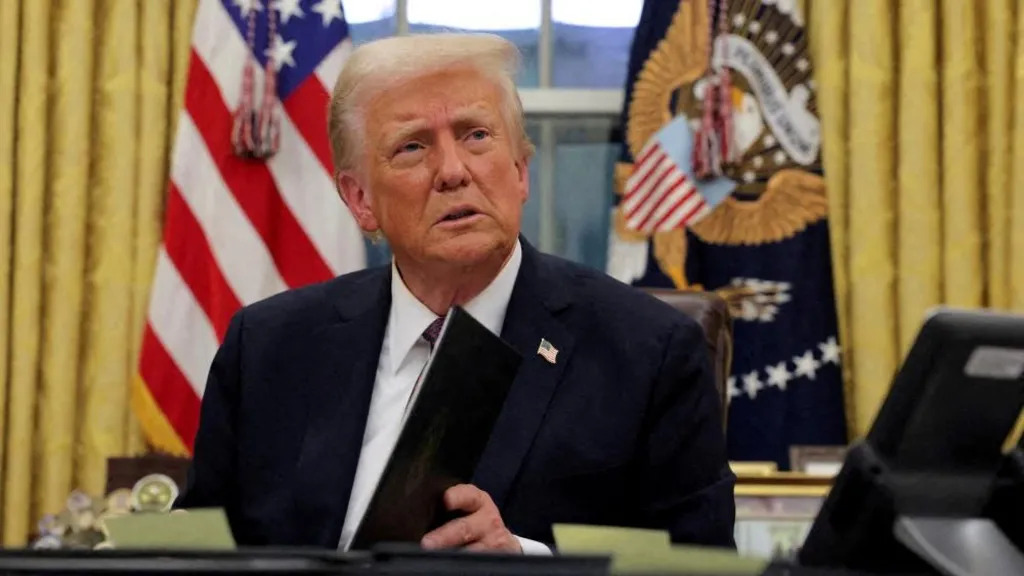
Trump’s executive order, issued earlier this week, called on federal agencies to deny citizenship to children of migrants who are either undocumented or on temporary visas. The order’s enforcement, which was slated to begin on February 19, included withholding key documents like passports from those deemed ineligible.
The states’ lawsuit emphasized the irreparable harm the order could cause, arguing that it would render many individuals stateless and vulnerable to detention or deportation. “The 14th Amendment and U.S. law automatically confer citizenship upon individuals born in the United States,” the lawsuit stated. “The president does not have the power to amend the Constitution.”
William Tong, a U.S. citizen by birthright and representative of Connecticut, called the matter deeply personal. “There is no legitimate legal debate on this question,” he told the Associated Press.
The American Civil Liberties Union (ACLU) has also filed a separate challenge to the order, further escalating the legal battle.
The 14th Amendment, adopted in 1868, grants citizenship to all individuals born or naturalized in the U.S., with limited exceptions such as the children of foreign diplomats. Courts have historically interpreted this clause broadly, ensuring automatic citizenship for nearly all individuals born on U.S. soil.
Trump’s Department of Justice argued that the clause “subject to the jurisdiction thereof” excludes children of non-citizens who are in the U.S. unlawfully. However, experts maintain that altering this interpretation would require a constitutional amendment, a process demanding significant legislative and state approval.
The executive order is part of Trump’s broader agenda to address what he describes as a “broken immigration system.” However, the policy has sparked widespread criticism from legal experts, immigration advocates, and political leaders.
A coalition of 18 Democratic-led states, the District of Columbia, and the city of San Francisco have filed a separate legal challenge. The controversy surrounding the order underscores the contentious nature of immigration reform and the limits of executive power.
As the case progresses, the legal and political implications of Trump’s attempt to end birthright citizenship will likely remain a focal point of national debate, with potential long-term consequences for U.S. immigration policy and constitutional law.