

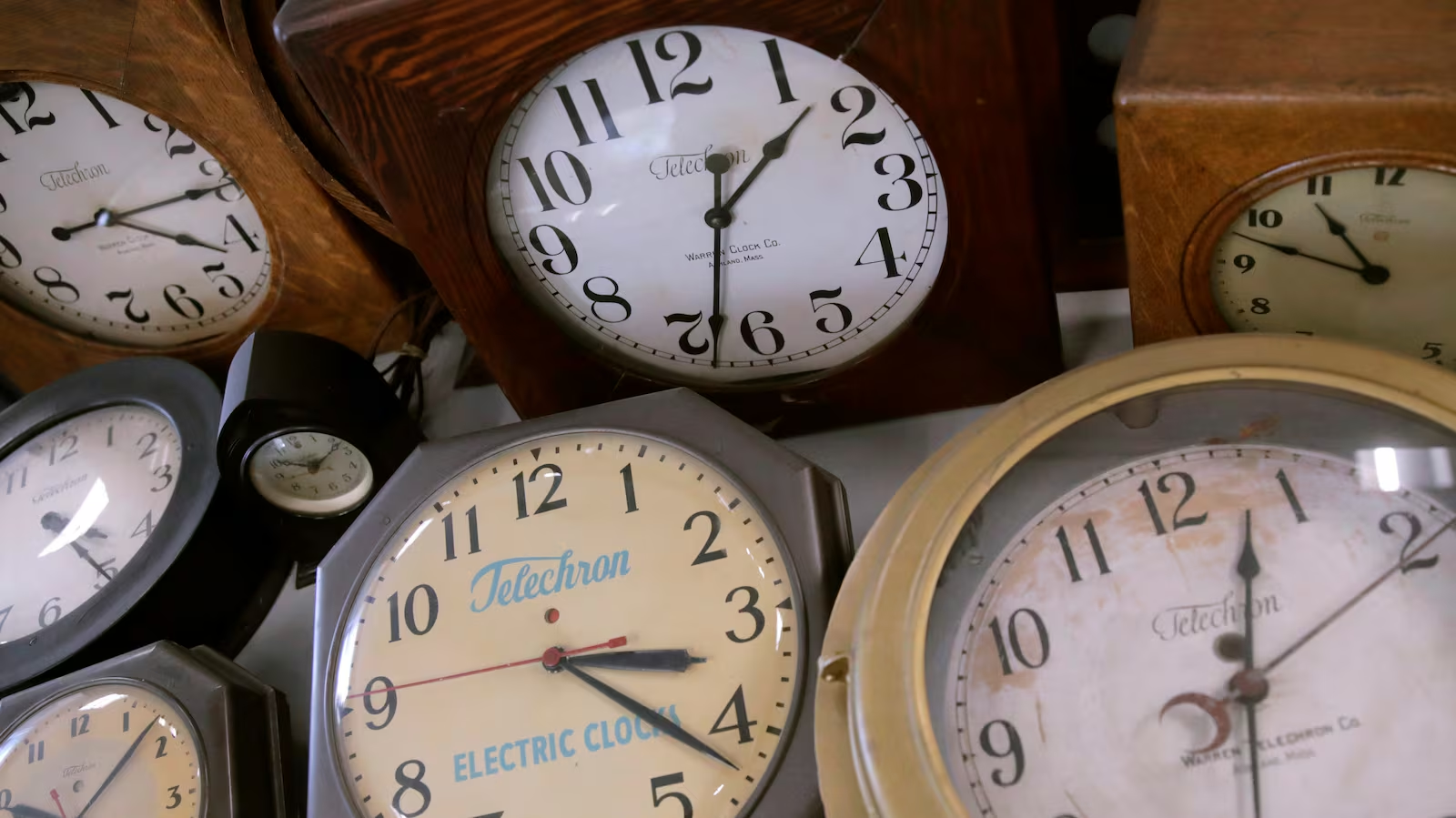
As fall settles in, Canadians will soon turn their clocks back an hour.
This year, daylight saving time ends at 2 a.m. on Sunday, November 2, when clocks “fall back” to standard time. That means an extra hour of sleep that night, though it also ushers in shorter days with earlier sunsets and longer nights through the winter months.
Daylight saving returns in March, when clocks will move forward by an hour, resulting in later sunsets but one less hour of sleep.
Who Observes Daylight Saving Time in Canada
- Most of Canada follows daylight saving time.
- British Columbia exceptions: Chetwynd, Creston, Dawson Creek, Fort Nelson, and Fort St. John stay on standard time year-round.
- Saskatchewan: Most of the province does not observe DST, except for Lloydminster, Creighton, and Denare Beach.
- Yukon: Does not observe DST at all.
Daylight Saving Time Debate
Canada first adopted daylight saving time in 1908, but its usefulness is still debated. Researchers and politicians point to health concerns, ranging from disrupted sleep patterns to long-term effects on heart health.
U.S. Developments
Since 2007, Canada and the United States have aligned their daylight saving time schedules. However, the U.S. is considering changes.
Former President Donald Trump called the practice “inconvenient” and “very costly” in late 2024. In January 2025, the Sunshine Protection Act was introduced in Congress, proposing to make daylight saving time permanent and end clock changes altogether.