

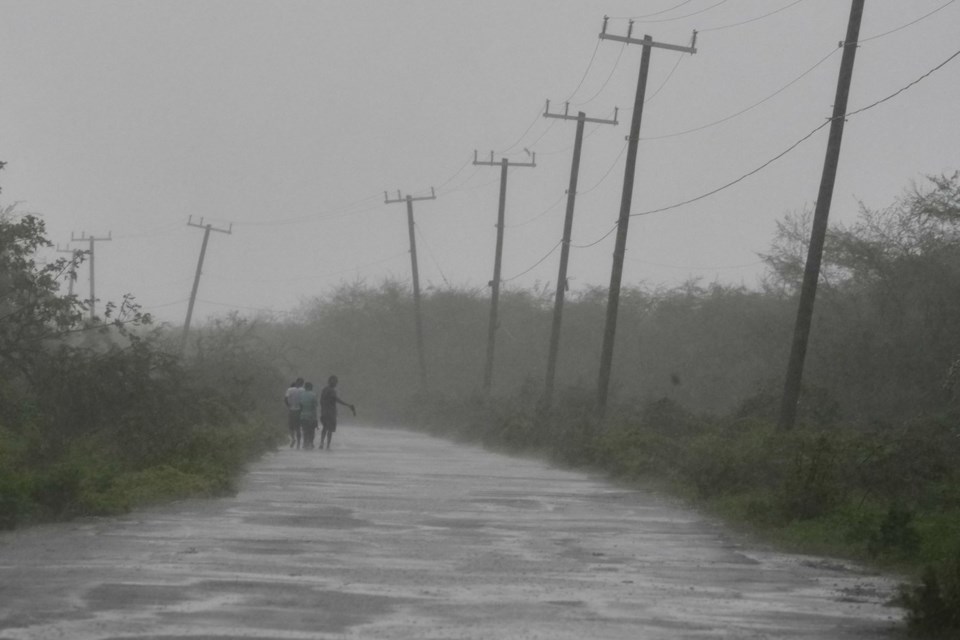
Kingston, — Torrential rain, catastrophic winds, and massive flooding battered Jamaica on Tuesday as Hurricane Melissa roared ashore as a Category 5 storm, one of the most powerful hurricanes ever recorded in the Atlantic.
With sustained winds of 185 mph (295 kph), Melissa tore off roofs, uprooted trees, and sent boulders cascading down mountainsides. Officials said entire communities were submerged, power was cut to nearly 540,000 customers — about 77% of the island — and 15,000 people took refuge in emergency shelters.
Prime Minister Andrew Holness warned that recovery would be long and difficult. “There is no infrastructure in the region that can withstand a Category 5,” he said. “The question now is the speed of recovery. That’s the challenge.”
In St. Elizabeth parish, local officials reported that “the area is underwater,” while families in Black River were trapped in their homes by rising floodwaters. Emergency crews said conditions were too dangerous for rescue operations.
“Roofs were flying off,” said Desmond McKenzie, deputy chair of Jamaica’s Disaster Risk Management Council. “We’re hoping the weather eases so we can reach those who need help.”
Melissa’s arrival marks the strongest hurricane to strike Jamaica in 174 years of recordkeeping. The U.S. National Hurricane Center reported the storm’s central pressure at 892 millibars, tying records set by the 1935 Labor Day hurricane in Florida and 2019’s Hurricane Dorian.
By Tuesday night, Melissa was moving north-northeast at 8 mph (13 kph), about 15 miles east of Montego Bay, and was expected to make landfall in eastern Cuba early Wednesday. Meteorologists warned of storm surges up to 13 feet (4 meters) and rainfall of up to 20 inches (51 cm) in some regions.
Officials confirmed at least seven deaths across the Caribbean — three in Jamaica, three in Haiti, and one in the Dominican Republic — with another person reported missing.
Hospitals and infrastructure have been heavily affected. Four hospitals sustained serious damage, with one losing power and forcing the evacuation of 75 patients.
In a tense radio broadcast, a caller pleaded for help for a woman in labor as the storm raged. Listeners and an obstetrician guided the caller on how to deliver a baby safely if emergency services couldn’t arrive.
In the capital, Kingston, residents were warned to stay indoors not only because of flooding but also because crocodiles displaced from nearby wetlands had been spotted.
Relief efforts were already underway before the storm made landfall. U.N. agencies and humanitarian groups pre-positioned supplies of food, medicine, and water, ready to deploy once conditions allow. Airports are expected to reopen by Thursday.
Meanwhile, in Cuba, officials issued evacuation orders for more than 200,000 people in Holguín and Santiago de Cuba, where residents scrambled to secure homes, livestock, and crops.
Cuban President Miguel Díaz-Canel called Melissa “the strongest storm ever to hit national territory,” urging citizens not to underestimate its power.
“May God have mercy on us,” said Diamon Mendoza, a resident of Santiago de Cuba. “It’s coming with a lot of strength — anything can happen.”
Meteorologists say Melissa has tied two historical records for intensity, cementing its place among the most destructive Atlantic hurricanes ever recorded.