

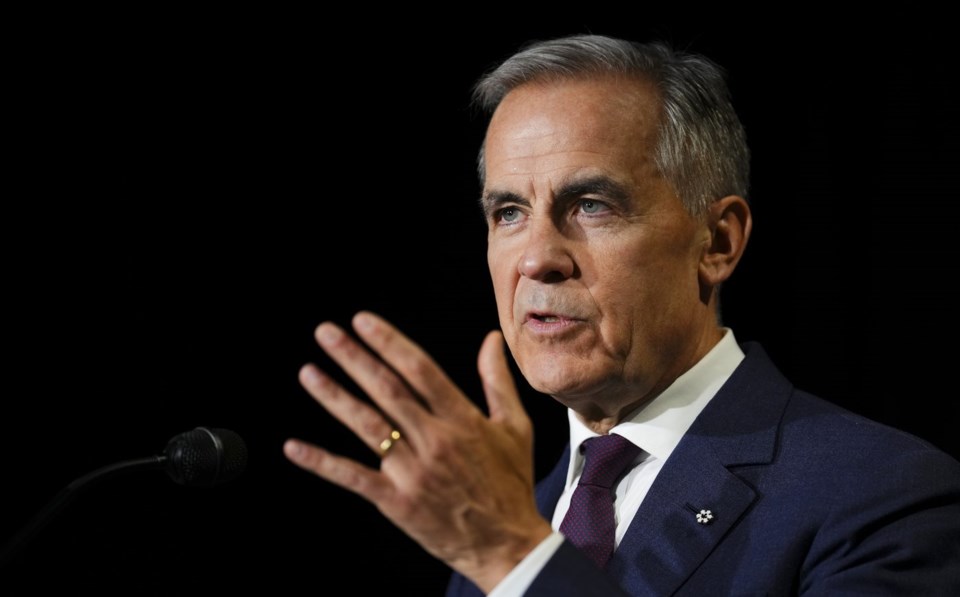
Prime Minister Mark Carney says Canada “welcomes the opportunity for freedom, democracy, peace, and prosperity” for the Venezuelan people following the dramatic capture of Venezuelan President Nicolás Maduro by U.S. military forces.
The operation, ordered by U.S. President Donald Trump, sent shockwaves across the Western Hemisphere. Trump described the mission in the oil-rich South American nation as a success.
In a statement posted to social media Saturday afternoon, Carney noted that one of the first actions of his government after taking office in March was to impose additional sanctions on what he called Maduro’s “brutally oppressive and criminal regime.” He reiterated that Canada has not recognized Maduro’s government since the 2018 Venezuelan election, which Ottawa has described as illegitimate.
“The Canadian government therefore welcomes the opportunity for freedom, democracy, peace, and prosperity for the Venezuelan people,” Carney wrote.
At the same time, he emphasized Canada’s long-standing support for a peaceful, negotiated and Venezuelan-led transition. Carney called on all parties to respect international law and underscored the right of Venezuelans to determine their own future.
U.S. forces removed Maduro and his wife, Cilia Flores, from their residence on a military base in Caracas during a rapid operation that included explosions and low-flying aircraft over the capital. The pair were transported to New York, where U.S. Attorney General Pam Bondi said they will face several drug-related charges, including conspiracy to commit “narcoterrorism.” Maduro and other senior officials were first indicted on similar charges in 2020.
Conservative Leader Pierre Poilievre praised the U.S. action, congratulating Trump and describing Maduro as a “terrorist and socialist dictator who should live out his days in prison.”
Reaction among Venezuelan Canadians was mixed but emotional. Toronto-based activist Rebecca Sarfatti, co-founder of the Canada Venezuela Democracy Forum, said she awoke early Saturday to frantic messages from contacts in Caracas. Initial fear for civilians, she said, has given way to cautious optimism.
“I never thought I would live to see something like this,” Sarfatti said, adding that she hopes the development will allow Venezuela to rebuild as a peaceful country after years of turmoil.
The Green Party of Canada, however, condemned the operation as a violation of international law, characterizing it as a kidnapping.
Speaking to reporters hours after Maduro’s capture, Trump said the United States intends to take advantage of the power vacuum to “fix” Venezuela’s oil infrastructure and sell large quantities of oil internationally.
In response to the rapidly evolving situation, the Canadian government issued a travel advisory urging Canadians to avoid all travel to Venezuela, citing violent crime, political instability, the risk of arbitrary detention and deteriorating living conditions. Canadians currently in the country were advised to shelter in place and ensure they have essential supplies.
Global Affairs Canada said it was not aware of any Canadians injured in the events. As of Saturday, 775 Canadians were registered with the Registration of Canadians Abroad service in Venezuela, though officials cautioned that registration is voluntary and the figure may not be complete. Canadians requiring consular assistance were directed to contact the Canadian embassy in Bogotá, Colombia.
Kenneth Frankel, president of the Canadian Council for the Americas, said the U.S. action has prompted serious questions across the region about Washington’s willingness to use military force to advance its interests.
“Once you look past the stated justifications of drugs and human rights, it’s clear this is also about resources,” Frankel said, speaking from Medellín, Colombia. He warned that the consequences of Maduro’s removal remain highly uncertain, particularly in border regions where armed groups operate.
Frankel also raised concerns about regional diplomacy, questioning who Colombia would engage with on border security matters given strained relations between the U.S. and Colombian President Gustavo Petro.
“For critics of Maduro, this may look like success on day one,” Frankel said. “But nobody knows what happens on day two, day three, or months down the line.”