

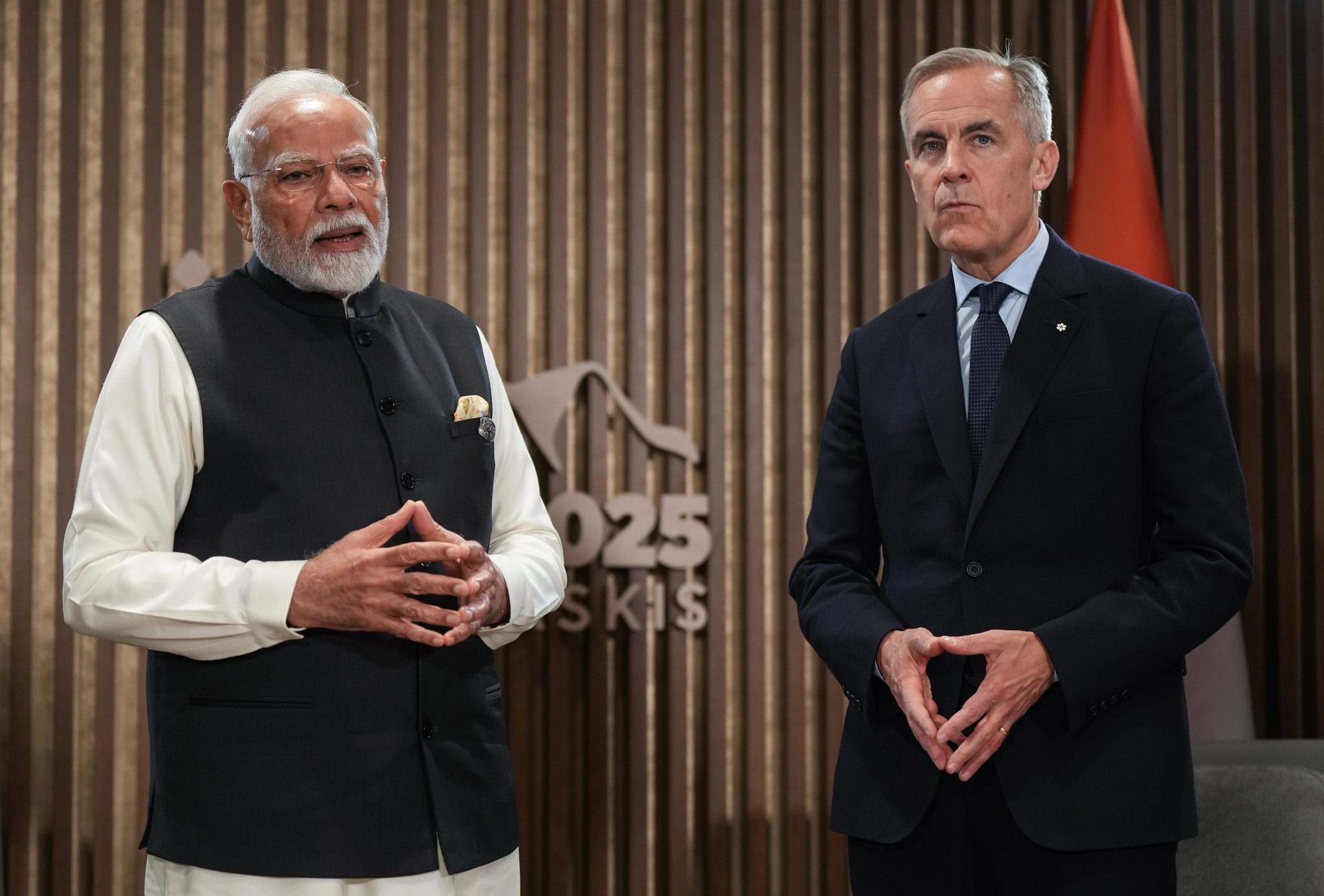
Prime Minister Mark Carney defended his decision to restore diplomatic ties with India, calling it a foundational step toward repairing a fractured relationship between the two countries. Speaking Thursday at a press conference on Parliament Hill, Carney confirmed that both nations have agreed to appoint new high commissioners, marking a mutual move to reestablish direct diplomatic presence after both sides expelled six senior diplomats in October 2023.
Carney, however, declined to say whether he raised the issue of Hardeep Singh Nijjar’s murder in his one-on-one meeting with Indian Prime Minister Narendra Modi at the G7 summit in Kananaskis, Alberta, earlier this week. Nijjar, a prominent Sikh separatist activist, was killed in British Columbia in 2023. Canadian intelligence and former prime minister Justin Trudeau have previously linked his murder to Indian government agents, sparking a diplomatic crisis. Multiple Sikh advocacy groups, including Sikhs for Justice, have called on the government to demand accountability and transparency from India in ongoing investigations.
“I never make it a policy to give a line-by-line transcript readout of exactly what’s said in a meeting, and I’m not about to start now,” Carney said. He did, however, confirm that he spoke to Modi about the issue of transnational repression, emphasizing that Canada has made it “very clear” that such behavior from any source is unacceptable. He did not provide specifics on what commitments, if any, India has made since the expulsion of diplomats, nor did he elaborate on whether Indian officials are cooperating with Canadian police in the Nijjar investigation.
The Canadian Security Intelligence Service (CSIS) identified India as a major actor in foreign interference in its annual public report released Wednesday. The report added weight to allegations that Indian operatives or their proxies have been involved in coercion, extortion, and even violent crimes on Canadian soil. Former NDP leader Jagmeet Singh was reportedly warned by the RCMP of a credible threat to his life in December 2023, with recent reports suggesting he was being surveilled by Indian government agents at the time.
Carney said that restoring basic diplomatic engagement with India is essential to serving Canadians, particularly the large Indo-Canadian community, and that exchanging high commissioners is “a basic, first step” to re-establishing normal relations. “There are very deep ongoing ties, people-to-people, certainly of Indo-Canadians but Canadians as a whole with India. We don’t have a high commissioner in India right now. We’re not serving Canadians in India right now because of where we are,” he said. “So just having a basic level of engagement is in many respects a duty of the government. I’m glad we came to that agreement and understanding.”
Carney noted that this renewed understanding includes several elements, among them cooperation on law enforcement, though he stopped short of outlining specifics. While many questions remain unanswered about the depth of India’s involvement in foreign interference and Nijjar’s murder, Carney framed the new diplomatic appointments as necessary groundwork to resume dialogue and protect Canada’s long-term interests in the Indo-Pacific.