

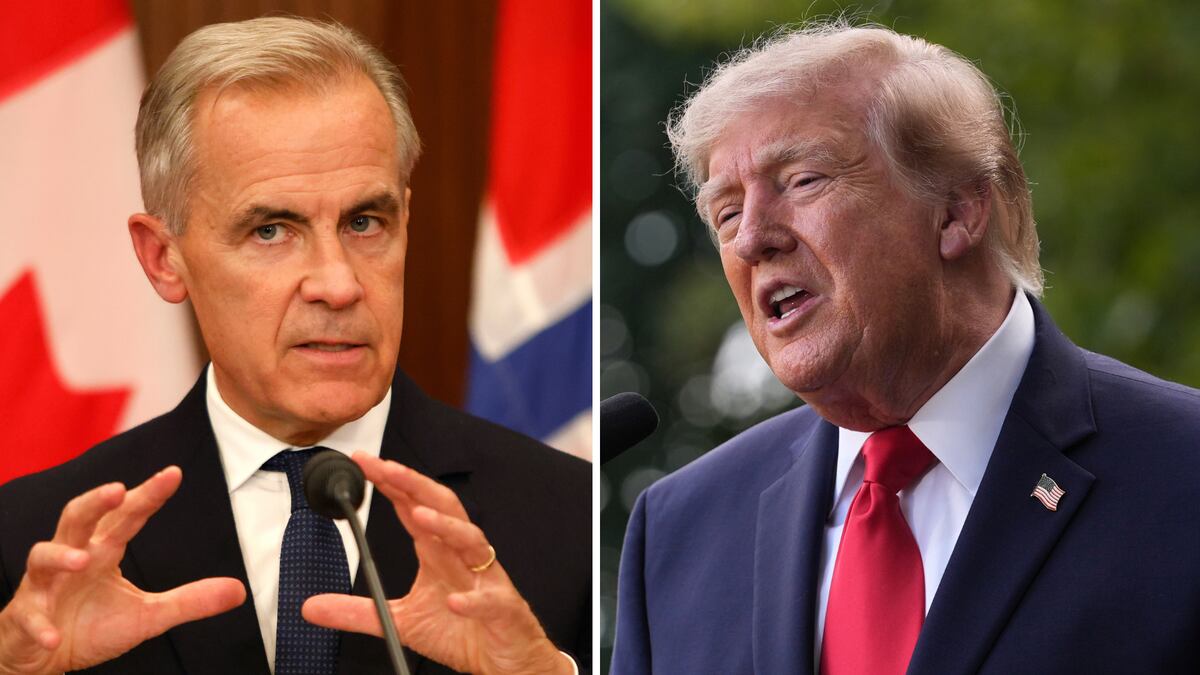
NEW YORK — Prime Minister Mark Carney and U.S. President Donald Trump are both in New York as world leaders gather for the 81st session of the United Nations General Assembly, with global security, trade, diplomacy and the future of international institutions dominating discussions.
Carney has a packed schedule of meetings with international leaders and senior officials, while Trump is expected to deliver a closely watched address to the General Assembly. Despite both leaders being in New York at the same time, a meeting between Carney and Trump is not currently listed on the prime minister’s public schedule.
Carney is expected to meet the presidents of Chile and Angola around midday, followed by discussions with the United Arab Emirates’ technology minister and Jordan’s King Abdullah II. He is also scheduled to speak later at an event focused on a two-state solution to the Israeli-Palestinian conflict, a diplomatic approach supported by Canada.
Carney’s visit comes as his government seeks to strengthen Canada’s relationships beyond the United States, particularly with Europe and other international partners. His government has also indicated that reforming the United Nations will be an important part of Canada’s diplomatic agenda.
The issue has gained additional significance as UN Secretary-General António Guterres approaches the end of his second and final five-year term. Discussions over the organization’s future leadership are expected to become increasingly important.
Carney said ahead of the gathering that Canada wants to play an active role as the international system undergoes significant change. He said Canada intends to work with both longstanding and new partners, protect Canadian sovereignty and translate international co-operation into economic opportunities for Canadian workers and businesses.
At the same time, another Canada-U.S. trade issue has emerged after Trump said his administration is working on what he described as a major agreement to purchase potash from Belarus at prices substantially below what the United States currently pays Canada.
The comments quickly drew a response from Saskatchewan Premier Scott Moe. Saskatchewan is a major supplier of potash to the United States, and Moe argued that purchasing Belarusian potash would raise economic and geopolitical concerns because Belarus remains under sanctions from Canada and numerous allied countries over its support for Russia’s war against Ukraine.
Moe questioned whether potash transported from Belarus through Russia could realistically be cheaper, more sustainable or more ethical than Saskatchewan potash produced and shipped within North America.
Back in Ottawa, Parliament has returned following its summer break, and the Liberal government has introduced Bill C-39, the Building Canada Strong Act, legislation intended to speed up the review and approval of major Canadian projects.
The government says faster approvals could help get major infrastructure and economic projects underway sooner. However, labour organizations have raised concerns about proposed changes to the Canada Labour Code contained in the legislation.
Those groups argue that some provisions could affect collective bargaining and potentially restrict workers’ ability to strike, particularly in federally regulated industries that have previously experienced labour disputes, mediation or government intervention.
With Trump addressing the UN, Carney conducting a series of diplomatic meetings, new Canada-U.S. tensions emerging over potash and Parliament debating major labour and project-approval legislation, developments in New York and Ottawa are being closely watched throughout the day.