

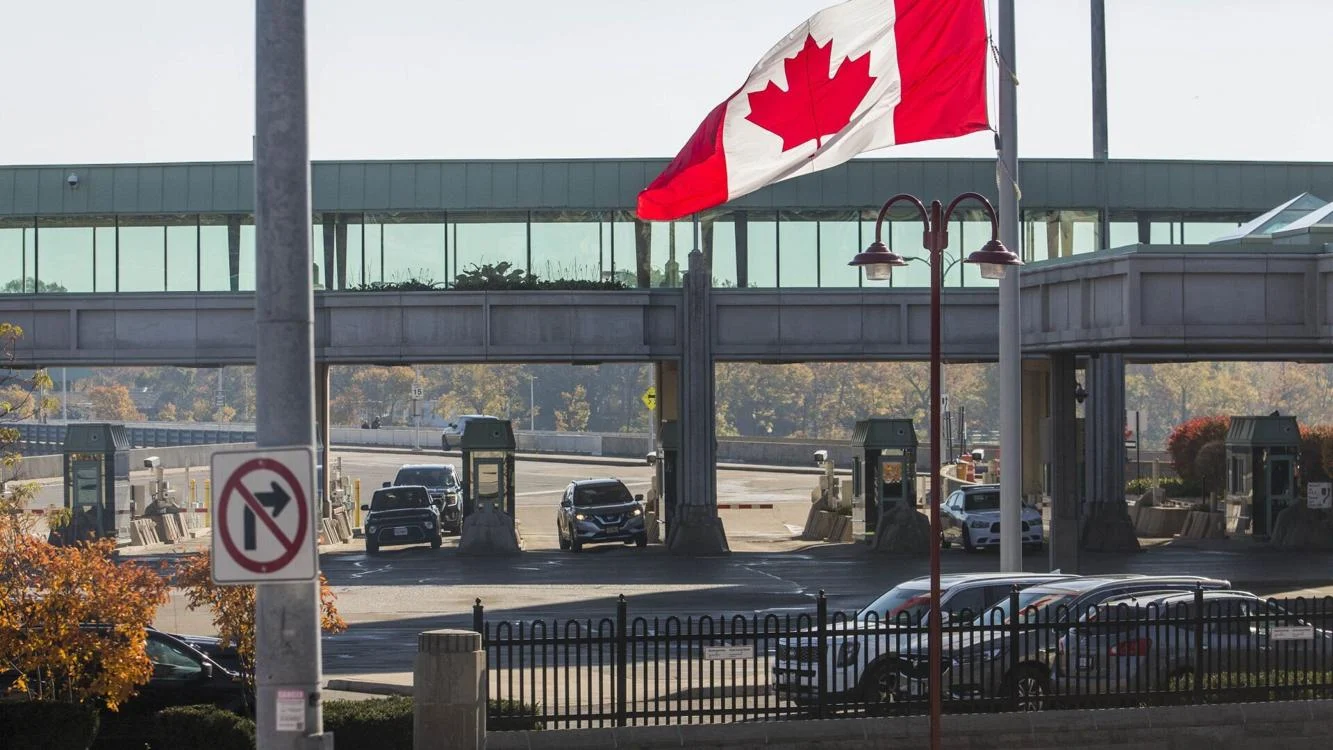
Canadians travelling to or from the United States will now be photographed at the border under expanded biometric requirements introduced by U.S. authorities, a change that applies to all non-U.S. citizens.
According to a recent directive from U.S. Customs and Border Protection (CBP), photographs will be taken of travellers entering and exiting the country at all ports of entry, including land crossings commonly used by Canadians. The policy also expands the U.S. government’s biometric system used to track arrivals and departures.
Biometrics include unique physical identifiers such as facial features and fingerprints, which are used to verify identity.
Data retention and scope
CBP says the program is intended to strengthen border security and help identify travellers who overstay their permitted time in the U.S. The rules apply broadly, with no general exemptions for children, seniors, or diplomats. In some cases, U.S. border officers may also collect fingerprints.
Under U.S. law, the Department of Homeland Security (DHS) can retain certain personal data for up to 75 years.
DHS says its Automated Biometric Identification System, known as IDENT, currently contains more than 320 million unique identities and processes over 400,000 biometric transactions daily.
Privacy assurances
CBP maintains that the program is not a surveillance system. In its biometrics privacy policy, the agency says facial comparison technology is operated within a secure cloud-based environment and that it does not store biographic data linked to travellers.
“CBP’s traveller identity verification process is not a surveillance program,” the agency said, adding that signage is clearly displayed at border points to inform travellers that biometric collection is taking place.
Officials also say the technology helps speed up processing times and improve the overall travel experience.
Diane J. Sabatino, acting executive assistant commissioner for CBP’s Office of Field Operations, said expanded biometric screening will enhance border security. “With increased funding to support this critical mission, we will continue to expand facial biometrics and advanced technology for identity verification to further secure and innovate the entry and exit process,” she said.
Policy roots and travel trends
U.S. President Donald Trump has long pushed for tighter border controls. During his first term, he signed an executive order calling for faster implementation of biometric entry-exit systems. DHS later issued notices requiring most non-citizens to participate in facial biometric processing.
The new measures come as fewer Canadians are travelling south. According to Statistics Canada, Canadian-resident return trips by car from the U.S. fell to 1.4 million in October, a decline of 30.5 per cent compared with October 2024. The drop has been linked to trade tensions and political rhetoric.
With the new biometric rules now in place, Canadian travellers will need to factor additional identification steps into future cross-border trips, even for short visits such as shopping or holidays.