

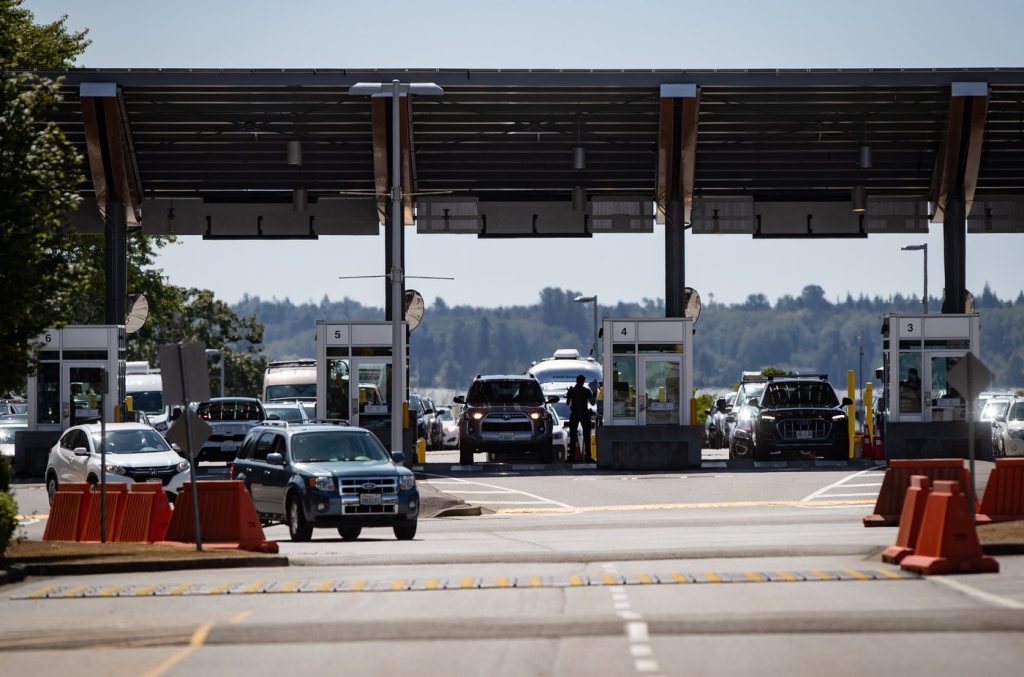
Canadian travel to the United States continued to decline sharply in April as growing political tensions dampened enthusiasm for cross-border vacations. Statistics Canada reported that the number of Canadians returning from the U.S. by car fell to 1.2 million trips—a staggering 35.2 per cent drop from April 2024 and 45.1 per cent below pre-pandemic levels in 2019. This marks the fourth straight month of year-over-year declines.
Industry experts attribute the slump to an increasing reluctance among Canadians to spend money in the U.S. amid ongoing trade tensions and provocative political rhetoric. U.S. President Donald Trump’s recent tariff threats and suggestions of annexing parts of Canada as the “51st state” have not gone unnoticed north of the border. While most travelers are not cancelling existing plans due to non-refundable deposits, many are simply avoiding new bookings to the U.S. altogether.
Richard Vanderlubbe, president of tripcentral.ca, believes this trend is being fueled by social networks and word-of-mouth. “People are choosing other destinations when planning future travel,” he said. “It’s not just about price anymore—it’s about values and where they feel welcome.”
Even air travel to the U.S. is seeing a dip. The number of Canadian residents flying back from the U.S. in April dropped to 582,700, down 19.9 per cent from the same time last year. Meanwhile, trips returning from overseas destinations rose nearly 10 per cent, indicating that many Canadians are turning their sights toward Europe, Asia, and South America.
Flight Central Travel Group has seen a 53 per cent drop in U.S. bookings, according to spokesperson Amra Durakovich, who noted that the change doesn’t represent a permanent boycott but rather a shift in consumer sentiment. “It’s more a recalibration,” she said. “Travelers want to avoid uncertainty, and right now, the U.S. feels unpredictable to many.”
Durakovich added that there’s been a notable uptick in interest in Japan, South Korea, Thailand, and Colombia. As Canadians look farther afield, airlines are adjusting accordingly. Air Canada cut flights by 10 per cent in March to popular U.S. destinations like Florida and Las Vegas and has since announced a 16 per cent increase in capacity to Latin America beginning in October. WestJet, Flair Airlines, and Air Transat have made similar adjustments.
While some Canadians will still choose to visit the U.S., the broader sentiment seems to be shifting. “People are travelling with more intention now,” Durakovich said. “If they’re going to go to the U.S., they go. But for many others, it’s a firm ‘no thanks.’”