

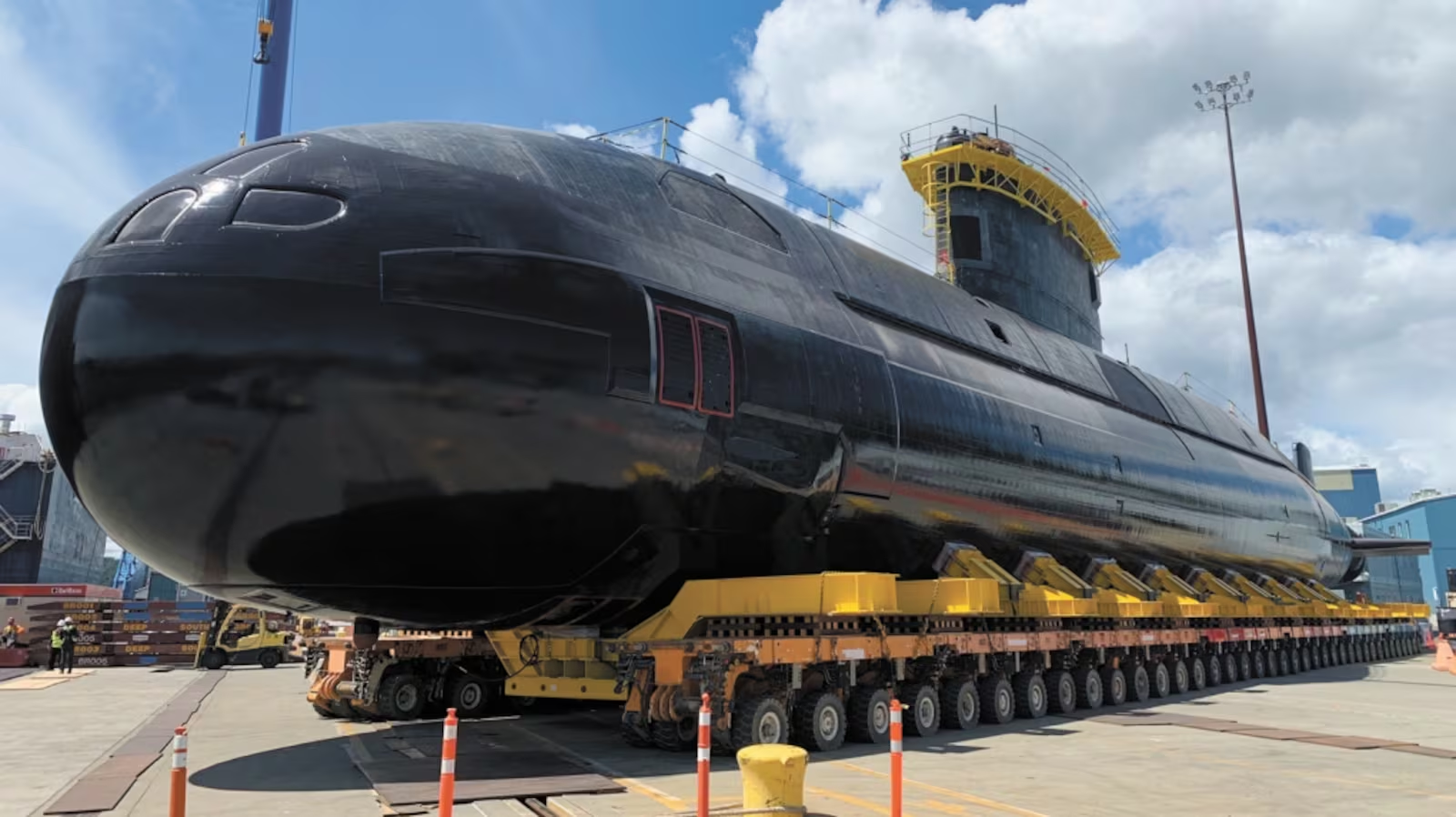
Canada is set to make a significant return to international naval operations this summer by deploying a submarine to the world’s largest multinational maritime exercise for the first time in more than a decade. The move is being viewed as an important milestone in Canada’s efforts to strengthen its military presence in the Indo-Pacific region and demonstrate its growing commitment to international security partnerships.
The submarine HMCS Corner Brook is expected to depart from Canada’s west coast in the coming days to participate in the biennial Rim of the Pacific (RIMPAC) exercise near Hawaii. The deployment marks the first Canadian submarine participation in the exercise since 2014.
The mission comes after years of extensive maintenance, modernization, and life-extension work on the vessel. Following a grounding accident off Vancouver Island in 2011, the submarine underwent a lengthy repair and upgrade process before returning to operational service. The modernization program included significant structural repairs, equipment upgrades, enhanced combat systems, and improvements designed to extend the vessel’s service life.
Military officials say the submarine now possesses upgraded electronic warfare capabilities that improve its ability to detect, identify, and monitor potential threats in increasingly complex maritime environments. New battery systems and advanced monitoring technologies have also been installed to improve operational efficiency and reliability.
Canada’s submarine fleet has faced ongoing challenges in recent years, with only one vessel currently available for active deployment. Defence experts have frequently pointed to the aging condition of the country’s Victoria-class submarines and have urged the federal government to move forward with plans to acquire a new generation of submarines capable of meeting future security requirements.
At the upcoming RIMPAC exercise, Canada will field one of its largest naval contributions in recent years. Alongside HMCS Corner Brook, the Royal Canadian Navy will deploy the frigates HMCS Regina and HMCS Ottawa, as well as the naval support vessel MV Asterix. Canadian forces will participate in anti-submarine warfare operations, missile and torpedo exercises, boarding operations, cyber defence activities, and maritime security missions.
The Royal Canadian Air Force will also play a key role by deploying a CP-140 Aurora reconnaissance aircraft and two CH-148 Cyclone helicopters. These aircraft will support surveillance, intelligence gathering, anti-submarine operations, and maritime patrol missions across the Pacific Ocean.
Approximately 800 Canadian Armed Forces personnel are expected to participate in the exercise, reflecting Canada’s growing focus on Indo-Pacific security. The deployment aligns with the federal government’s Indo-Pacific Strategy, which seeks to expand Canada’s diplomatic, economic, and defence engagement throughout the region.
RIMPAC, hosted by the United States Pacific Fleet, is widely regarded as the world’s premier international naval exercise. The 2026 edition is expected to bring together approximately 25,000 military personnel, 40 warships, five submarines, and more than 140 aircraft from 31 participating nations.
As geopolitical tensions continue to evolve across the Pacific region, military planners view multinational exercises such as RIMPAC as critical opportunities to improve interoperability, strengthen alliances, and prepare participating forces for future security challenges. Canada’s renewed submarine participation sends a strong signal that the country intends to play a more active role in maintaining stability and security throughout the Indo-Pacific.
For Canada’s navy, the deployment also serves as an important demonstration that HMCS Corner Brook remains capable of contributing meaningfully to complex international operations despite the age of the current submarine fleet. The mission is expected to provide valuable operational experience while reinforcing Canada’s longstanding partnership with allies and defence partners across the Pacific region.