

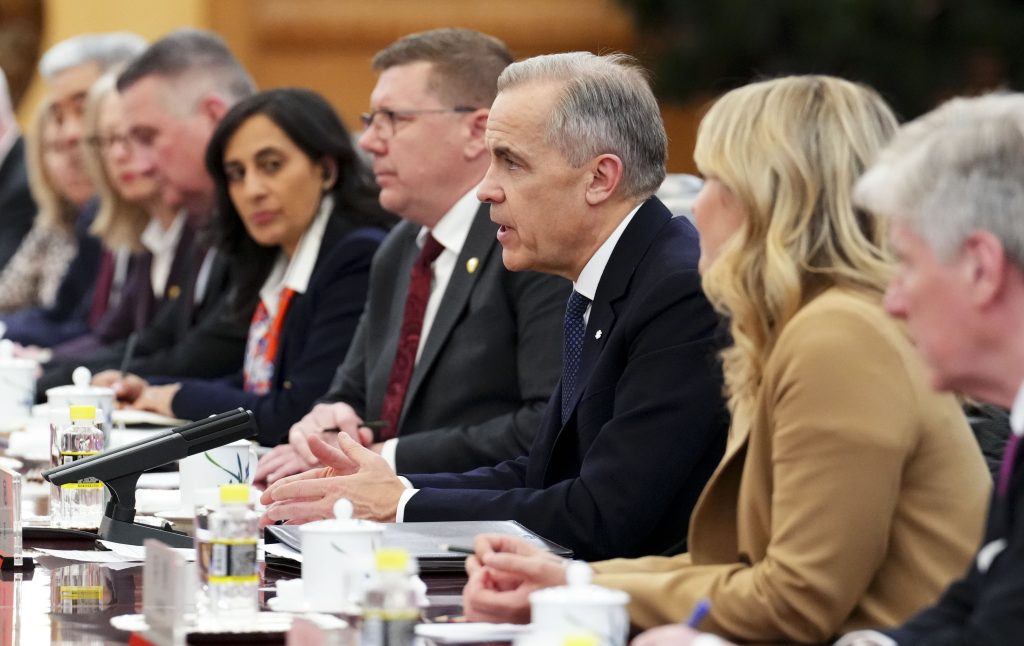
Canada and China have announced a series of agreements aimed at expanding trade and investment across six key economic areas, signaling a renewed effort to stabilize bilateral relations despite an unresolved tariff dispute.
The agreements were released Thursday during Prime Minister Mark Carney’s visit to Beijing, where he met with Chinese Premier Li Qiang. Analysts say the deals reflect an attempt to revive formal economic dialogue that has largely stalled over the past decade.
The largest unresolved issue remains tariffs. Canada’s levies on Chinese electric vehicles, steel and aluminum—and China’s retaliatory duties on Canadian canola, seafood and other agricultural goods—remain in place. Beijing has linked the removal of canola tariffs to Canada dropping its EV levy, a move supported by several provincial premiers but opposed by Ontario Premier Doug Ford, who argues the tariffs protect auto-sector jobs.
Among the areas targeted for expanded co-operation are agriculture, energy, finance, tourism, forestry and small- and medium-sized enterprises. A new economic and trade co-operation roadmap outlines mutual investment goals while maintaining limits on Chinese investment in what Canada considers sensitive sectors.
Energy features prominently, with China describing Canada as a potential supplier of oil, liquefied natural gas and clean energy technologies. The countries also agreed to explore co-operation on renewable energy and CANDU nuclear reactors.
Other agreements include efforts to boost tourism ahead of the 2026 FIFA World Cup, promote modern wood construction in China using Canadian lumber, address long-standing animal health trade barriers, and revive joint committees on agriculture and trade dispute resolution.
Both countries reaffirmed support for rules-based global trade under the World Trade Organization, while acknowledging its current limitations. China also reiterated its interest in joining the Comprehensive and Progressive Agreement for Trans-Pacific Partnership, a move Canada says would require meeting high standards on labour, environmental and intellectual property protections.
Experts caution the progress could be fragile. While the agreements suggest renewed engagement, analysts note they remain largely aspirational and could be derailed by political shifts or continued tensions with Canada’s key trading partner, the United States.