

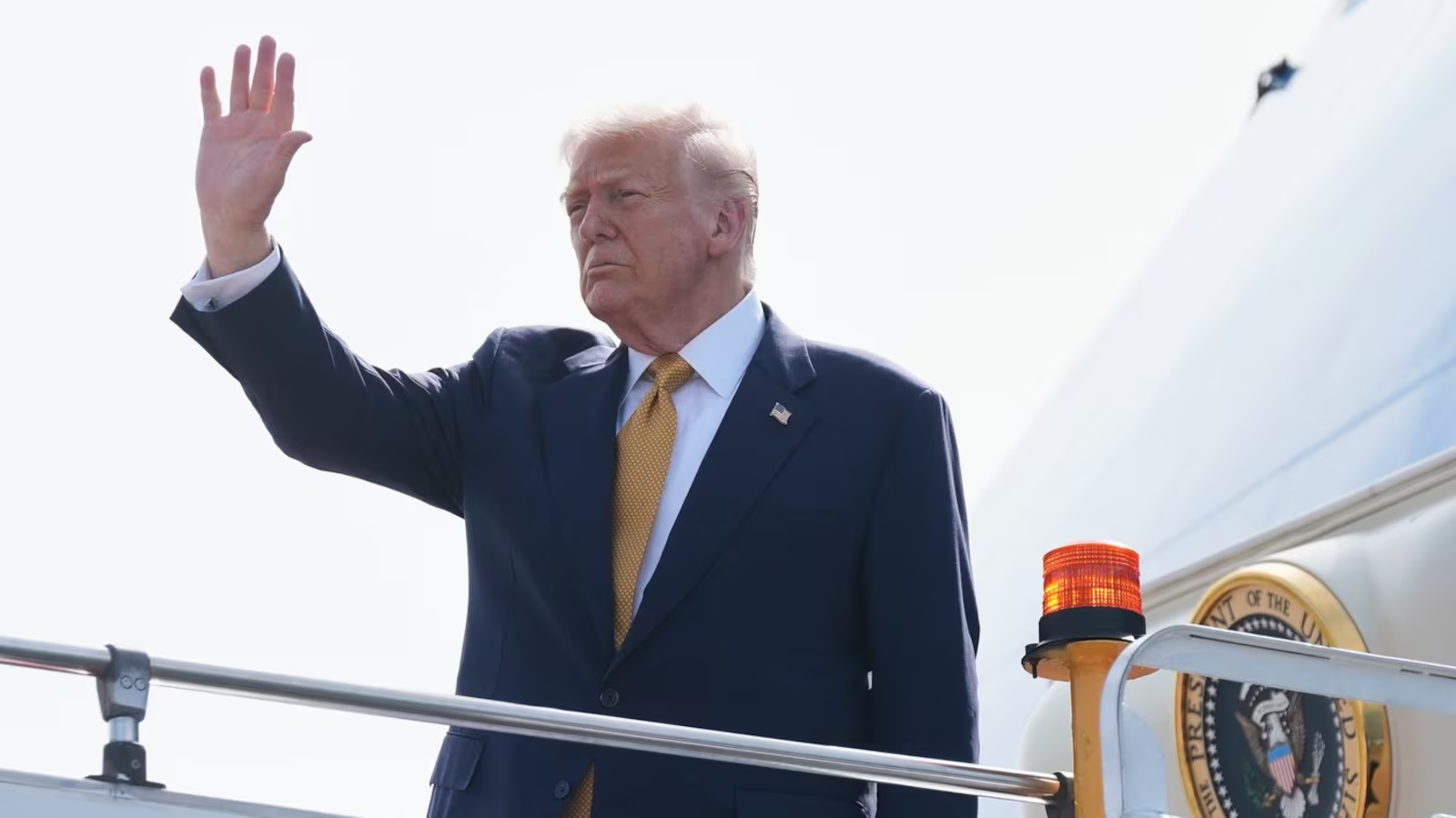
U.S. President Donald Trump has reignited debate over presidential term limits after declining to rule out the possibility of seeking a third term. Speaking to reporters aboard Air Force One en route from Malaysia to Japan, Trump said he had not considered whether he would challenge the U.S. Constitution’s two-term limit in court.
Under the 22nd Amendment, ratified in 1951 following Franklin D. Roosevelt’s unprecedented four-term presidency, “no person shall be elected to the office of the President more than twice.” Legal experts say this provision clearly bars Trump—or any other former president—from seeking a third term.
“The Constitution is unambiguous — presidents are limited to two terms of four years each,” said Wayne Unger, a constitutional law professor at Quinnipiac University. “If this were ever challenged, I would expect the Supreme Court to rule decisively that Donald Trump cannot run for a third term.”
While some of Trump’s allies, including Republican Congressman Andy Ogles of Tennessee, have proposed amending the 22nd Amendment to allow presidents to serve three non-consecutive terms, experts consider the measure politically unrealistic. A constitutional amendment requires approval by two-thirds of Congress and ratification by 38 of 50 state legislatures — a near-impossible threshold in the current era of deep partisan division.
Trump also dismissed speculation that he could return to the White House by running as vice president, saying the maneuver would be “too cute.” Legal scholars agree he is ineligible for the role, as the 12th Amendment states that anyone barred from serving as president cannot serve as vice president either.
For now, Trump’s comments appear to be testing political waters rather than laying legal groundwork, but they have already reignited discussion around presidential term limits — a foundational principle of U.S. democracy since George Washington’s time.