

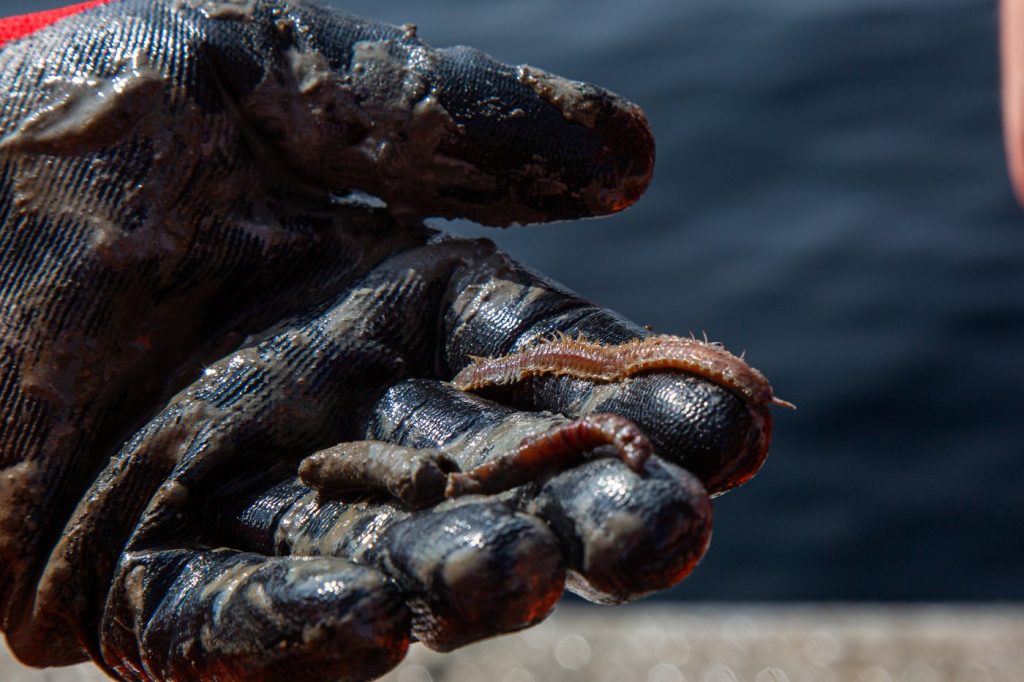
Far below the seals and belugas gliding through Quebec’s Saguenay fiord, an invisible world in the mud could hold key answers to fighting climate change. Tiny creatures living deep within the sea floor are being studied by scientists who believe their role in carbon storage may be crucial for the planet’s health.
Earlier this month, researchers from the United Kingdom and Université Laval ventured onto the fiord’s challenging waters, hauling up samples from depths of nearly 200 metres. Dr. Adam Porter, a post-doctoral fellow at the University of Exeter, explained that while the ocean surface may appear like an “impenetrable blue,” the hidden world under the mud is alive and vital. “There’s this whole world of life under the mud, and that is playing a really important role in keeping the planet healthy,” he said.
The work forms part of the Convex Seascape Survey, a global research effort to understand how the sea floor helps regulate climate through carbon sequestration. Porter lightheartedly called the project’s unofficial mission “trying to make mud sexy.”
Collecting the roughly 60 samples was no easy task, noted Université Laval PhD student Rebecca Howman. Strong tides and currents meant scientists had to rely on a giant claw device to scoop up pieces of the fiord floor. “It’s very messy, very muddy, but also a good challenge and really quite fun,” she said. Once retrieved, the mud samples were transported to aquariums in Chicoutimi, Que., where the team sprinkled fluorescent sand over them to observe the movements of the creatures hidden within.
What they discovered was a vibrant miniature ecosystem of worms, brittle stars, and bivalves. Howman likened them to “little ocean gardeners” whose constant activity reshapes the sediment, brings oxygen into the mud, and helps recycle nutrients, thereby sustaining the larger marine ecosystem. Importantly, they also help trap carbon that sinks from above, effectively locking it away in the sea floor.
Porter emphasized the significance of this process, pointing out that the ocean floor is one of Earth’s largest carbon stores, even surpassing rainforests. However, human activities such as trawling, dredging, and mining risk disturbing this delicate balance and releasing stored carbon back into the atmosphere.
The five-year study hopes to map areas of the sea floor most critical for carbon sequestration and convince policymakers to protect them. With Canada among the countries pledging to safeguard 30 percent of global land and oceans by 2030, the findings from Quebec’s fiord may prove invaluable in shaping future climate strategies.