

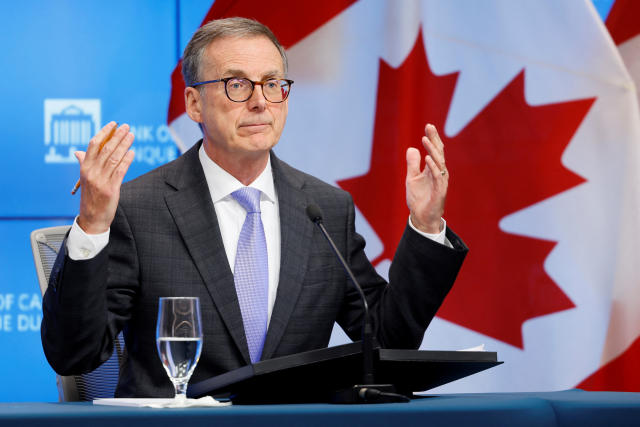
The Bank of Canada announced a 0.25% cut to its benchmark interest rate on Wednesday, marking the sixth consecutive reduction in its easing cycle. However, the central bank cautioned that looming U.S. tariffs on Canadian goods could create significant economic uncertainty.
With this latest adjustment, the policy rate now stands at 3.0%, aligning with market expectations. Unlike previous rate cuts of 50 basis points, this quarter-point reduction signals a more measured approach to monetary easing.
While the Bank of Canada did not provide explicit guidance on future rate decisions, its primary concern appeared to be the potential economic fallout from proposed U.S. trade tariffs.
“The potential for a trade conflict triggered by new U.S. tariffs on Canadian exports is a major uncertainty,” said Bank of Canada Governor Tiff Macklem in a prepared statement. “This could be very disruptive to the Canadian economy and is clouding the economic outlook.”
In its accompanying statement, the central bank warned that broad-based and significant tariffs would test the resilience of Canada’s economy.
The Bank of Canada transitioned from tightening to easing monetary policy last year, responding to slowing inflation and economic activity. While annual inflation cooled to 1.8% in December, some measures of core inflation remain sticky, keeping policymakers cautious.
Macklem reiterated that monetary policy is now in a better position to support economic stability as Canada navigates trade uncertainty. However, he acknowledged that the scale, scope, and duration of any U.S. tariffs remain unknown, making it difficult to predict their full impact.
“A long-lasting and broad-based trade conflict would badly hurt economic activity in Canada,” he said. “At the same time, the higher cost of imported goods would directly increase inflationary pressures.”
As Canada braces for potential trade disruptions, the Bank of Canada’s next moves will likely hinge on developments in global trade policy and inflation trends in the coming months.