

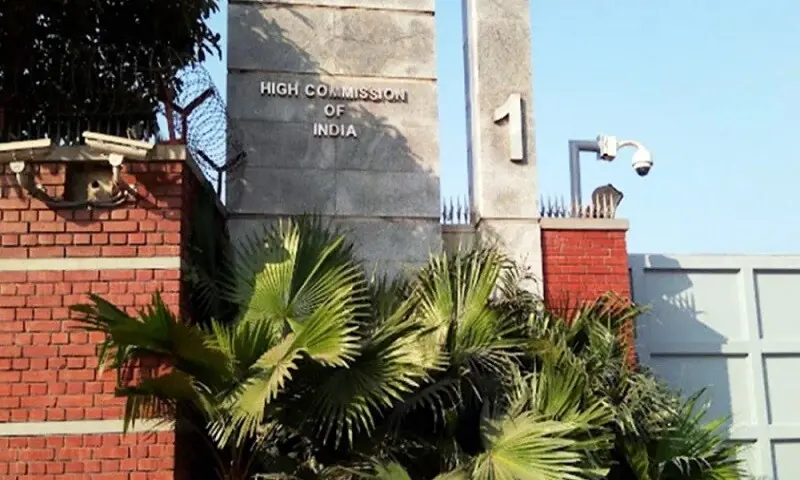
Bangladesh has summoned India’s high commissioner in Dhaka to protest what it described as violent incidents targeting its diplomatic facilities in India, including demonstrations outside its mission in New Delhi and vandalism at a visa centre in Siliguri.
In a statement Tuesday, Bangladesh’s Ministry of Foreign Affairs said Indian High Commissioner Pranay Verma was called in to convey Dhaka’s “grave concern” over what it termed “regrettable incidents” outside the Bangladesh High Commission and the ambassador’s residence in New Delhi on Dec. 20, as well as the vandalism of the Bangladesh Visa Centre in Siliguri on Dec. 22 by what it called “extremist elements.”
The ministry condemned the incidents as premeditated acts of violence and intimidation against diplomatic establishments, saying they endangered the safety of diplomatic personnel and undermined “the principles of mutual respect and values of peace and tolerance.”
“Bangladesh expects the Government of India to immediately take appropriate steps in accordance with its international and diplomatic obligations to safeguard the dignity and security of diplomatic personnel and establishments,” the statement said, calling for a thorough investigation.
According to Bangladeshi media reports, around 20 to 25 protesters gathered outside the Bangladesh High Commission in New Delhi on Saturday evening, raising anti-Bangladesh slogans and issuing threats against High Commissioner Prothom Alo reported.
India’s Ministry of External Affairs said on Sunday that the demonstration involved “20-25 youths” who were dispersed by police within minutes, adding that India remained “committed to ensure the safety of foreign missions.” Spokesperson Randhir Jaiswal also said New Delhi had taken note of what he called “misleading propaganda” in sections of the Bangladeshi media.
Dhaka rejected that characterization, saying the “unjustifiable incident at the Bangladesh High Commission residence in New Delhi on December 20 is highly regrettable and cannot be accepted as ‘misleading propaganda.’”
The diplomatic exchange comes amid heightened tensions as Bangladesh grapples with domestic unrest following the killing of youth leader Sharif Osman Hadi, who was shot while launching his campaign for February’s parliamentary elections last week. His death sparked protests that escalated into arson and vandalism targeting media outlets and cultural institutions.
Bangladeshi daily The Daily Star reported that about 100 protesters gathered in the Chowhatta area, demanding justice for Hadi and alleging his killing was carried out “at the behest of India.”
Amid the tensions, Bangladesh has halted all consular and visa services at its High Commission in New Delhi. Meanwhile, the Indian Visa Application Centre in the Bangladeshi city of Chattogram has suspended operations, citing security concerns at India’s mission there.
Protests in India
Separately on Tuesday, hundreds of protesters gathered near Bangladesh’s High Commission in New Delhi over the killing of a Hindu man in Bangladesh accused of blasphemy.
Factory worker Dipu Chandra Das, 27, was beaten and set on fire in Bangladesh’s Mymensingh district last week by a mob accusing him of making derogatory remarks about the Prophet Muhammad (PBUH). At least 10 people have been arrested in connection with his death.
The protest in New Delhi, called by Hindu groups, saw demonstrators clash with police as they tried to breach barricades near the High Commission, television footage showed. Protesters chanted slogans, burned images of Bangladesh’s Chief Adviser Professor Muhammad Yunus, and held placards calling to “boycott Bangladesh.”
“We needed to raise the voice of Hindus in Bangladesh in Delhi, and we have done that,” one protester told broadcaster India Today. “As long as even one Hindu is being harmed there, we will be awake and will not stop.”
Similar demonstrations were reported in other parts of India, including in Indian-administered Kashmir.
The developments underscore growing strains between Dhaka and New Delhi as both governments face pressure to contain unrest and protect diplomatic missions amid escalating protests.