

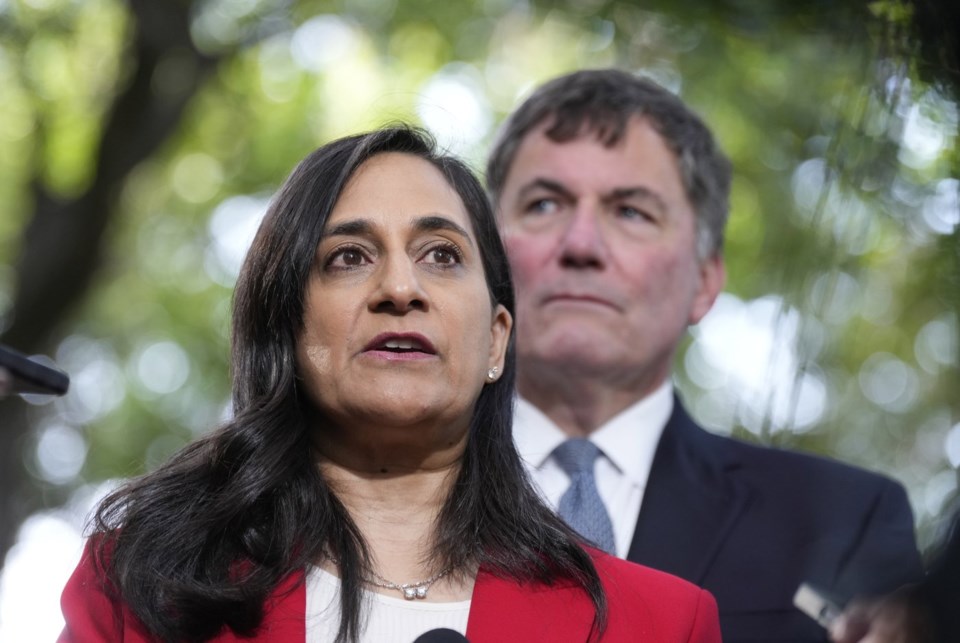
Ottawa, ON – Prime Minister Mark Carney will not deliver a major foreign policy address at the United Nations General Assembly during his upcoming trip to New York. Instead, Foreign Affairs Minister Anita Anand will speak on Canada’s behalf, addressing global leaders from the UN podium on September 29.
An updated UN speakers list confirmed Anand as Canada’s delegate, replacing Carney, who will remain in New York from Sunday through Wednesday but whose schedule did not align with the allocated speaking slot. Senior officials said the decision reflects logistical challenges, noting that under UN protocol, heads of state speak first and Carney would have been required to leave and return later in the week to deliver remarks.
Carney will instead outline his government’s foreign policy vision during a Monday lecture hosted by the Council on Foreign Relations and will participate in several key UN events, including discussions on stabilizing Haiti, repatriating Ukrainian children abducted by Russia, and addressing the ongoing Israel-Hamas conflict. He is also expected to attend a summit on reforming global financing for development projects and climate adaptation.
“In a more dangerous and divided global landscape, Canada is strengthening our international partnerships to build prosperity and advance shared solutions to the world’s most pressing challenges,” Carney’s office said in a statement.
Canada is expected to formally recognize Palestinian statehood during the UN proceedings. Speaking to reporters in Mexico City, Anand emphasized that recognition is a critical step toward preserving the possibility of a two-state solution but does not signal an immediate normalization of diplomatic relations with the Palestinian Authority. “Recognition is binary. You either recognize or you do not,” Anand said, adding that normalization, including opening embassies, will be considered later.
Meanwhile, NDP MP Jenny Kwan tabled a private member’s bill aimed at closing what she described as a “loophole” that allows U.S.-bound Canadian arms to bypass export vetting requirements before being sent abroad. The proposed legislation seeks to prevent certain weapons from reaching Israel and Saudi Arabia without oversight.
The federal government maintains it has banned arms exports to Israel that could be used in Gaza while still allowing the transfer of defensive technologies such as Iron Dome components. Activists and senators continue to call for tighter restrictions and greater transparency.