

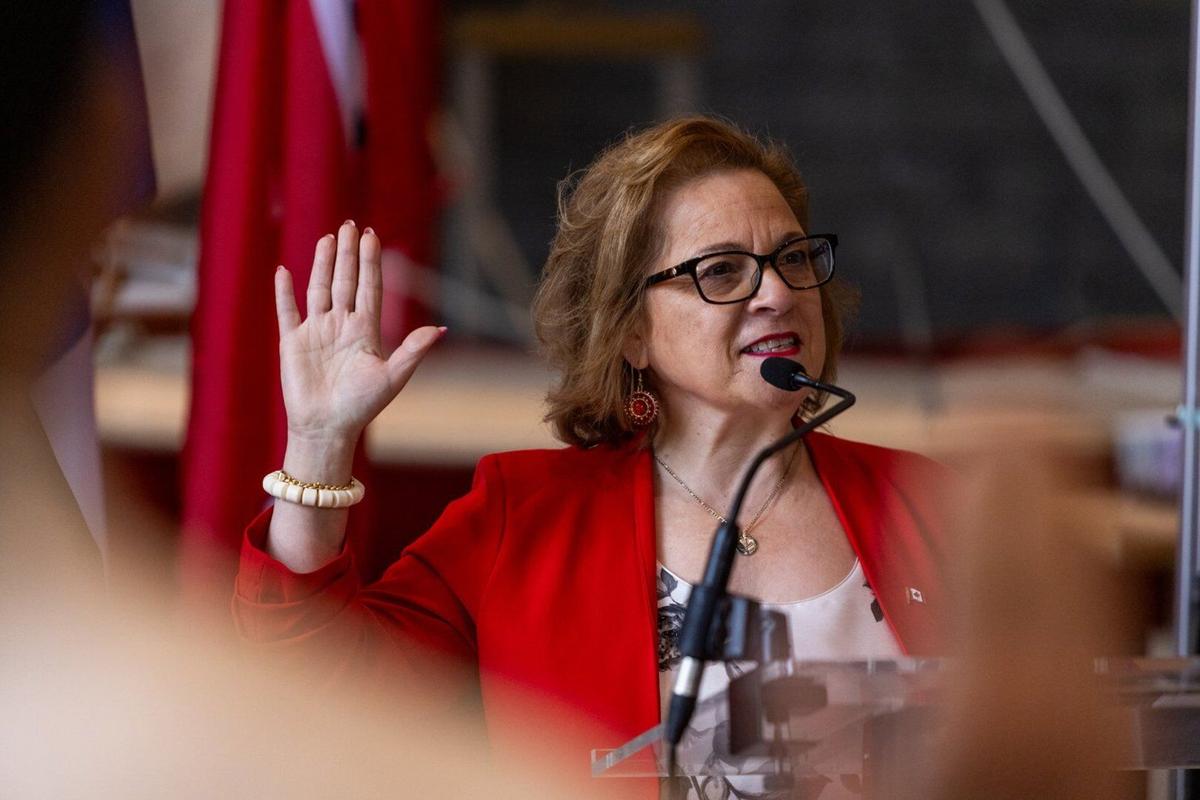
One year into her tenure as Canada’s immigration minister, Lena Metlege Diab has become a lightning rod for criticism. Yet many observers suggest her low profile may not be a sign of weakness but rather a deliberate strategy by Prime Minister Mark Carney to cool down one of the country’s most politically sensitive files.
Why critics are unhappy
Opposition Conservatives, led by immigration critic Michelle Rempel Garner, have accused Diab of:
- Being largely invisible in public.
- Relying heavily on senior bureaucrats to answer parliamentary questions.
- Providing unclear communication on immigration policies.
- Failing to address long processing delays, backlogs and fraud.
- Overseeing a system marked by uncertainty for temporary residents and asylum seekers.
Immigration lawyers and advocates also point to abrupt policy changes, refugee restrictions under Bill C-12, and reduced pathways for international students and workers.
What supporters and experts say
Several experts argue that Diab’s assignment was never to become a high-profile minister.
According to political scientist Phil Triadafilopoulos, the Prime Minister’s Office appears to be steering immigration policy while Diab’s role is to “decompress” the issue and keep it out of the headlines.
Immigration lawyer Kyle Hyndman says Diab has largely succeeded in reducing the political temperature around immigration.
Results under her watch
Since May 2025:
- International student arrivals have reportedly fallen by 89% compared with two years earlier.
- New foreign worker arrivals have dropped 37%.
- New asylum claims have declined 63%.
- The Parliamentary Budget Officer projects non-permanent residents will represent less than 5% of Canada’s population by 2027.
- Two major immigration laws were passed:
- Bill C-3, expanding citizenship-by-descent rules.
- Bill C-12, tightening asylum eligibility and granting broader powers to suspend or cancel immigration processing.
Remaining challenges
Despite reductions in numbers, major issues remain:
- Processing backlogs and uncertainty.
- Constant policy changes affecting temporary residents.
- Immigration fraud and fake job offers.
- Questions about fairness and predictability.
- Reduced access to health coverage for some asylum seekers.
- Economic concerns about lower international student and permanent resident numbers.
Political interpretation
Experts suggest Carney wanted:
✅ Lower immigration levels.
✅ Fewer immigration headlines.
✅ A more bureaucratically managed system.
✅ Less political drama than during the Trudeau years.
In that sense, Diab may actually be carrying out the Prime Minister’s mandate successfully, even if she lacks the public profile of previous immigration ministers.
Bottom line
Critics see a weak and largely invisible minister overseeing a system still plagued by uncertainty. Supporters and some academics argue that visibility was never the objective. Instead, Lena Metlege Diab appears to be executing Mark Carney’s strategy of reducing immigration numbers and removing the issue from the political spotlight.
Whether Canadians judge that approach as successful may depend less on falling numbers and more on whether the immigration system eventually becomes stable, predictable, and fair.