

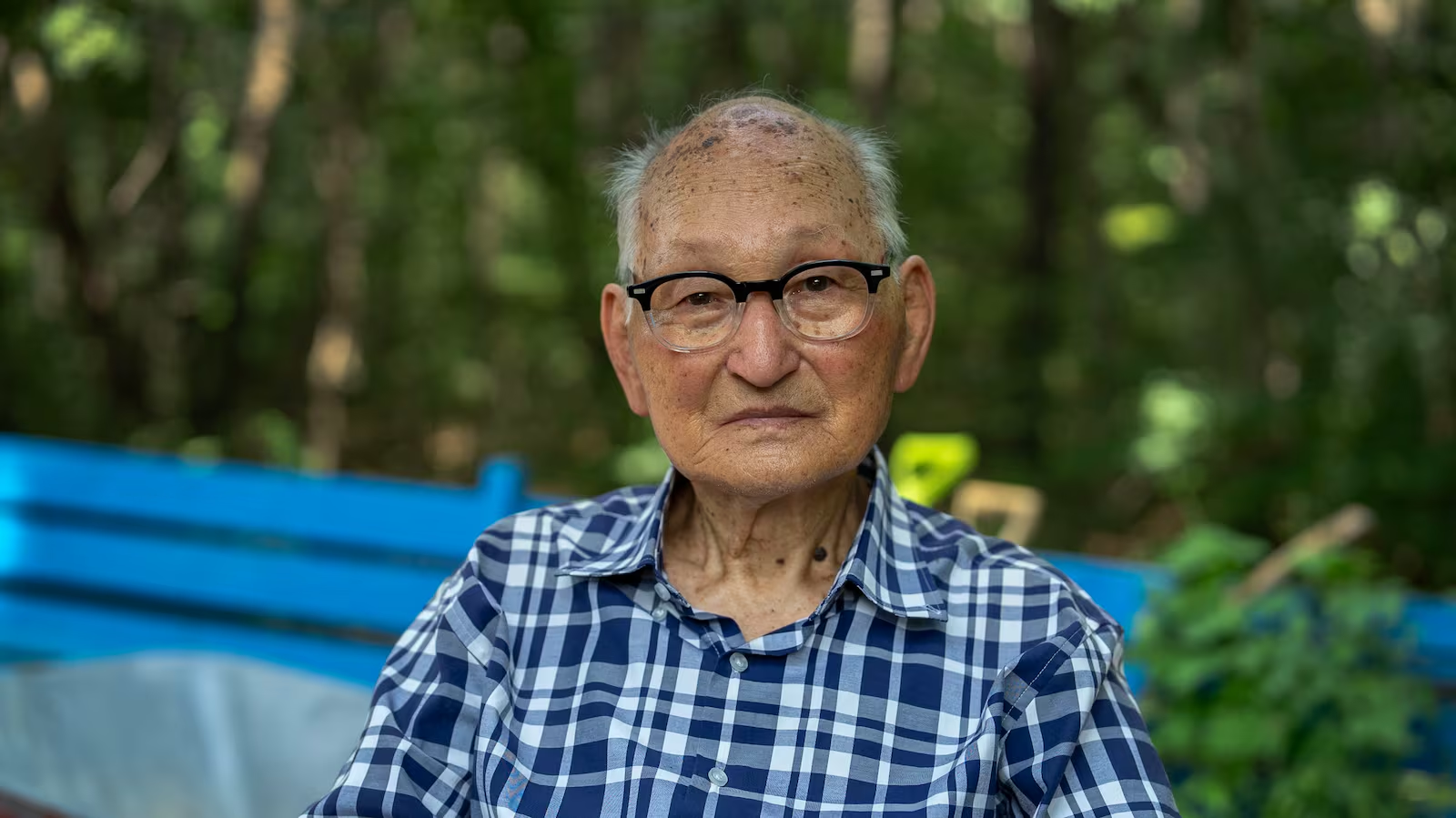
For 95-year-old Ahn Hak-sop, life has been defined by loyalty to North Korea, even while spending most of his years in the South. Captured during the Korean War and imprisoned for more than four decades for refusing to renounce his allegiance to Pyongyang, Ahn’s final wish is simple yet politically impossible: to cross the heavily fortified border and be buried in the land he still calls home.
This week, in a frail state and confined to a wheelchair, Ahn traveled to the Unification Bridge in Paju, near the Demilitarized Zone, pleading with South Korean officials to allow him passage. Holding a North Korean flag, he begged for the chance to die and be buried alongside his fallen comrades. Security personnel stopped him at the checkpoint and turned him back, citing national security law and the absence of any agreement with Pyongyang. For Ahn, the denial was devastating. “I miss the North, it’s unbearable,” he said. “I want to be buried in the free land.”
Ahn’s life reflects the enduring scars of the Korean Peninsula’s division. Born in 1930 under Japanese colonial rule, he joined North Korea’s army during the war, serving in intelligence before being captured in 1953. He was offered parole if he abandoned his beliefs, but he refused, spending 42 years and six months in prison. Even after being pardoned in 1995, he said he felt as if he had only moved from “a small prison to a bigger one,” still under the watchful eye of authorities.
In 2000, South Korea permitted dozens of long-term prisoners to return to the North, but Ahn declined, insisting his mission was unfinished. He remained in the South, convinced that the country was still under American influence, and chose to continue his quiet resistance. His modest home near the border is filled with North Korean posters and mementos, while a U.S. flag serves as his doormat.
Now in failing health and reliant on state benefits and help from acquaintances, Ahn says it would be a betrayal of his beliefs to be buried in South Korea. His plea to return has been met with sympathy from human rights advocates but little expectation of change, especially as inter-Korean relations remain frozen since Pyongyang cut communications in 2023.
For Ahn, the denial underscores a lifetime of division. “I am determined to go back to the home of my ideology, the home of my principles,” he said. “DPRK, the beginning of my life.”