

Guarded Optimism in India as Modi and Trump Forge Closer Military Ties
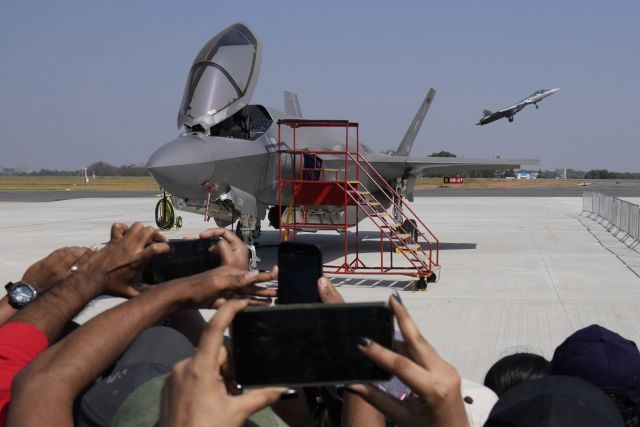
Military experts in India are expressing cautious optimism following a meeting between Prime Minister Narendra Modi and U.S. President Donald Trump, where the two leaders outlined plans to deepen defense cooperation. The proposed partnership includes the sale of advanced defense systems, such as F-35 stealth fighter jets, to India, marking a significant step in strengthening the strategic relationship between the two nations.
“Defense is a big-money sector, and India happens to be one of the top buyers in the world,” said Lt. Gen. Vinod Bhatia, India’s former director-general for military operations. “As long as we buy, Trump will be happy, but it’s surely going to expand our conventional deterrence.”
During their meeting at the White House, Modi and Trump announced plans to sign a new 10-year framework for the U.S.-India Major Defense Partnership later this year. The agreement aims to enhance military cooperation across all domains—air, land, sea, space, and cyberspace—through joint training, exercises, and operations. The leaders also pledged to improve logistics and intelligence sharing to support overseas deployments in the Indo-Pacific region.
While the partnership signals a shift toward closer U.S.-India ties, analysts caution that it will take years to reduce India’s reliance on Russian arms, which currently account for up to 60% of its defense equipment. “What India wants is co-production and more research and development in India. It’s a long-term project,” said Raja Mohan, an analyst at the Institute of South Asian Studies in Singapore.
India’s immediate need for over 100 fighter jets, for example, will not be met quickly by the F-35 deal. “They are not going to come tomorrow,” said Rahul Bedi, an independent defense analyst. “It’s going to take several years for them to start arriving.”
India’s defense strategy has increasingly focused on diversifying its acquisitions, with purchases from the U.S., Israel, and France complementing efforts to achieve self-reliance. However, Russia remains a critical supplier for military upgrades and modernization, particularly given India’s protracted border conflicts with Pakistan and China.
The growing strategic alliance between India and the U.S. is also driven by shared concerns over China’s rise as a global power. India has joined the Quad, an Indo-Pacific alliance with the U.S., Australia, and Japan, which aims to counter China’s economic and military influence in the region. “The major threat is from China, which is outstripping India’s capability,” said Lt. Gen. D.S. Hooda, former head of the Indian military’s Northern Command.
The defense partnership could also help address the trade deficit between the two countries. “It’s a win-win for all. America will get more business, and we’ll get modern weapons,” Hooda added. “It will also help to ease pressure on the tariff issue and trade deficit.”
As India navigates its complex defense needs, the new partnership with the U.S. offers a promising, albeit gradual, path toward modernization and strategic autonomy.