

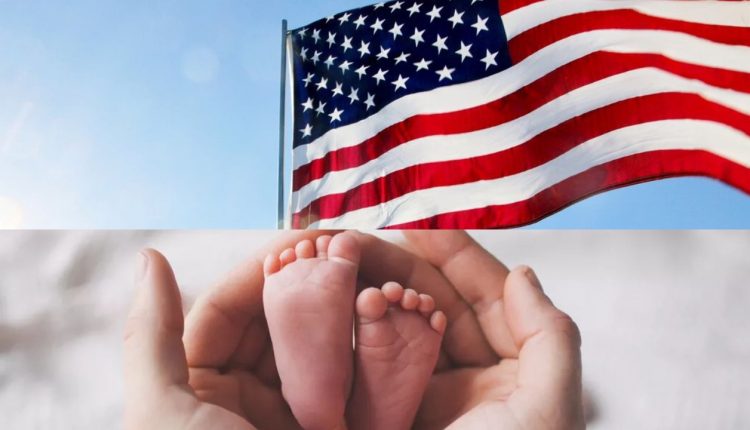
Indian Families on Temporary Visas Face New Challenges
On Monday, Donald Trump was sworn in as the 47th President of the United States. Within hours, he signed an executive order aimed at restricting the 14th Amendment—a cornerstone of U.S. citizenship law since 1868. The amendment guarantees citizenship to children born on U.S. soil, irrespective of their parents’ nationality. Trump’s executive action, which has already sparked lawsuits from 22 states and several civil rights organizations, seeks to curtail this right.
This policy marks the start of a broader crackdown on immigration—a central promise of Trump’s campaign. However, its immediate repercussions have sent shockwaves through immigrant families, particularly Indian professionals residing in the U.S. on H1B or L1 work visas.
For this group, already navigating lengthy waits for permanent residency, the executive order has amplified their anxiety. Under the new policy, set to take effect on February 20, 2025, children born in the U.S. will only gain automatic citizenship if at least one parent is a U.S. citizen or Green Card holder.
This looming deadline has triggered an unprecedented surge in requests for pre-term cesarean deliveries among Indian expectant mothers. Healthcare providers across the U.S. report a significant increase in parents seeking to ensure their children are born before the policy takes effect, thereby securing birthright citizenship.
“A seven-month pregnant woman came with her husband to schedule a cesarean, even though her due date is in March,” said Dr. S.D. Roma, a gynecologist in New Jersey, in an interview with The Times of India.
Similarly, Dr. S.G. Mukkala, an obstetrician in Texas, has spoken to numerous couples about the medical risks of early deliveries. “Complications include underdeveloped lungs, low birth weight, and neurological issues,” he explained. “Yet, I’ve counseled 15-20 desperate couples in just the last two days.”
For many Indian professionals on temporary work visas, birthright citizenship for their children represented a long-term strategy to secure their family’s future in the U.S. The executive order has upended these plans, intensifying the uncertainty surrounding their residency status.
The impact is even more severe for families stuck in the Green Card backlog. Over a million Indian nationals face decades-long waits for permanent residency, with no immediate resolution in sight. Without birthright citizenship, their children may face deportation or visa hurdles once they turn 21.
Some families are considering returning to India as an alternative. Addressing this possibility, President Trump remarked, “I don’t want to break up families. But the only way to avoid it is to send them all back.”
The executive order challenges the 14th Amendment, which unequivocally states: “All persons born or naturalized in the United States, and subject to the jurisdiction thereof, are citizens of the United States.” Legal experts predict intense scrutiny of the order by the Supreme Court, potentially leading to a landmark ruling.
If the courts uphold the 14th Amendment, only a constitutional change could permanently end birthright citizenship. However, amending the Constitution is an arduous process, requiring a two-thirds majority in Congress and approval from three-fourths of state legislatures—a feat not achieved since 1992.
Trump’s bold move has drawn both praise and condemnation, further polarizing the nation on immigration. Supporters view the order as a necessary step to reform U.S. immigration policies, while critics argue it undermines foundational American values and creates humanitarian crises.
For millions of immigrants, the order has intensified uncertainty, highlighting the precarious balance between policy reform and its human cost. The fight over birthright citizenship promises to shape America’s identity as a nation built on immigration for years to come.
As lawsuits proceed and debates rage on, one thing is certain: the outcome of this battle will define the future of immigration in the United States and the lives of countless families striving for stability and security.