

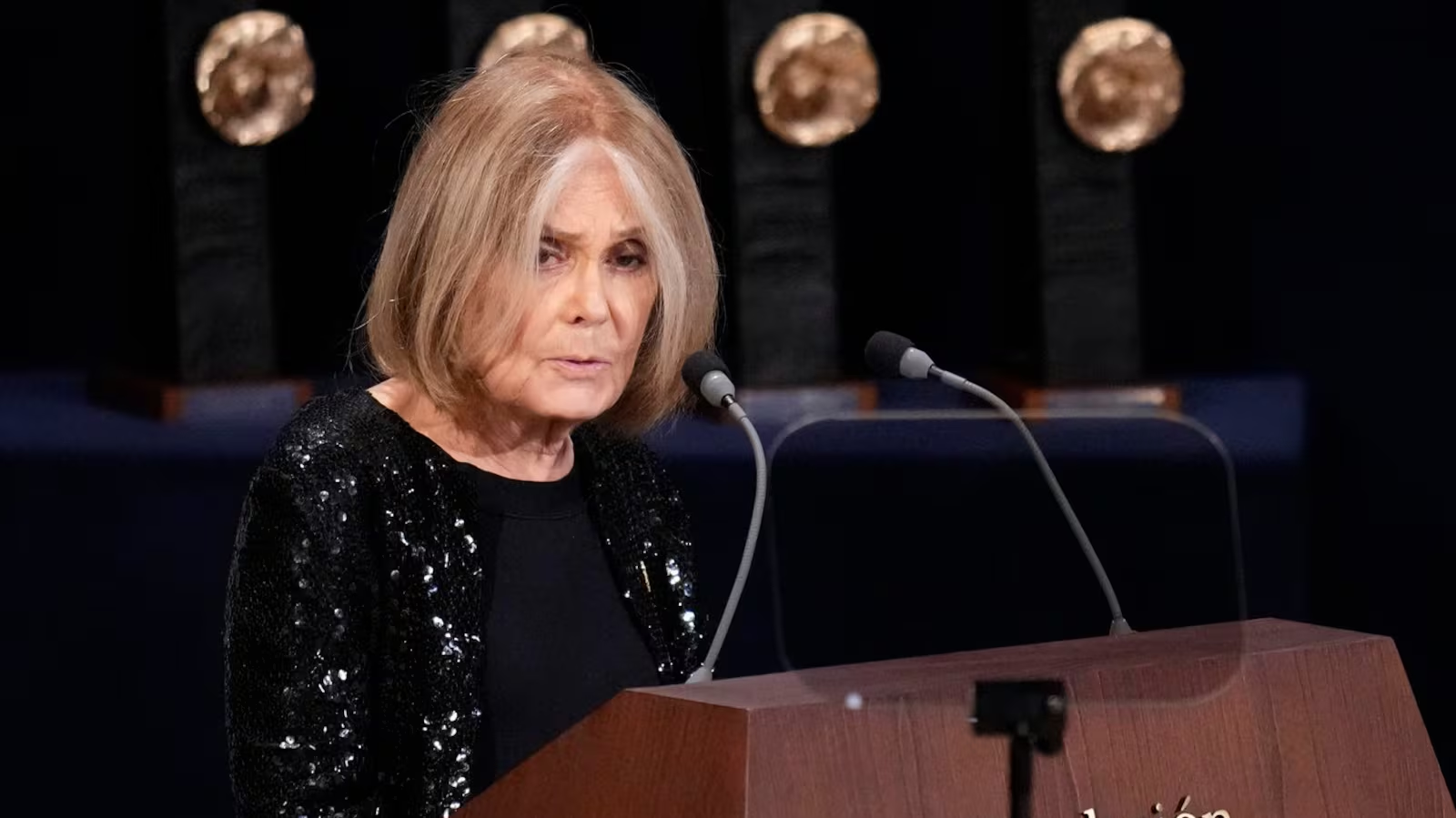
NEW YORK — September 3, 2026 — Gloria Steinem, the influential journalist, author and activist who became one of the most recognizable leaders of the American women’s movement, has died at the age of 92.
Steinem died Wednesday at her home in New York City, according to an announcement posted on social media by her representatives and foundation.
For more than half a century, Steinem was at the forefront of campaigns for women’s equality, reproductive rights and broader social justice, becoming an internationally recognized figure in modern feminism.
From Journalist to Activist
Steinem began her professional life as a journalist. One of her best-known early assignments came in 1963, when she went undercover to report on the working conditions of women employed as Playboy Club “Bunnies.”
A pivotal moment came several years later when she attended a public gathering where women spoke openly about abortion rights.
The subject was deeply personal. Steinem later disclosed that she had undergone an illegal abortion when she was 22.
The experience contributed to her increasingly active role in the women’s movement and her lifelong advocacy for women having control over decisions concerning their own bodies.
Co-Founder of Ms. Magazine
One of Steinem’s most enduring accomplishments was helping establish Ms. Magazine in 1972.
At the time, critics questioned whether a publication devoted to feminist issues could survive. Ms. went on to become an influential platform for discussions about gender equality, discrimination, reproductive rights, politics and social change.
Steinem herself became almost as recognizable as the magazine, known for her distinctive aviator glasses and long, centre-parted hair.
But her influence extended far beyond publishing.
She spent decades travelling throughout the United States and internationally, speaking at universities, community centres, political gatherings, marches and rallies.
Public Speaking Was Once Her Greatest Fear
Ironically, one of America’s most famous public speakers on women’s rights initially feared speaking before audiences.
Steinem said she would have preferred to remain primarily a writer. But when editors showed little interest in publishing serious coverage of the emerging women’s movement, she began speaking publicly.
What started as something she feared eventually became a major part of her life’s work.
A Lifetime of Advocacy
Steinem remained politically and socially active well into her 80s and 90s.
While women’s equality remained at the centre of her work, she also spoke about international peace, discrimination, female genital mutilation and numerous other human-rights issues.
Her influence crossed generations.
In 2020, her life was portrayed in the feature film “The Glorias,” based on her 2015 memoir My Life on the Road, with Julianne Moore among the actresses portraying Steinem.
Even at age 91, Steinem was still publishing. She collaborated with Liberian peace activist and Nobel laureate Leymah Gbowee on the children’s picture book Rise, Girl, Rise: Our Sister-Friend Journey. Together for All, published in February 2026.
A Controversial Figure to Some
Steinem’s prominence also made her a frequent target of criticism.
Her positions on feminism, abortion and traditional gender roles generated strong opposition, particularly during the cultural and political battles of the 1970s and 1980s.
Even President Richard Nixon was recorded disparaging Steinem and the use of the title “Ms.”
Steinem responded to critics with the humour for which she became well known. Her wit frequently accompanied serious arguments about discrimination and equality.
Bringing People Together
In her later years, Steinem increasingly emphasized the importance of personal connection.
She hosted discussion or “talking circles” involving hundreds of people at her New York home and argued that technology could not completely replace face-to-face human interaction.
Her representatives said after her death that one of Steinem’s greatest abilities was listening and making other people feel that their experiences mattered.
A Legacy Spanning Generations
Gloria Steinem’s significance goes well beyond any single organization or campaign.
She helped bring conversations about women’s rights, workplace discrimination, reproductive freedom and equality from the margins of American public debate into mainstream politics and society.
She was also part of a generation of activists who challenged assumptions about what women could do professionally, politically and personally.
For supporters, she represented independence and equality. For critics, she was sometimes a polarizing symbol of profound social change.
Either way, Gloria Steinem became one of the defining figures of the modern American women’s movement, and her influence on journalism, activism and the debate over women’s rights stretched across more than six decades.
She was 92.