

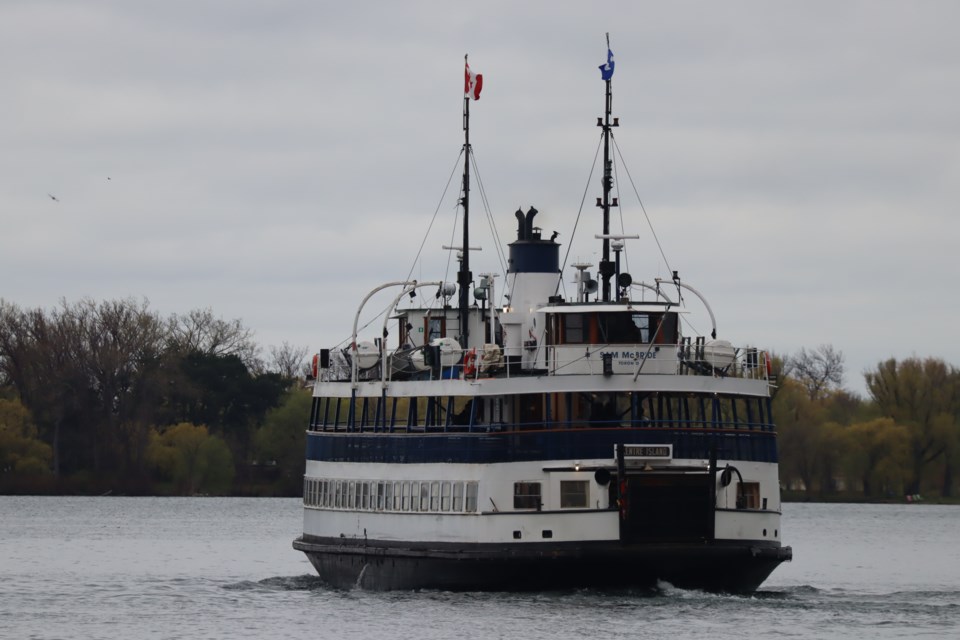
TORONTO — Toronto’s decision to offer free ferry rides to seniors and youth produced a record-breaking surge in trips to the Toronto Islands in August, but the nearly $1-million initiative is also generating political controversy over how the City financed the program.
More than 423,000 ferry trips were recorded during August, the highest monthly total in Toronto’s history and nearly 30,000 above the previous record established in July 2018.
The increase came despite unusually rainy weather during the month, suggesting the free-fare initiative provided a significant incentive for residents to visit the islands.
The program followed a motion brought forward by Mayor Olivia Chow and Spadina–Fort York Councillor Ausma Malik at the final city council meeting before Toronto’s Oct. 26 municipal election.
Under the initiative, seniors and youth were allowed to ride Toronto Island ferries free throughout August.
City ridership figures indicate that seniors and young people were responsible for much of the increase.
Adult ferry ridership rose only slightly compared with August 2025, increasing by just over four per cent.
Senior ridership, however, jumped by nearly 60 per cent, rising from approximately 25,000 trips in August 2025 to more than 40,000 this year.
Youth ridership, covering passengers between the ages of 15 and 19, increased by almost 44 per cent, climbing from fewer than 25,000 trips last August to more than 35,000 this year.
The numbers suggest the free-fare program succeeded in attracting precisely the groups it was designed to encourage.
But while the ridership results were impressive, the way the City found approximately $940,000 to finance the program has become a political issue.
The money was connected to funds originally received from developers behind Pinnacle One Yonge, a major three-tower development near the foot of Yonge Street.
Those funds were collected through the former Section 37 density-bonusing system, under which developers contributed money to the City in exchange for permission to construct larger or taller developments.
Provincial rules generally required Section 37 funds to support community infrastructure and other long-term capital improvements rather than operating expenses such as subsidizing ferry fares.
The City therefore used approximately $1.4 million in developer contributions toward restoration of the Jack Layton Ferry Terminal.
Doing so freed an equivalent amount of previously committed City funding that did not carry the same restrictions.
From those newly available municipal funds, approximately $940,000 was allocated to free ferry rides, while another $450,000 was directed toward reducing City debt.
Malik defended the arrangement, arguing that the City’s approach remained within the rules governing the funds.
Critics, however, have questioned whether money connected to development-related community benefits should ultimately have been used to support temporary free ferry transportation.
Councillor Brad Bradford, who is challenging Chow in the Oct. 26 mayoral election, has been among the strongest critics.
Bradford argued that development-related funds are intended to support infrastructure needed by growing communities rather than provide temporary transportation subsidies immediately before an election.
He also compared the approach to using developer contributions to subsidize TTC fares and said he would not repeat the practice if elected mayor.
Chow has said that any portion of the $940,000 remaining after the free ferry program is fully accounted for will be returned to improvements at the ferry terminal.
The final cost has not yet been determined because the free-ridership period only recently ended.
Whatever the eventual price tag, the initiative clearly had an impact on ferry usage.
July and August are traditionally the busiest months for trips to the Toronto Islands, but August 2026 moved into unprecedented territory by becoming the first month in which ferry ridership surpassed 400,000 trips.
The surge among seniors and young people was particularly striking and provides evidence that eliminating even a relatively modest transportation cost can influence recreational travel decisions.
The political question is whether the record attendance justifies spending close to $1 million in municipal funds.
Supporters can point to tens of thousands of additional seniors and young people enjoying one of Toronto’s most popular public recreational destinations.
Critics can argue that temporary free transportation should not take priority over infrastructure, debt reduction or other municipal needs, particularly when the initiative was approved shortly before an election.
With Toronto voters heading to the polls on Oct. 26, the record-breaking ferry experiment has therefore become about considerably more than a trip across the harbour.
It has emerged as another election-season debate over how Toronto should spend public money — and whether record participation is enough to justify the cost.