

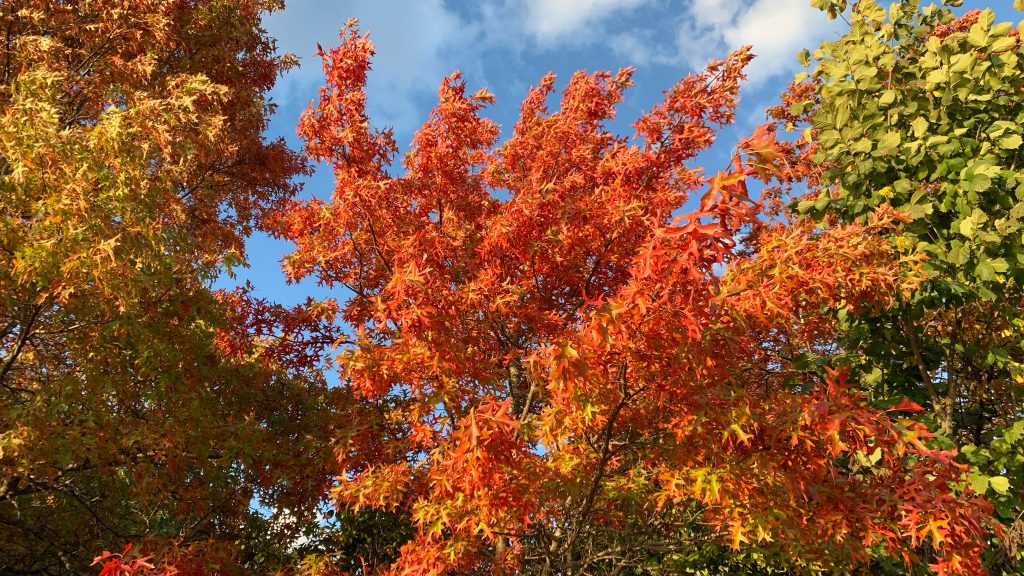
TORONTO — Ontario’s forests will soon begin their annual transformation from summer green to brilliant shades of red, orange and yellow, but weather conditions over the next several weeks could determine whether the fall of 2026 delivers a spectacular colour show or a more subdued season.
The annual transition normally begins around the middle of September in northern Ontario before gradually moving south and continuing through October.
While the timing of the change is relatively consistent from year to year, the intensity of the colours can vary considerably depending on temperature, rainfall, sunlight and the overall health of the trees.
Ryan Statham, an ISA-certified arborist with Davey Tree in Strathroy, says many people assume cold weather is what causes leaves to change colour, but the main trigger is actually the shortening of daylight hours.
As autumn approaches and the days become shorter, trees begin a natural process known as senescence.
During this process, trees gradually shut down photosynthesis in their leaves and recover valuable nutrients, including nitrogen, minerals and sugars, before the leaves eventually fall.
It is essentially a survival and recycling system that allows trees to preserve nutrients for the following growing season.
As chlorophyll — the pigment responsible for the familiar green colour of leaves — breaks down, other pigments become visible.
Carotenoids produce the yellow and orange colours associated with autumn, while pigments called anthocyanins are responsible for many of the striking reds and purples.
Although shorter days initiate the process, weather plays an important role in determining just how brilliant those colours become.
Some of the best conditions for spectacular fall foliage are bright, sunny days followed by cool nights.
Sunny conditions allow leaves to continue producing sugars through photosynthesis, while colder nighttime temperatures slow the movement of those sugars out of the leaves. That combination can increase the production of anthocyanins and produce particularly vivid red and purple foliage.
A warm, cloudy and wet autumn can have the opposite effect.
If overnight temperatures remain unusually mild and daytime skies are frequently overcast, trees may produce less intense colours. Too much or too little water can also stress trees, potentially causing leaves to wilt, turn brown or fall before reaching their peak colour.
That makes Ontario’s early fall weather outlook particularly important this year.
Environment and Climate Change Canada’s seasonal outlook currently indicates a 40 to 50 per cent probability of above-average temperatures across southern Ontario and cottage country during the September-to-November period.
There is also roughly a 30 per cent probability of above-normal precipitation.
Early September is also expected to begin warmer than normal, according to The Weather Network.
If those conditions translate into persistently warm nights combined with frequent cloudy or rainy days, Ontario could experience somewhat duller fall colours in some locations.
The forecast does not mean a disappointing season is guaranteed, however. Fall colour intensity can depend heavily on short-term weather conditions, and several weeks of sunny days and cool nights could significantly improve the display.
Tree health will also play a role.
Trees affected by disease, insects, drought or excessive moisture may change colour differently or lose their leaves earlier than healthy trees. Low-lying locations that received particularly heavy rainfall could experience premature leaf drop.
Homeowners hoping to keep trees healthy heading into autumn are advised to avoid excessive watering and consider applying mulch around trees to help the soil retain appropriate moisture.
For people planning fall drives, hikes or photography trips, the best viewing locations will gradually shift southward as September progresses into October.
Ontario Parks provides a fall-colour report tracking conditions at provincial parks, while Algonquin Provincial Park and the Muskoka region operate their own seasonal colour trackers.
Those reports generally become particularly useful from around mid-September, when the transformation begins accelerating across some of Ontario’s most popular fall destinations.
The exact quality of Ontario’s 2026 colour season therefore remains difficult to predict.
Current forecasts suggesting warmer-than-normal conditions could work against the most brilliant displays, particularly if warm nights are accompanied by cloudy and wet days.
But if Ontario receives plenty of sunshine followed by crisp, cool nights as September progresses, the province could still produce the spectacular reds, oranges and yellows that make autumn one of its most colourful seasons.
For fall-colour watchers, the next few weeks of weather will make all the difference.