

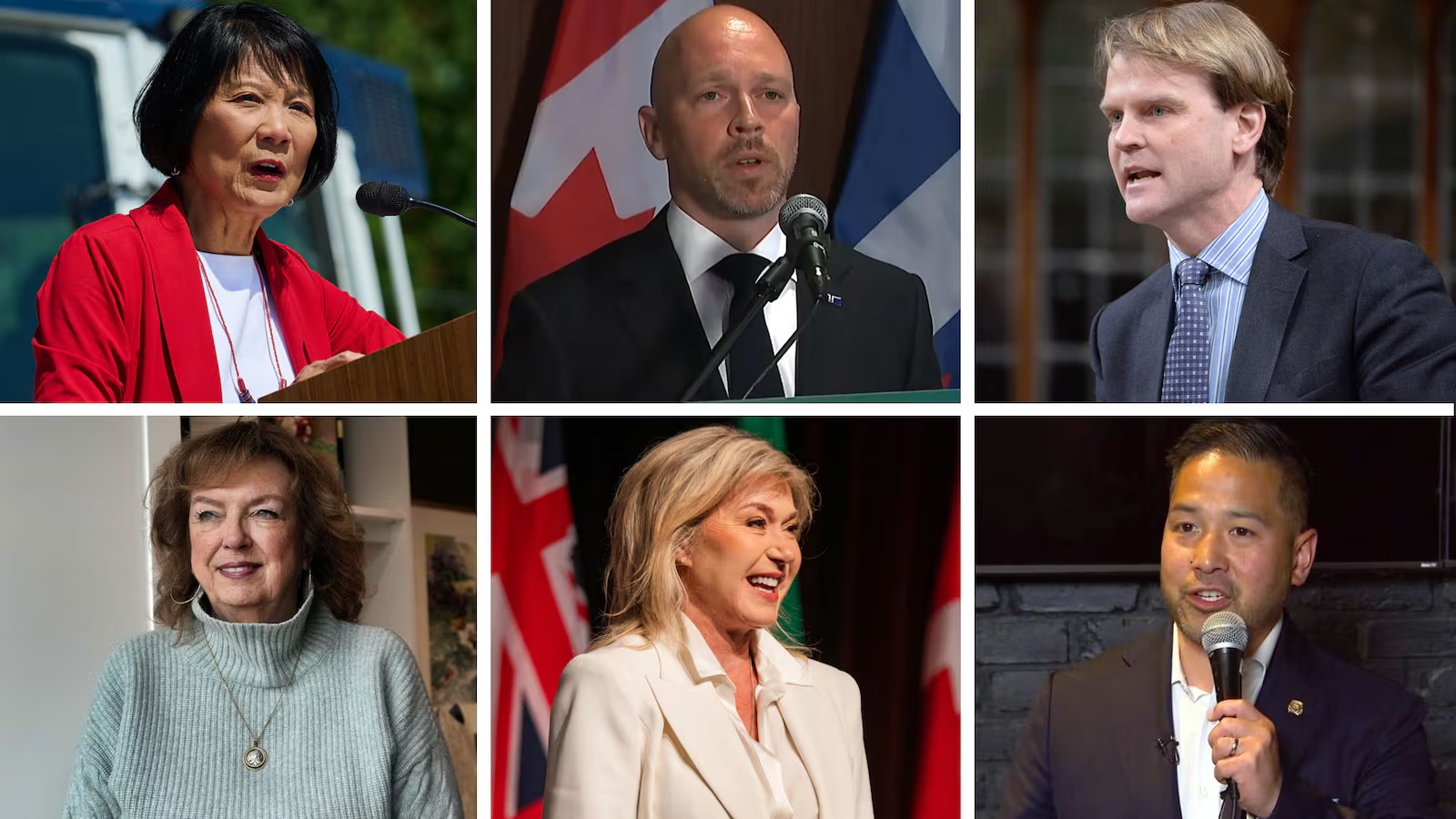
Mayoral candidates in Toronto and Mississauga are putting forward a range of measures aimed at protecting local businesses as the escalating Canada-U.S. trade dispute creates growing uncertainty for employers, manufacturers and exporters across the Greater Toronto Area.
With new American tariffs reaching as high as 50 per cent on some goods and Canadian counter-tariffs expected to affect a broad range of U.S. products, municipal candidates are increasingly focusing their campaigns on property tax relief, faster business approvals, local procurement and financial assistance for companies exposed to cross-border trade.
In Toronto, Olivia Chow is emphasizing support for Canadian businesses and urging residents to buy locally produced goods. She says the city has already taken steps to strengthen businesses through programs such as the Economic Development and Growth in Employment initiative, commonly known as EDGE.
The program provides property tax incentives to eligible companies that expand their operations and create employment. Since its launch in January 2025, projects approved under the program have represented approximately $220 million in construction investment, with hundreds of new jobs expected to be created and existing positions retained.
Chow says more than 98 per cent of Toronto’s procurement spending already goes to Canadian companies. She has also pointed to the city’s decision to increase the small-business property tax reduction to 20 per cent in 2026.
Warning that the trade dispute could add further pressure to grocery prices and the overall cost of living, Chow has described the tariff confrontation as damaging for businesses and consumers alike.
Her main rival, Brad Bradford, is proposing a more direct property tax measure for businesses affected by the trade war. Bradford says approximately 3,500 industrial businesses would receive a 25 per cent property tax reduction for each year the trade dispute continues.
He argues that the relief would allow companies to preserve cash, maintain employment and continue operating while dealing with higher costs and uncertainty.
Bradford is also proposing the creation of a permanent municipal tariff-response table bringing together manufacturers, workers and industry representatives. His plan includes speeding up permits and approvals for companies looking to expand, renovate or modernize their facilities.
Another Toronto candidate, Chris Alexander, is proposing a broader package of measures aimed particularly at small and newly established businesses.
Alexander wants Toronto to expand its EDGE incentive program so that qualifying entrepreneurs starting new businesses could receive reimbursement of commercial property taxes.
He is also proposing a small-business bridge-support program involving credit unions and the Business Development Bank of Canada. The initiative would seek to provide financing for businesses experiencing short-term cash-flow difficulties because of tariffs.
Alexander has additionally proposed reducing municipal licensing costs by 30 per cent for street vendors, farmers’ markets and other small businesses. He wants the city to lower the commercial-to-residential property tax ratio and has pledged not to increase residential property taxes during his first two years as mayor.
The trade dispute is also emerging as a major campaign issue in Mississauga, one of Canada’s largest industrial and business centres.
Incumbent mayor Carolyn Parrish says Mississauga is particularly vulnerable because tens of thousands of local jobs are connected directly or indirectly to trade with the United States.
Parrish estimates that about 89,000 jobs in Mississauga are linked to U.S. trade. Automotive manufacturing, machinery, electronics, plastics, furniture, steel and aluminum are among the sectors potentially exposed to tariffs and disruptions in cross-border commerce.
She says the city is examining whether property tax subsidies or temporary tax holidays could be offered to small businesses suffering directly from tariff-related pressures.
Former Mississauga mayor Bonnie Crombie, who is also seeking the mayor’s office, has proposed interest-free property tax deferrals on the municipal portion of commercial and industrial taxes for qualifying companies directly affected by U.S. tariffs.
Her proposal would also require Mississauga to pay eligible local small and medium-sized suppliers within 15 days, helping businesses maintain stronger cash flow during difficult economic conditions.
Crombie wants Buy Canadian and Made-in-Mississauga purchasing policies made permanent and measurable, arguing that municipal governments can use their substantial procurement budgets to support domestic businesses even though international trade policy itself is controlled by federal governments.
Her plan also calls for a Mayor’s Tariff Action Team capable of responding within 48 hours when major local employers face significant decisions involving jobs, investment or plant operations.
Mississauga councillor and mayoral candidate Alvin Tedjo is taking a somewhat different approach, arguing that the trade confrontation should be used as an opportunity to reduce the city’s dependence on the American market.
Tedjo says roughly one in five Mississauga jobs is connected to U.S. trade, but believes the city’s skilled workforce, manufacturing base and transportation infrastructure provide an opportunity to attract investment from Canada and other international markets.
His proposal includes helping companies access existing trade-support programs, encouraging consumers to purchase Canadian goods and using the mayor’s office to promote Mississauga as a destination for new domestic and international investment.
The competing proposals show how the Canada-U.S. tariff dispute is rapidly becoming a municipal election issue, despite international trade traditionally falling under federal jurisdiction.
Municipal governments cannot negotiate tariffs or international trade agreements, but they control property taxes, licensing, procurement, development approvals and economic-development programs that can have a direct impact on local businesses.
With Toronto and Mississauga together representing one of Canada’s largest concentrations of manufacturing, logistics, finance and small-business activity, the economic consequences of a prolonged trade confrontation could be significant.
As the tariff dispute continues, voters are increasingly being presented with a broader question: how far should municipal governments go in using tax relief, public purchasing and economic incentives to protect local companies from decisions being made far beyond city hall?