

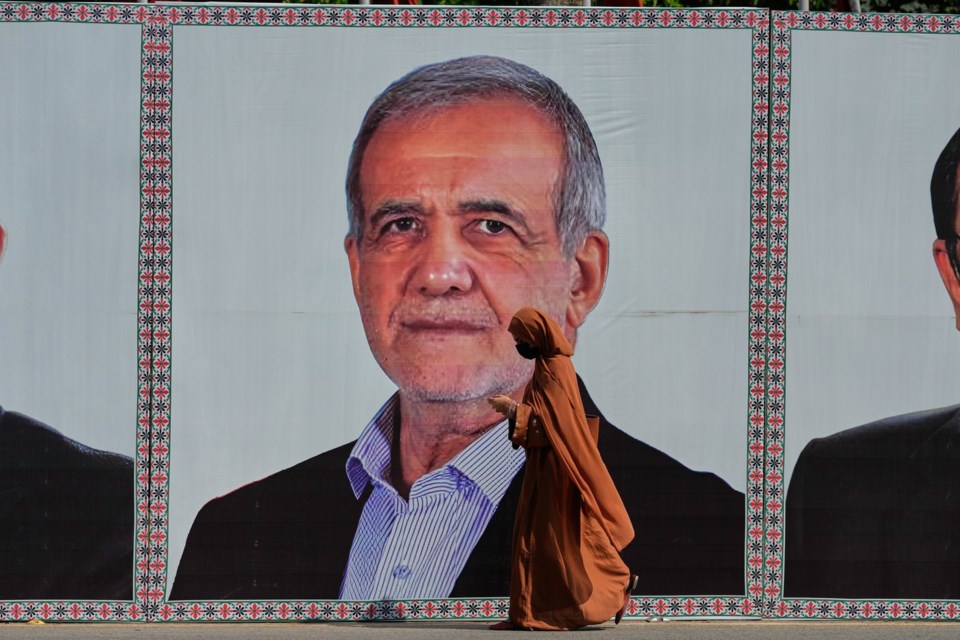
Diplomatic efforts to bring a permanent end to the Middle East conflict entered a critical phase Tuesday as Iranian President Masoud Pezeshkian arrived in Pakistan for high-level discussions with officials helping mediate negotiations between Tehran and Washington. The visit comes amid signs of progress in Switzerland, but also growing disagreements over key issues and renewed violence in southern Lebanon.
Pezeshkian was welcomed in Islamabad by Pakistani President Asif Ali Zardari and Prime Minister Shehbaz Sharif, marking his first visit abroad since the conflict with the United States and Israel erupted in late February. Iranian Foreign Minister Abbas Araghchi joined the delegation as technical teams in Switzerland continued work on a proposed agreement designed to permanently end the war.
The diplomatic process follows high-level talks in Switzerland between U.S. Vice President JD Vance and Iranian parliamentary speaker Mohammad Bagher Qalibaf. Those discussions launched a 60-day framework aimed at resolving issues surrounding Iran’s nuclear program, sanctions relief and regional security.
However, cracks have already appeared in the emerging agreement. American officials have said Iran agreed to permit inspectors from the International Atomic Energy Agency to visit nuclear facilities damaged in previous U.S. strikes. Tehran quickly disputed those claims, insisting that no such inspections have been scheduled.
Differences have also emerged regarding billions of dollars in Iranian assets that could eventually be unfrozen if sanctions are eased. Vance suggested the funds would be used to purchase American agricultural products under a mechanism overseen by the United States and Qatar. Iranian officials rejected that characterization, insisting that Tehran alone would determine how its assets are spent and that import decisions would be based solely on price and quality.
Despite those disagreements, negotiators have established specialized working groups to address sanctions relief, reconstruction, nuclear matters and monitoring mechanisms. A communication system has also been created to prevent incidents in the Strait of Hormuz and to manage tensions in Lebanon.
Yet renewed violence in southern Lebanon has highlighted the fragility of the diplomatic process. Two people were reportedly killed after Israeli forces opened fire in the Nabatiyeh region, ending two days of relative calm following a ceasefire reached over the weekend. The flare-up threatens to complicate negotiations, as Iran has repeatedly insisted that a lasting ceasefire in Lebanon is essential to any broader peace agreement.
Israeli Prime Minister Benjamin Netanyahu added further uncertainty by reaffirming that Israel retains full freedom of action against threats originating from Lebanon, while Hezbollah has maintained that attacks will continue unless Israeli forces withdraw from occupied areas.
Meanwhile, thousands of displaced Lebanese residents have begun returning to their homes after the recent lull in fighting, raising hopes that the ceasefire can hold despite lingering tensions.
As Lebanon and Israel prepare for another round of direct talks in Washington, diplomats are racing to transform the current truce into a durable peace. But with disagreements emerging over inspection rights, sanctions relief and the future of Lebanon, the path to a final agreement remains uncertain.
For now, the arrival of Iran’s president in Pakistan underscores the increasingly important role regional powers are playing in a peace process that could reshape the Middle East and determine whether diplomacy succeeds where months of warfare have failed.