

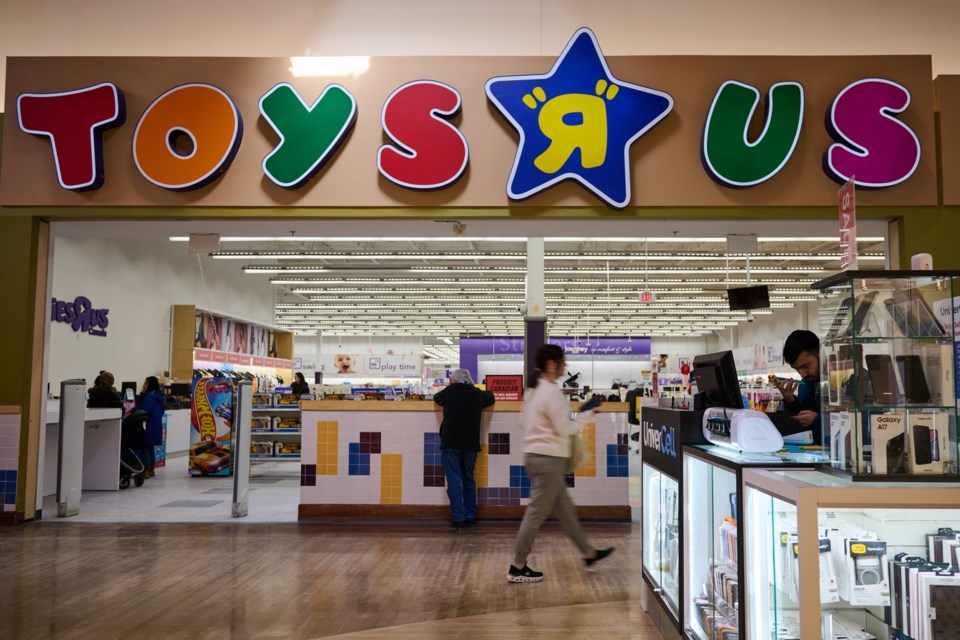
The future of Toys “R” Us Canada remains uncertain after an Ontario court approved the sale of the struggling retailer’s assets to three separate buyers in a move aimed at helping the company repay millions of dollars owed to creditors.
Justice Jane Dietrich authorized the transactions, which come months after the toy retailer sought creditor protection amid mounting financial pressures. The deals are expected to help address debts exceeding $120 million owed to suppliers, along with substantial obligations to landlords and other creditors.
One of the transactions will see U.S.-based Ad Populum acquire the rights to the Toys “R” Us Canada and Babies “R” Us Canada names, logos and more than 150 trademarks. The package includes iconic assets such as Geoffrey the Giraffe, the familiar Toys “R” Us jingle and well-known slogans that have been associated with the brand for generations. Ad Populum also owns Party City and has interests in several entertainment and consumer brands.
A second agreement transfers the retailer’s remaining inventory, equipment, logistics contracts and ten store leases to a company controlled by current owner Doug Putman. Putman, who also owns Sunrise Records, HMV, Northern Reflections, Ricki’s and Cleo, intends to continue operating the business if possible. He currently holds a licence to use the Toys “R” Us name until January 2027 and hopes either to extend that arrangement or introduce a new brand.
The third transaction involves the sale of the lease for the Vaughan Mills location to Fox Group Jumbo Canada, which plans to expand its discount home goods business into Canada. Signs have already appeared at the Vaughan Mills store informing customers that the location will soon close.
Once a dominant force in the toy industry, Toys “R” Us Canada has undergone dramatic downsizing in recent years. Before entering creditor protection in February, the company had already closed 53 stores. Additional closures since then have reduced the chain to just 15 locations and approximately 260 employees.
Questions now surround what the future will look like for the iconic retailer. It remains unclear whether Ad Populum intends to revive the brand itself or license the name to others, and Putman has yet to reveal any alternative branding plans should his rights to the Toys “R” Us name expire.
For many Canadians who grew up visiting the brightly coloured stores and hearing the familiar slogan that promised they “didn’t want to grow up,” the latest developments mark another chapter in the long decline of one of the country’s most recognizable retail brands.
Whether Toys “R” Us survives under its famous name or re-emerges in a new form, the court-approved restructuring signals the end of an era and the beginning of an uncertain future for a beloved Canadian retail institution.