

A newly announced memorandum of understanding between the United States and Iran has eased immediate tensions in the Middle East and paved the way for broader negotiations, but many of the most difficult and contentious issues remain unresolved.
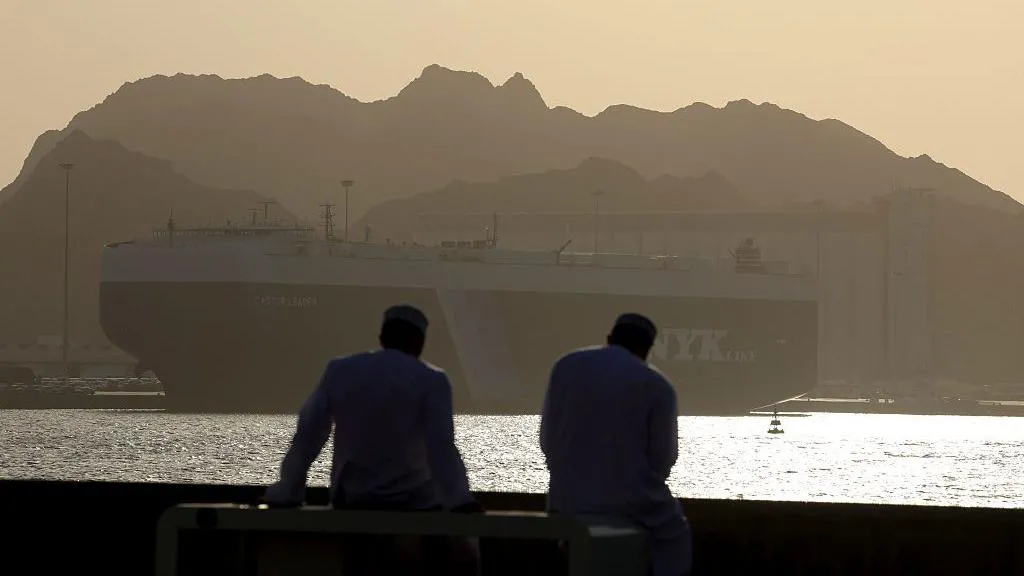
The agreement, unveiled following discussions at the G7 Summit in France, effectively reopens the strategically vital Strait of Hormuz and establishes a framework for a 60-day negotiating period aimed at reaching a comprehensive and lasting peace agreement. While both Washington and Tehran have described the memorandum as an important step forward, analysts caution that it represents only the beginning of a much larger diplomatic challenge.
U.S. President Donald Trump hailed the agreement as a major diplomatic achievement and reiterated his commitment to preventing Iran from ever obtaining nuclear weapons. However, the current framework falls short of a final nuclear agreement and leaves many technical and political questions unanswered.
Under the terms announced so far, Iran has agreed to reduce or “downblend” its stockpile of highly enriched uranium under the supervision of the International Atomic Energy Agency. While U.S. officials describe this as a significant concession, the precise mechanisms, timelines, verification procedures, and long-term nuclear restrictions remain subject to future negotiations.
The two countries now face an ambitious 60-day deadline to negotiate a comprehensive accord. Achieving such a complex agreement within two months would be a remarkable diplomatic feat, considering that the original 2015 nuclear agreement required nearly two years of intensive negotiations.
One of the most controversial aspects of the memorandum involves Iran’s economic reconstruction. The agreement calls for cooperation with regional partners to develop a reconstruction plan valued at more than $300 billion. Although American officials insist the United States is not committing direct financial assistance to Iran, the language has raised questions about whether future funding arrangements could eventually involve U.S. participation or support.
The reconstruction issue has already become politically sensitive in Washington. President Trump has frequently criticized previous administrations for providing financial concessions to Iran and has repeatedly promised that his administration would not transfer U.S. taxpayer money to Tehran. Any future financial commitments could face opposition from both lawmakers and portions of Trump’s political base.
Critics also argue that the agreement leaves several major security concerns largely unaddressed. Iran’s support for regional proxy groups, including Hezbollah, receives little attention in the current framework despite being a central concern for both the United States and Israel throughout the conflict. Likewise, Iran’s ballistic missile program, another key issue raised by Washington and Jerusalem, remains largely absent from the memorandum.
The agreement has already generated mixed reactions among political leaders. Supporters view it as a necessary first step toward reducing tensions and avoiding a prolonged military conflict in the region. Critics, however, contend that Iran has secured important concessions without making sufficient commitments on its nuclear ambitions, missile capabilities, or regional influence.
Meanwhile, Iranian officials are presenting the agreement domestically as a diplomatic success that helped avoid further military escalation while opening the door to economic recovery and reconstruction.
Despite the optimism surrounding the signing, significant uncertainty remains. The memorandum itself acknowledges the possibility that negotiations may need to extend beyond the initial 60-day period. Even President Trump suggested that failure to reach a final agreement could result in a return to military action, underscoring the fragile nature of the current arrangement.
For now, the agreement has reduced immediate tensions and restored vital maritime traffic through one of the world’s most important energy corridors. Whether it ultimately evolves into a lasting peace settlement, however, will depend on the success of the difficult negotiations that lie ahead. The coming weeks may prove decisive not only for U.S.-Iran relations but also for the broader stability of the Middle East and global energy markets.