

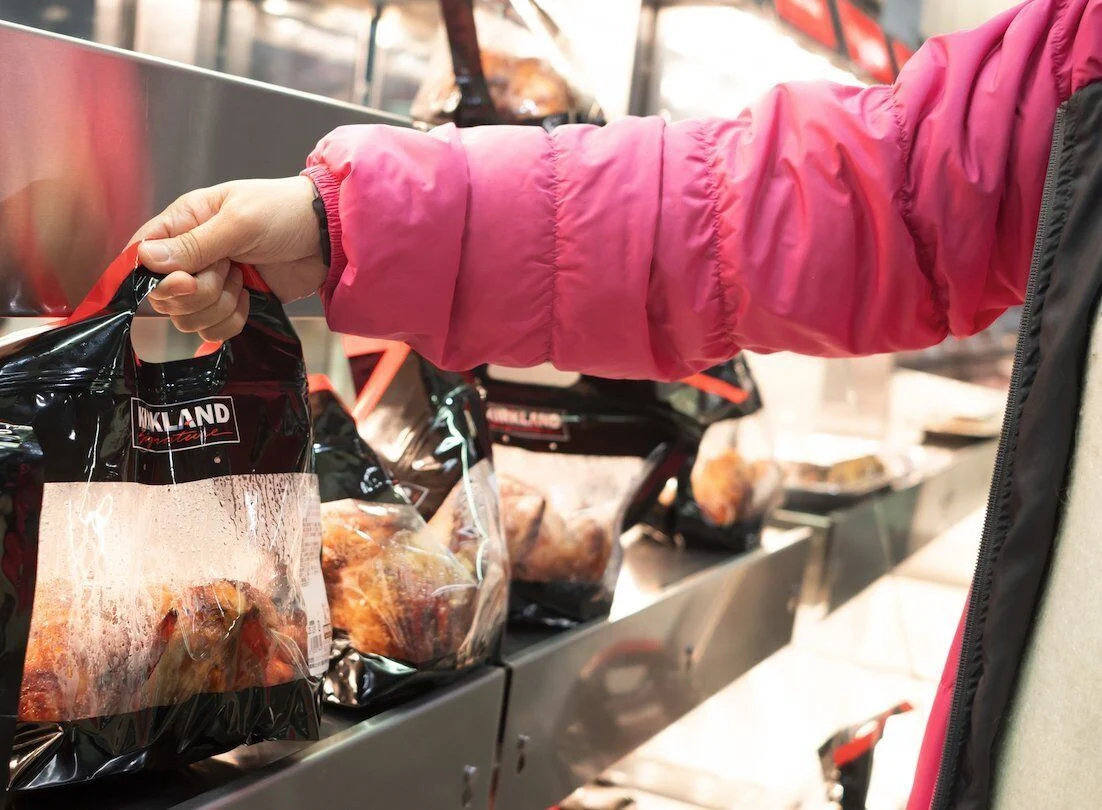
As food prices continue to climb across Canada, many shoppers are wondering whether one of the country’s most beloved bargains—the Costco rotisserie chicken—is finally headed for a price increase.
The concern comes as wholesale chicken prices have surged dramatically over the past year. Increased consumer demand, rising production costs, and changing market conditions have pushed poultry prices significantly higher, making chicken one of the fastest-rising grocery items in many Canadian households.
Yet despite these pressures, Costco’s famous Kirkland rotisserie chicken continues to sell for less than $10, maintaining a price point that has become almost legendary among Canadian consumers.
According to food industry experts, the chances of Costco raising the price of its signature chicken in the near future remain extremely low. The reason lies not in the profitability of the chicken itself, but in the broader business strategy behind it.
Retail analysts explain that the rotisserie chicken serves as a powerful traffic generator. Customers are often drawn into Costco warehouses specifically to purchase the chicken, but once inside, they typically buy a wide range of additional products that carry much higher profit margins. As a result, the company views the chicken less as a profit-making item and more as a customer attraction tool that boosts overall sales and strengthens customer loyalty.
Costco’s enormous purchasing power, efficient supply chain, and large-scale operations also help the retailer absorb cost increases better than many competitors. Industry observers note that the company has built a reputation for protecting the prices of its most recognizable products, even when market conditions become challenging.
Experts say that before considering a direct price increase, Costco would likely explore numerous alternatives, including operational efficiencies, supplier negotiations, or other cost-management measures. The retailer is also known for being cautious about reducing product sizes, a practice commonly referred to as “shrinkflation,” because its customers closely monitor the value they receive.
Marketing specialists point out that maintaining the low price of its rotisserie chicken provides Costco with significant goodwill among shoppers. Signature products such as the rotisserie chicken and the retailer’s famous hot dog combo have become symbols of value and are closely associated with the Costco brand. Any increase in price would attract widespread consumer attention and could affect customer perceptions of the company’s overall value proposition.
However, experts caution that no retailer is immune to long-term economic realities. If higher poultry costs prove to be permanent and continue to rise substantially, Costco may eventually have little choice but to adjust pricing. Such a decision would likely occur only after all other options have been exhausted and the financial losses associated with maintaining the current price become unsustainable.
For now, consumers can continue enjoying one of Canada’s most affordable prepared meal options. Industry analysts believe Costco remains committed to preserving the value of its rotisserie chicken as long as possible, recognizing that the product plays a unique role in attracting customers and reinforcing the company’s reputation for exceptional value.
While poultry prices may be soaring, Costco’s famous rotisserie chicken appears likely to remain a bargain for the foreseeable future, continuing its status as one of the most successful and recognizable retail value offerings in Canada.