

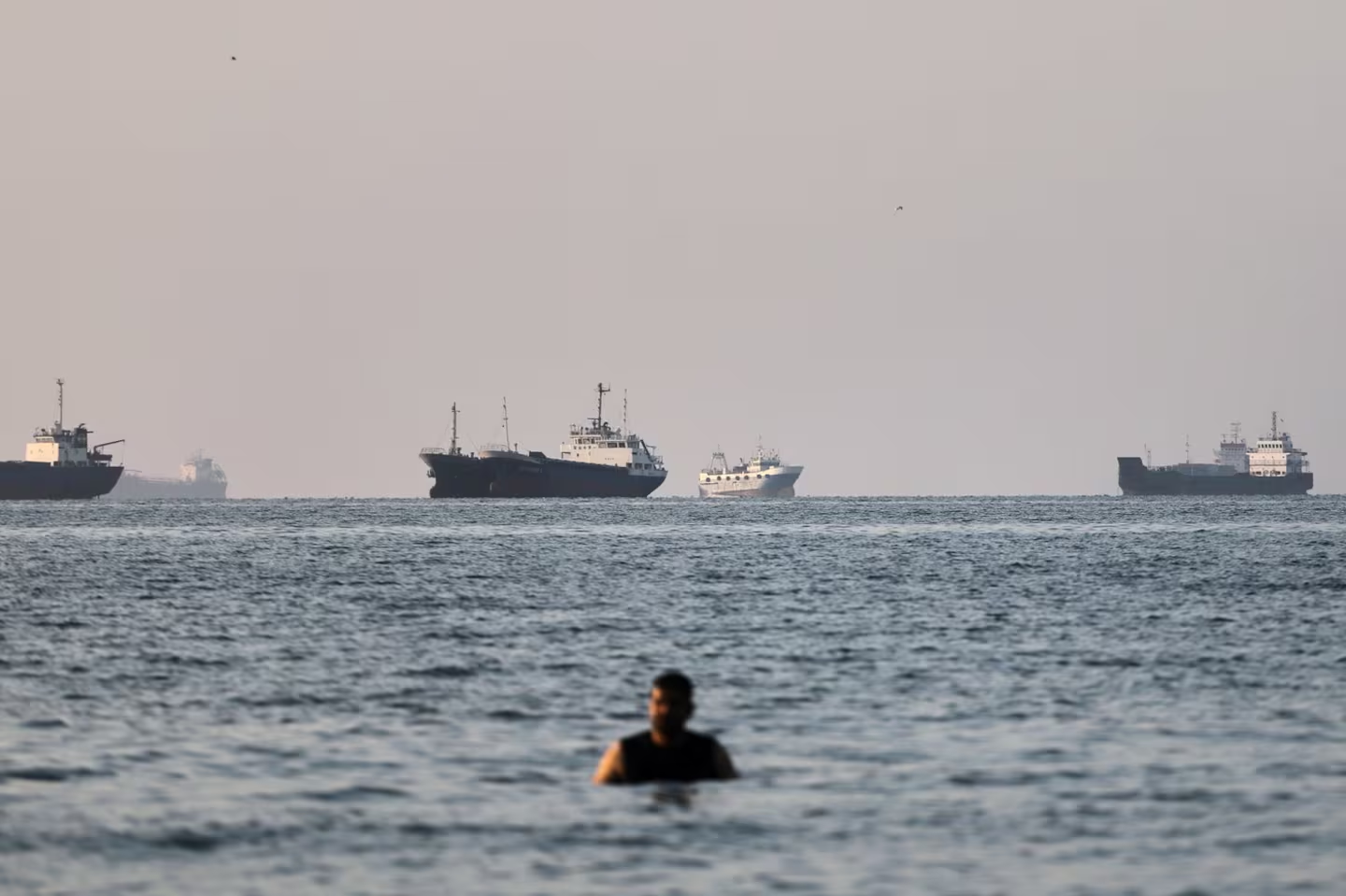
A leaked draft of a proposed agreement between the United States and Iran suggests that one of the world’s most strategically important waterways, the Strait of Hormuz, could soon reopen, potentially easing global energy concerns and reducing pressure on oil prices.
The tentative agreement, expected to be signed in Switzerland, outlines a framework aimed at ending months of conflict between the two countries while launching a new phase of negotiations on Iran’s nuclear program and regional security issues.
Under the reported terms, Iran would immediately begin reopening the Strait of Hormuz, a critical shipping route through which a significant portion of the world’s oil and natural gas supplies traditionally pass. The disruption of traffic through the strait during the conflict caused sharp increases in global energy prices and contributed to inflationary pressures in many countries.
The proposed agreement would also permit Iran to resume unrestricted oil exports under temporary sanctions waivers issued by the United States. This move would allow Iran to return more fully to international energy markets, potentially increasing global oil supplies and helping stabilize prices.
Another major component of the framework involves a reconstruction and development initiative valued at approximately $300 billion. The funding would reportedly come primarily from private investors and regional partners rather than direct U.S. government contributions. The money would be used to rebuild infrastructure, industrial facilities, transportation networks, airports, refineries, and other assets damaged during the conflict.
The agreement also envisions future negotiations that could eventually lead to the removal of U.S. and United Nations sanctions against Iran, although such measures would be tied to progress on broader nuclear and security discussions.
For the global economy, the reopening of the Strait of Hormuz may be the most significant aspect of the deal. Before the conflict, the narrow waterway served as one of the world’s most important energy corridors. Its closure disrupted shipping, increased transportation costs, and contributed to higher prices for fuel, food, and consumer goods worldwide.
The draft agreement also includes provisions related to regional stability, including efforts to reduce tensions involving Iran-backed groups and broader security concerns across the Middle East. However, many of the most complex issues remain unresolved and will be addressed during a 60-day negotiation period that could be extended if necessary.
Questions surrounding Iran’s nuclear program remain central to the talks. While Iran has reiterated that it does not intend to develop nuclear weapons, international concerns persist due to the country’s advanced uranium enrichment capabilities. Future negotiations are expected to focus heavily on inspection mechanisms, enrichment limits, and verification procedures.
The proposed framework has already generated considerable debate. Supporters argue that it offers a pathway toward peace, economic recovery, and energy market stability. Critics, however, contend that the agreement provides substantial economic benefits to Iran before key security issues are fully resolved.
Financial markets are closely monitoring developments. Energy analysts believe that a successful reopening of the Strait of Hormuz and the return of Iranian oil exports could ease supply concerns and help moderate oil and gasoline prices globally.
Although many details remain subject to negotiation, the proposed agreement represents one of the most significant diplomatic initiatives in the Middle East in recent years. If finalized, it could reshape regional relations, influence global energy markets, and mark the beginning of a new phase in U.S.-Iran relations after decades of tension and conflict.