

Annual Report Highlights Growing Financial Pressures on Families, Seniors, Students and Working Households
The growing cost of living in Peel Region is pushing more families to seek food assistance, with nearly 13,000 children receiving support from Seva Food Bank during 2025, according to the organization’s latest annual impact report.
The report paints a concerning picture of increasing food insecurity across Mississauga and Brampton, particularly among families with young children. Seva Food Bank, which operates locations in Malton and Cooksville, reported serving a total of 46,373 individuals throughout the year, with children accounting for 12,972 of those clients.
The figures indicate that more than one in every four people seeking assistance from the organization was a child, underscoring the growing challenges many families face in meeting basic household needs.
Executive Director Vipin Saini said the number of children relying on food bank services has steadily increased over recent years and has become particularly noticeable since the COVID-19 pandemic.
He noted that rising housing costs, inflation, food prices and financial pressures continue to place significant strain on families across the region. Newcomer families, refugees, asylum seekers and recently arrived immigrants are among those most affected, many arriving with young children and limited financial resources.
According to Saini, food insecurity is no longer confined to a single segment of society. The organization now regularly serves working families, full-time employees, gig economy workers, students, seniors and individuals receiving social assistance.
“We are seeing people who have done everything society asked of them,” Saini explained. “They completed their education, secured employment and are working hard, yet they still struggle to afford basic necessities.”
The report highlights a troubling reality that many food bank clients are employed and housed, challenging long-standing misconceptions that food bank users are primarily homeless or unemployed.
At the same time, Seva Food Bank has also witnessed a rise in the number of unhoused individuals seeking assistance, including people living in vehicles due to the lack of affordable housing options.
Seniors have emerged as another vulnerable group. Many older adults living on fixed incomes are finding it increasingly difficult to cope with rising costs for housing, groceries, utilities and medications. Similarly, individuals receiving Ontario Works (OW) and Ontario Disability Support Program (ODSP) benefits continue to face significant financial hardships as benefit rates struggle to keep pace with inflation and living expenses.
Beyond food distribution, Seva Food Bank has expanded its role as a community support organization. The non-profit provides a range of services including before- and after-school programs, cooking classes for youth and adults, hot meal programs, and social initiatives designed to reduce loneliness and isolation among seniors.
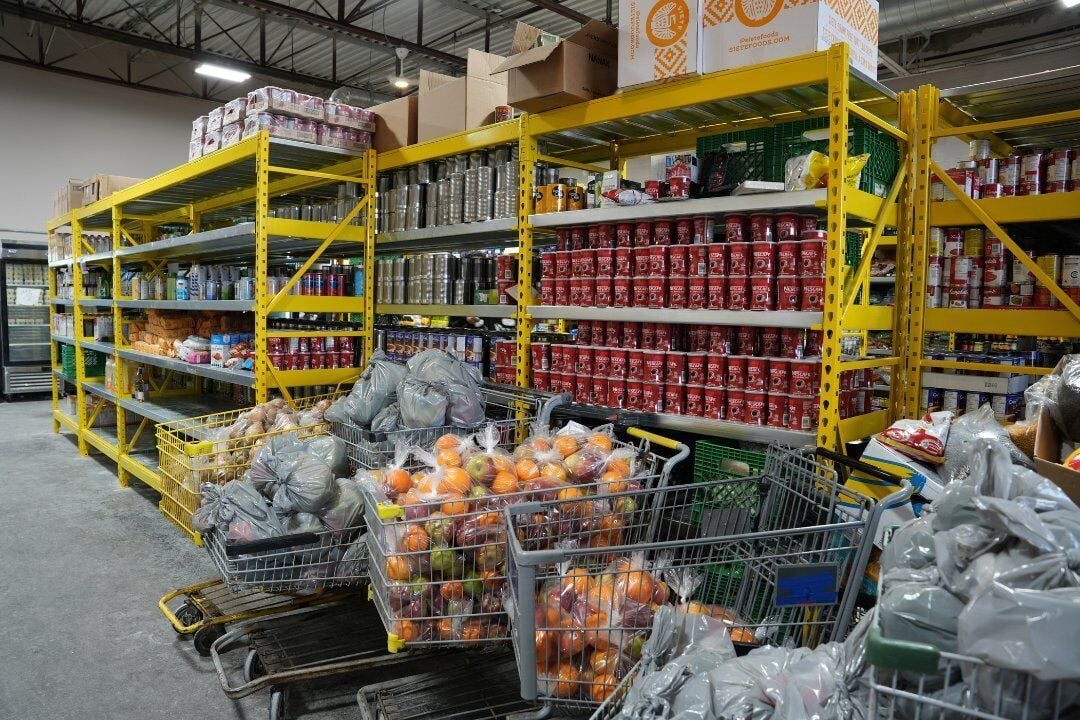
One of the organization’s distinctive features is its grocery store-style food bank model. Rather than distributing pre-packaged food hampers, clients are able to select food items that best meet their family’s dietary requirements, cultural preferences and household needs.
Saini believes this approach helps preserve dignity and respect for those seeking assistance during difficult times.
“Most individuals do not want to rely on a food bank,” he said. “Walking through the doors and asking for help can be incredibly difficult. Allowing people to choose their own food provides a sense of dignity and control during challenging circumstances.”
Named after the South Asian principle of selfless service, Seva Food Bank continues to combine food security initiatives with broader community programs aimed at supporting vulnerable residents and strengthening neighbourhood connections.
As food banks across Canada continue to experience record demand, Seva’s latest report serves as a reminder that food insecurity remains a growing challenge in one of the country’s fastest-growing regions.
Community leaders and social service organizations are increasingly calling for long-term solutions that address housing affordability, income security, employment stability and access to essential supports, while food banks continue to provide critical assistance to thousands of families facing difficult economic realities.
For many households across Peel Region, organizations like Seva Food Bank have become an essential lifeline during a period of rising costs and growing financial uncertainty.